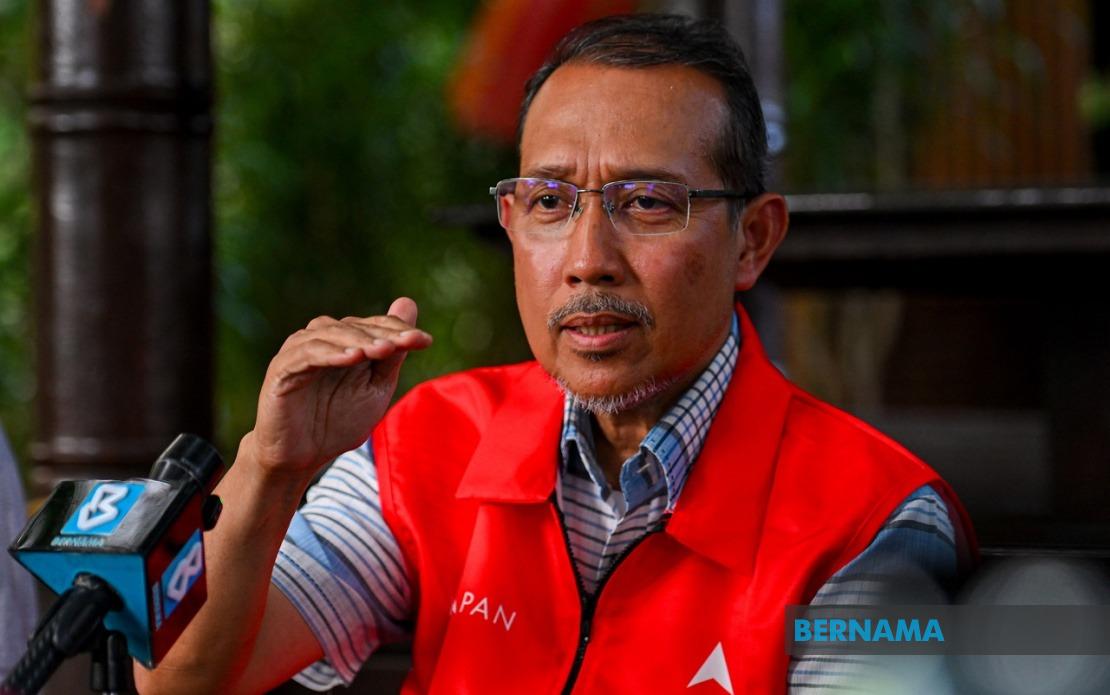
Datuk Muhammad Nazri Kassim, standing as the Pakatan Harapan candidate for Ampangan in the upcoming Negeri Sembilan state election, has outlined an ambitious vision to position the constituency as a thriving economic centre should voters grant him the mandate. Speaking during campaigning in Seremban, the candidate emphasised that transforming Ampangan into a cleaner, safer, and more vibrant township requires sustained commitment to foundational infrastructure and community-focused governance that directly addresses residents' practical concerns.
Among his primary undertakings is the rehabilitation and maintenance of essential infrastructure networks spanning roads, drainage systems, and river management facilities. The constituency has suffered from flooding in previous years, a challenge that Muhammad Nazri identifies as requiring urgent structural and administrative attention. This focus reflects broader vulnerabilities affecting many Malaysian townships where ageing infrastructure and inadequate maintenance protocols compound climate-related risks and seasonal water-related disasters.
The candidate pointed to the severe flooding experienced across Negeri Sembilan in 2021 as a watershed moment that demonstrated the necessity for comprehensive river management strategies. He credited the state government's collaborative river maintenance initiatives with substantially reducing flood frequency and severity over the past three to four years, suggesting that a continuation and enhancement of such programmes could further protect residents and their livelihoods from water-related emergencies. This track record, he argued, demonstrates that systematic, coordinated approaches to environmental management yield measurable improvements in public safety and quality of life.
Beyond flood prevention, Muhammad Nazri recognises that properly maintained waterways unlock broader economic and recreational potential for constituencies. Improving river conditions creates opportunities to establish recreational corridors that attract residents and visitors alike, facilitating activities ranging from jogging and cycling to community sports. These initiatives simultaneously generate income-earning opportunities for local service providers and small entrepreneurs while enhancing the township's appeal and vitality.
The candidate's economic strategy centres on leveraging Ampangan's strategic location within Seremban's urban core. He proposes revitalising the Benteng area and comparable commercial zones to become magnets for visitors and external investment. A township characterised by cleanliness, attractive public spaces, well-maintained waterways, and functioning infrastructure naturally attracts both consumers and business operators seeking reliable locations for commerce. This approach reflects conventional urban renewal thinking but with explicit emphasis on ensuring that development benefits reach ordinary traders and residents rather than concentrating gains among larger commercial interests.
Muhammad Nazri emphasises that improved physical conditions directly translate into enhanced quality of life and expanded economic participation. When residents inhabit cleaner environments with functioning drains and attractive landscaping, civic pride increases alongside property values and foot traffic. Small business owners, hawkers, and service providers find it easier to establish themselves and grow their operations when the surrounding environment signals vibrancy and safety rather than neglect. This perspective acknowledges that local economic development depends as much on environmental conditions and community confidence as on formal business policy.
The candidate has adopted an intensive grassroots campaign strategy, prioritising direct house-to-house engagement with voters across the constituency. Rather than relying solely on mass rallies or media appearances, Muhammad Nazri emphasises the importance of intimate conversations where residents articulate their specific challenges and priorities. This approach purportedly generates more accurate understanding of constituent concerns than top-down policy formulation, allowing candidates to calibrate their platforms toward issues genuinely affecting voters' daily lives.
Among the 21,336 registered voters in Ampangan, which falls within the broader Seremban parliamentary constituency, the state election will present a three-cornered contest. Beyond Muhammad Nazri's Pakatan Harapan candidacy, voters will choose between Datuk Dr Mohamad Rafie Malek representing Perikatan Nasional and Noor'azah Harun from Parti Pribumi Bersatu Malaysia. This competitive field reflects broader political fragmentation affecting Negeri Sembilan politics, with no single bloc commanding overwhelming support across all constituencies.
The Election Commission has scheduled polling day for August 1, with early voting opportunities available on July 28. This compressed campaign timeline requires candidates to prioritise their messaging and ground operations efficiently. For Muhammad Nazri, the emphasis on infrastructure maintenance, flood prevention, and local economic activation represents an attempt to distinguish his candidacy through concrete, tangible governance commitments rather than abstract ideological positions or national-level partisan appeals.
The focus on transforming Ampangan into an economic hub reflects broader challenges facing Malaysian townships that have experienced relative economic stagnation or infrastructure deterioration. Many constituencies struggle to attract investment or retain younger residents who migrate to larger urban centres or more developed areas. Strategies emphasising environmental improvement, flood resilience, and support for small business proliferation resonate with voters experiencing tangible degradation of public spaces and limited economic opportunities within their home constituencies.
For a wider Malaysian audience, Ampangan's election campaign illustrates how local politics increasingly centres on infrastructure adequacy, climate resilience, and inclusive economic participation rather than divisive identity-based appeals. Voters across different constituencies share concerns about flooding, infrastructure maintenance, and livelihood security. Candidates who articulate detailed, evidence-based approaches to these universal concerns—grounded in local knowledge and community engagement—potentially mobilise support more effectively than those relying on generic partisan messaging or populist rhetoric disconnected from everyday governance challenges.

