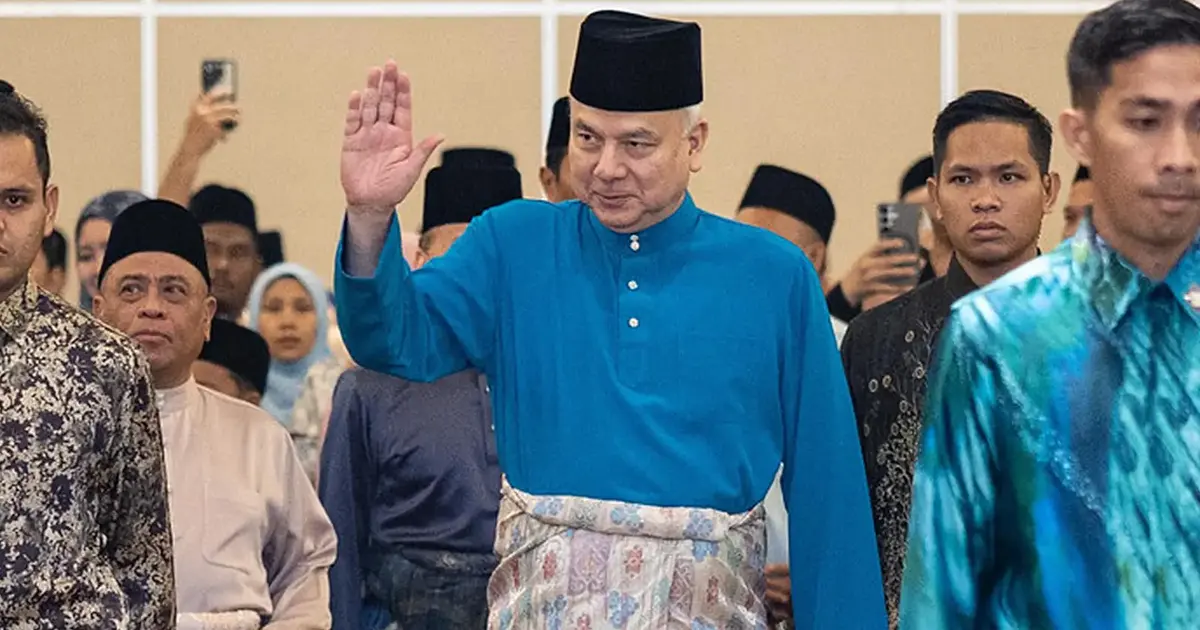
Sultan Nazrin Shah, the Deputy Agong, has delivered a pointed message to Malaysia's leadership circles: the path to national advancement demands reasoned judgment and restraint, not hasty reactions driven by sentiment or temporary passion. Speaking with the gravity befitting his constitutional role, the Perak ruler articulated a vision of governance where careful deliberation takes precedence over reactive policymaking—a principle increasingly vital as the nation navigates complex political and socioeconomic terrain.
The Deputy Agong's intervention reflects broader concerns about decision-making patterns in contemporary Malaysian governance. Throughout recent years, observers have noted instances where policy shifts, legislative moves, and high-level declarations appeared to stem from immediate pressures rather than comprehensive strategic planning. Sultan Nazrin's remarks serve as a measured reminder that leadership at the highest levels carries responsibility not merely to act, but to act wisely. This distinction matters significantly in a multiethnic and multireligious democracy where unilateral or emotionally-charged decisions can ripple across diverse communities with unintended consequences.
Central to Sultan Nazrin's perspective is the proposition that national success ultimately rests not on the pronouncements or ambitions of individual leaders, but on the collective commitment of the population to work together constructively. This formulation shifts focus from personality-driven governance toward institutional and social foundations. In Malaysia's context, where political competition has occasionally grown heated and polarising, emphasising the foundational role of ordinary citizens' willingness to cooperate addresses a real vulnerability in the national fabric. The Deputy Agong implicitly warns that leaders who forget this truth risk squandering public goodwill and fragmenting the social cohesion necessary for sustained progress.
The call for mutual respect takes on particular resonance given Malaysia's demographic complexity. A nation home to Malays, Chinese, Indians, indigenous peoples, and numerous other communities—each with distinct cultural, religious, and economic interests—cannot function through majoritarian decree or zero-sum competition between groups. Instead, the system depends on continuous negotiation, compromise, and the acceptance that different Malaysians hold different worldviews. When leaders make abrupt decisions without consultation or consideration for affected minorities, they risk eroding the reciprocal respect that lubricates multiethnic coexistence.
Harmonious living, the third pillar Sultan Nazrin identified, goes beyond mere tolerance of difference. It suggests active cultivation of peaceful relations, of seeking common ground even amid disagreement, and of building institutions and practices that facilitate rather than obstruct inter-community understanding. Harmony is not the natural state of a diverse society; it requires deliberate effort, investment, and—crucially—leadership that models the values it espouses. When senior figures communicate through inflammatory rhetoric or take positions that seem designed to inflame rather than unify, they undermine the very harmony they claim to represent.
The Deputy Agong's emphasis on avoiding impulsive and emotional decision-making carries implications for several current Malaysian challenges. Economic policy, social reform, religious affairs, and constitutional matters all benefit from calm analysis rather than reactive zeal. In economic terms, sudden policy reversals or regulatory changes announced without stakeholder consultation create uncertainty that deters investment and disrupts business planning. Foreign investors and local entrepreneurs alike need predictable governance frameworks. Similarly, in sensitive areas such as religious affairs or ethnic representation, decisions made in the heat of political competition rather than through inclusive dialogue tend to produce backlash and unintended damage.
The Deputy Agong's intervention also carries subtle constitutional weight. As a member of the Conference of Rulers, Sultan Nazrin represents an institution historically positioned as guardian of the nation's foundational compact, the Federal Constitution. Implicit in his remarks is a reminder that this compact—built on negotiated compromises between different communities and interest groups—depends on leaders honouring the spirit of deliberation and consent that characterised its creation. Departing from this spirit through impulsive action threatens not merely current governance but the legitimacy of institutions themselves.
For Malaysian political leaders across party lines, Sultan Nazrin's message carries both challenge and guidance. Challenge, because it requires acknowledging that not every political opportunity should be seized immediately, that some impulses—however popular in the moment—should be resisted in service of broader national interests. Guidance, because it offers a framework for evaluating decisions: Does this choice reflect careful judgment? Have affected communities been consulted? Does it strengthen or strain social cohesion? Will it be defensible not just today but in the retrospect of history?
The timing of these remarks suggests particular relevance to ongoing political dynamics. As Malaysia continues managing transitions in federal and state governments, as religious and constitutional questions remain contested, and as economic pressures mount, the temptation for leaders to take dramatic, headline-grabbing actions grows. Yet Sultan Nazrin's counsel proposes that the most consequential leadership often involves knowing what not to do, at least not hastily. This is a countercultural message in an age of hyperconnected politics and 24-hour news cycles, where inaction or measured response risks being perceived as weakness or indifference.
Ultimately, the Deputy Agong's intervention represents a call for institutional maturity and civic responsibility at the highest levels. It suggests that Malaysia's prosperity is not secured through individual genius or bold strokes, but through the accumulated effect of millions of decisions—by leaders and citizens alike—made with due consideration for others' interests and wellbeing. In this view, the seemingly pedestrian virtues of thoughtfulness, respect, and cooperation emerge as the true foundations of national strength, far more durable than the glitter of dramatic gestures or the satisfaction of partisan victories.