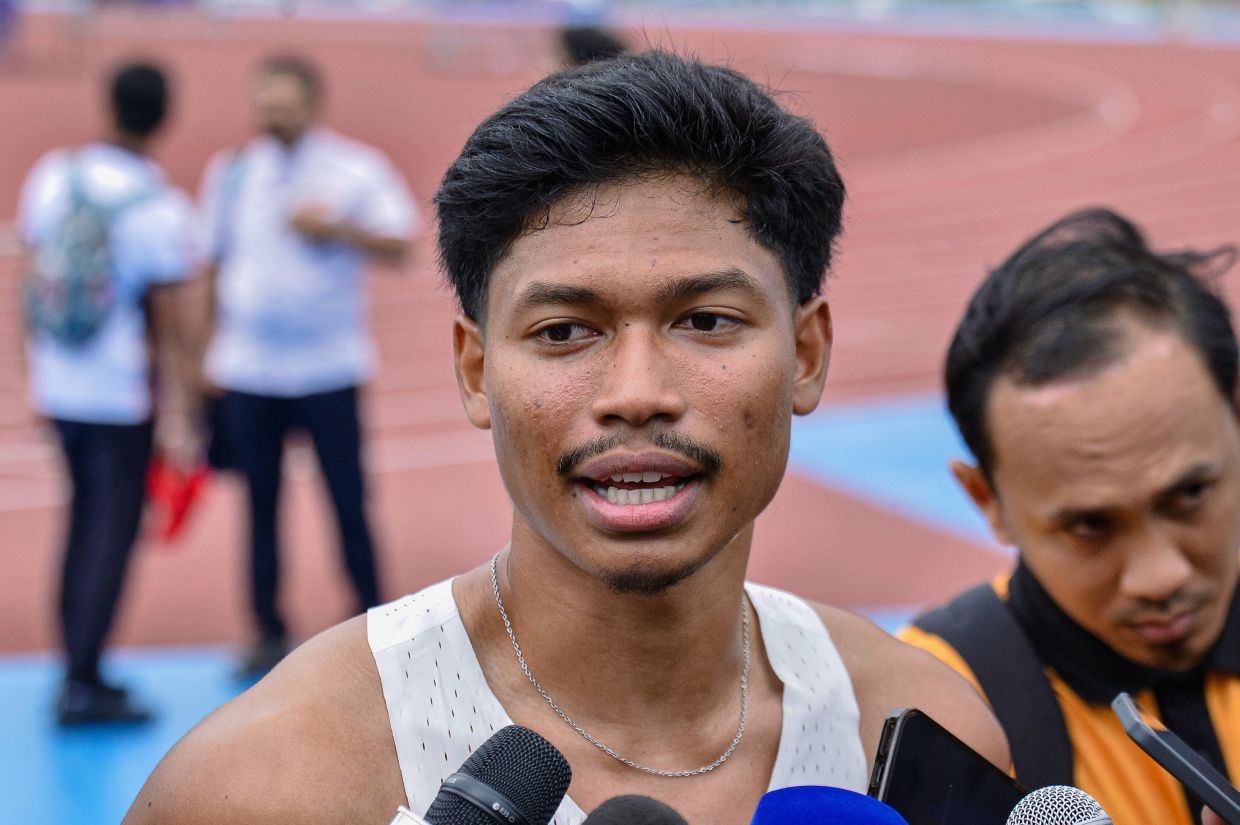
National sprinter Mohd Azeem Fahmi is returning home to advance his academic credentials, having committed to pursuing a master's degree at Universiti Malaya, Malaysia's oldest and most prestigious university. The move marks a significant transition for the 21-year-old athlete, who has recently wrapped up his undergraduate education at Auburn University in the United States and is now repositioning himself for the next stage of both his sporting and scholarly journey.
Fahmi's decision to study at UM represents a calculated career move that balances elite athletic ambitions with serious academic development. During a courtesy visit to the university on Monday, he met with vice-chancellor Prof Datuk Seri Dr Noor Azuan Abu Osman, who reaffirmed the institution's commitment to supporting the sprinter's graduate ambitions. The formal reception underscores UM's continued investment in nurturing high-performing athletes who maintain scholarly excellence, reflecting a broader institutional philosophy of developing well-rounded sporting talent.
The delegation that received Fahmi included Associate Prof Dr Zulkarnain Jaafar, dean of the Faculty of Sports and Exercise Sciences, and Afizal Abu Othman, director of the university's Sports Centre. This coordinated administrative engagement indicates a structured approach to integrating elite athletes into UM's academic frameworks, ensuring that Fahmi's training schedules and competition calendar can be accommodated within his postgraduate studies. Such institutional support mechanisms have proven essential in enabling Malaysian athletes to pursue both high-level competition and meaningful qualification advancement.
Universiti Malaya has long established itself as a destination of choice for Malaysia's most accomplished sporting figures, building an impressive roster of Olympic and international medalists across multiple disciplines. The university counts among its distinguished graduates Olympic diving gold medallist Datuk Pandelela Rinong, along with fellow diving competitors Ooi Tze Liang and Bryan Nickson Lomas, whose presence has elevated the institution's standing in the sports community. Former badminton international Vivian Hoo, who represented Malaysia at the highest levels of women's doubles competition, similarly completed her Bachelor of Sports Science degree at UM in 2019, demonstrating the university's breadth of athletic excellence spanning individual and team sports.
Fahmi's undergraduate tenure at Auburn University proved instrumental in developing his competitive credentials and technical capabilities. Since relocating to the United States in January 2023, the sprinter pursued studies in exercise physiology and kinesiology while training under renowned coach Ken Harnden, whose expertise in sprint mechanics and athletic development has benefited numerous international athletes. This educational immersion in an advanced American athletic environment has equipped Fahmi with cutting-edge knowledge of sports science principles while simultaneously sharpening his competitive edge on the track.
The sprinter recently demonstrated the tangible results of his Auburn training during the Malaysian Open athletics championships held at Universiti Putra Malaysia Serdang. Fahmi captured the gold medal in the men's 100 metres individual event, establishing himself as a dominant force in Malaysia's sprint landscape. Beyond his personal triumph, he also anchored the national men's 4x100 metres relay team to gold, competing alongside teammates Danish Iftikhar Mohd Roslee, Pengiran Aidil Auf Hajam, and Mohd Armin Zahryl. These consecutive victories at Malaysia's premier domestic athletics competition validate both his individual sprinting prowess and his capacity to perform under pressure within competitive team environments.
Fahmi's trajectory exemplifies a growing trend among Malaysian athletes of pursuing undergraduate education abroad while maintaining competitive participation at the highest national levels. This transatlantic model allows young athletes to absorb international best practices in sports science, strength and conditioning, and performance psychology while continuing to represent Malaysia in regional and continental competitions. The sustainability of such arrangements depends heavily on institutional support back home, which UM's receptive stance toward Fahmi clearly demonstrates.
The implications of Fahmi's academic advancement extend beyond individual achievement. His enrollment in a master's programme at UM positions him as a potential bridge between Malaysia's domestic coaching infrastructure and international athletic development methodologies. Athletes who combine elite competition experience with advanced academic qualifications increasingly populate coaching and sports administration roles, where they can elevate institutional standards and share methodological insights with the next generation of Malaysian competitors.
The master's programme pathway also provides Fahmi with meaningful insurance against the inherent uncertainties of a professional athletic career. Injuries, declining performance, and the finite duration of competitive excellence are realities that elite athletes must navigate. By pursuing serious postgraduate qualifications in sport-related disciplines, Fahmi ensures that his substantial investment in athletic development translates into sustainable career options beyond competitive sprinting, whether in sports science, coaching, or athletic administration.
Universiti Malaya's welcoming approach to Fahmi reflects broader Malaysian aspirations to establish world-class sporting ecosystems that genuinely integrate athletic excellence with intellectual development. Rather than treating these domains as separate pursuits, the university's institutional architecture enables athletes to cultivate both simultaneously. As Fahmi embarks on his master's studies while continuing his competitive preparations, he embodies the multidimensional athlete that modern international sport increasingly demands—one who understands not just how to run faster, but why, and can contribute meaningfully to the scientific understanding of human athletic performance.