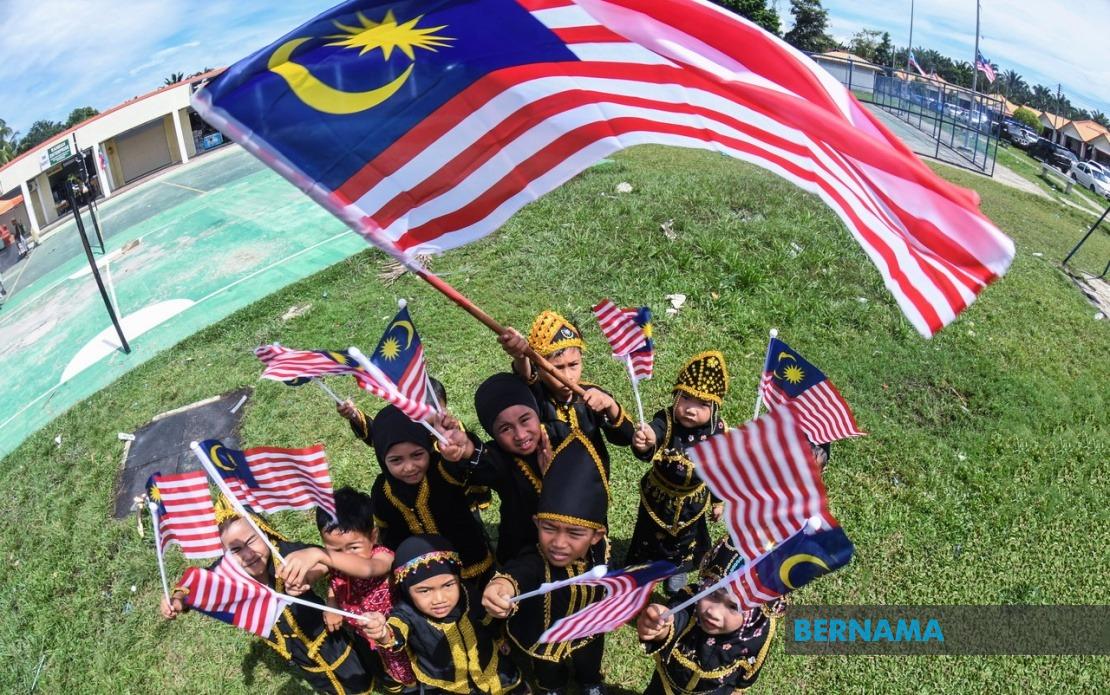
Prime Minister Datuk Seri Anwar Ibrahim will launch the National Month and Fly the Jalur Gemilang 2026 campaign this Sunday at the Ministry of Health Training Institute Sultan Azlan Shah in Tanjung Rambutan, Ipoh, signalling a deliberate shift in how the nation marks its most significant patriotic celebrations. The event, which kicks off activities for the 2026 National Day and Malaysia Day festivities (HKHM2026), represents a departure from the large-scale public gatherings that have characterised recent years, with the government opting instead for a contained indoor ceremony that will be broadcast nationwide to reach Malaysians across the country.
According to Muhammad Najmi Mustapha, director of the Information Department's Communications and Community Development Division, this recalibrated approach reflects contemporary realities rather than a diminishment of national pride. Speaking to NasionalFM radio, he explained that the decision to move away from open-air events—such as last year's gathering in Muar, Johor, and the 2024 Cyberjaya celebration—takes into account pressing global circumstances including energy supply constraints and the escalating geopolitical tensions affecting West Asia. Rather than viewing the shift as a retreat, officials are framing it as a pragmatic response that allows the nation to honour its traditions while managing resource allocation responsibly during uncertain times.
The launch ceremony will commence at 10 am and receive comprehensive media coverage through multiple channels designed to ensure public participation despite the venue change. Radio Televisyen Malaysia, the Malaysian National News Agency BERNAMA, and various digital platforms including Facebook Live pages run by Merdeka360, the Ministry of Communications, and the Information Department will simultaneously broadcast proceedings. This multimedia distribution strategy acknowledges how Malaysians increasingly consume national events through diverse media outlets rather than gathering physically, effectively democratising access to the ceremony across different regions and demographics.
Government officials emphasise that moving the celebration indoors does not diminish the patriotic essence of the occasion. Muhammad Najmi stressed that maintaining and nurturing the spirit of patriotism remains central to the exercise, with the launch ceremony serving as a catalyst for grassroots activities and programmes throughout August that will enliven National Month across communities nationwide. This distributed model of celebration—where the formal government launch triggers decentralised community-led initiatives—may actually prove more effective at sustaining patriotic sentiment throughout the month than concentrating energy and resources on a single grand spectacle.
The '1 Rumah 1 Jalur Gemilang' campaign, which encourages households to display the national flag, will continue as a cornerstone initiative for 2026. Introduced several years ago, this programme has evolved significantly and now encompasses nine distinct clusters rather than the original seven. Alongside the established education, higher education, health, security, community, industry, and government agency segments, the expanded framework now includes houses of worship and sports organisations. This broadening reflects recognition that patriotic expression thrives across diverse institutional and social settings, from schools and hospitals to mosques, churches, temples, and athletic facilities.
The expanded clustering strategy carries particular significance for Malaysian society, which encompasses multiple faith communities and cultural traditions. By deliberately incorporating houses of worship and sports—sectors that command deep emotional investment and community participation—the government recognises that national identity and patriotic sentiment are not confined to secular or governmental spaces. Places of worship represent where millions of Malaysians gather regularly, whilst sports venues draw passionate crowds across ethnic and religious lines. This inclusive framework attempts to weave patriotism into the fabric of everyday Malaysian life rather than reserving it for formal state occasions.
Digital engagement will play an amplified role in this year's celebrations, reflecting how Malaysians increasingly express identity through social media. The government is explicitly encouraging citizens to adopt the Jalur Gemilang as their social media profile pictures and to share content utilising designated hashtags: #HKHM2026, #MalaysiaMADANI, #KesejahteraanDinikmati, and #Merdeka360. This digital activism strategy extends the reach of patriotic expression beyond those who can physically attend events or display flags at home, enabling Malaysians working abroad or unable to participate in traditional celebrations to demonstrate national pride through virtual means. The hashtag strategy also creates shareable, aggregatable content that amplifies patriotic messaging across social networks.
The overarching theme for 2026 celebrations—'Malaysia MADANI: Kesejahteraan Dinikmati' (Malaysia MADANI: Shared Prosperity)—establishes a connection between national celebration and the government's broader development philosophy. Communications Minister Datuk Seri Fahmi Fadzil previously announced this thematic choice, which links Independence Day observance to the administration's policy agenda centred on inclusive prosperity. The Malaysia MADANI logo, selected as the official celebration emblem, will remain in use through 2026, providing visual continuity and reinforcing the philosophical linkage between historical commemoration and contemporary governance priorities.
The National Day celebration proper will occur on August 31 at Dataran Putrajaya, continuing the modest yet vibrant approach outlined for the month's launch. By concentrating the formal ceremony in the capital but distributing celebratory activities throughout the nation via the expanded cluster approach, the government aims to foster patriotic participation across diverse communities whilst managing logistics and resource expenditure. This decentralised model reflects growing recognition that national celebrations need not pivot entirely on monumental centralised events to achieve their patriotic objectives.
For Malaysian readers and policymakers, this recalibration of National Month observance offers instructive lessons about adapting traditions to contemporary constraints. The approach demonstrates how patriotic sentiment can be cultivated through multiple channels—digital, communal, religious, and athletic—rather than depending on spectacular centralised gatherings. As Malaysia heads toward its 2026 Independence anniversary during a period of global economic uncertainty and geopolitical turbulence, this modest yet deliberately inclusive strategy may ultimately prove more resilient and authentically reflective of how Malaysians across diverse backgrounds experience and express national identity in practice.

