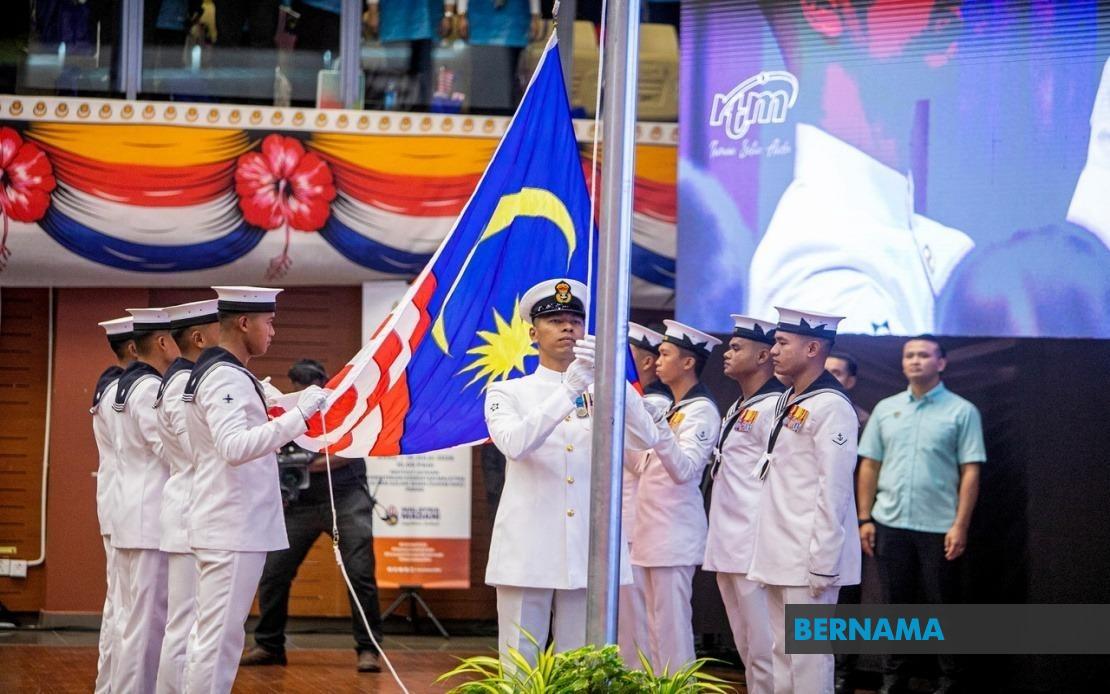
Prime Minister Datuk Seri Anwar Ibrahim presided over the revival of Malaysia's Jalur Gemilang raising ceremony in Ipoh on July 19, rekindling a patriotic tradition that had lain dormant for two years. The ceremonial hoisting of the national flag marked the official commencement of the 2026 National Month and Fly the Jalur Gemilang campaign, bringing back one of the nation's most symbolic demonstrations of collective pride and unity.
Held at the Sultan Azlan Shah Ministry of Health Training Institute (ILKKM SAS) in Tanjung Rambutan, the event combined ceremonial grandeur with substantive national messaging. The Prime Minister's attendance underscored the government's commitment to revitalizing public engagement with national symbols during an era when such displays of patriotism carry renewed political significance. The setting—a training institute for healthcare professionals—added a contemporary dimension by linking national identity celebrations to the public sector workforce.
The centrepiece of the ceremony involved the formal handover of a 1.82-metre by 3.65-metre Jalur Gemilang to a nine-member Royal Malaysian Navy contingent from the Lumut Base, commanded by Chief Petty Officer Mohamad Razif Aliff Md Yusof. This symbolic gesture served dual purposes: acknowledging the military's custodial role in protecting national sovereignty whilst democratizing the flag-raising ritual by distributing it beyond government headquarters to maritime defenders. The Navy team subsequently hoisted the colours whilst participants sang Negaraku, creating the ceremonial atmosphere that characterizes such patriotic gatherings.
The programme incorporated traditional elements of civic participation. ILKKM SAS trainee Muhammad Ammar Mohd Asri recited the Rukun Negara pledge, embedding the nation's foundational principles into the ceremony's fabric. Attendees maintained respectful silence before joining in the national anthem, a collective action designed to reinforce social cohesion and shared national values. These ritualistic components, seemingly routine, carry particular weight in Malaysia's plural society, where synchronized national observance serves as a unifying mechanism across diverse communities.
The two-year hiatus in this ceremony merits consideration. The suspension likely reflected pandemic-related disruptions to public gatherings, though the decision to revive it in 2026 signals governmental prioritization of symbolic nationalism as Malaysia approaches mid-decade transitions. Reintroducing such ceremonies during a period of evolving political dynamics suggests deliberate repositioning of patriotic narratives within public consciousness, particularly relevant for a nation navigating generational shifts in political engagement.
Complementing the flag ceremony, the Prime Minister formally launched the Fly the Jalur Gemilang campaign, an initiative encouraging households and organizations to display the national flag throughout the month. This grassroots component transforms patriotism from a state-managed affair into collective household practice, fostering visual landscapes saturated with national symbols. For Malaysian citizens, the proliferation of flags across neighbourhoods creates environmental reinforcement of national identity, whilst also serving administrative and security functions through increased public participation in government-designated commemorative periods.
The campaign extends across two major national observances: National Day on August 31 and Malaysia Day on September 16, creating an extended celebratory window spanning nearly three weeks. This temporal expansion maximizes opportunities for sustained public engagement, allowing multiple touchpoints for patriotic expression rather than concentrating observance into single-day events. For Malaysian businesses, media organizations, and community groups, the extended campaign provides extended promotional opportunities within an officially sanctioned patriotic framework.
Artistic dimensions featured prominently through the unveiling of "Aku Berjanji" as the official campaign theme song. Composed and performed by Faizal Tahir, the song represents contemporary Malaysia's approach to patriotic expression—leveraging popular music to resonate with younger demographics whilst maintaining dignified nationalist content. The track's immediate availability via the Merdeka360 portal from 12:30 pm ensured rapid public access, reflecting digital-age considerations in campaign dissemination. Musicians playing prominent roles in national celebrations symbolize the integration of cultural production into state patriotic messaging.
The National Month celebrations umbrella encompasses diverse programmes and activities scheduled throughout Malaysia's regions, suggesting coordination between federal authorities and state governments in delivering synchronized national observance. This decentralized approach, coordinated from the centre, mirrors Malaysia's federal structure whilst ensuring consistent messaging. For different states and communities, localized activities provide contextual relevance whilst maintaining alignment with national themes.
The resurrection of the Jalur Gemilang ceremony carries implications extending beyond ceremonial aesthetics. It demonstrates government confidence in public assembly during a period when such gatherings carry political significance, and reflects deliberate investment in symbolic nationalism as a governance tool. For Southeast Asian observers, Malaysia's recommitment to ceremonial patriotic practice offers insights into how regional governments navigate national identity maintenance amid social transformation and evolving demographic realities.
The ceremony's location in Perak, rather than the capital Kuala Lumpur, represented geographical decentralization of national symbol-raising, potentially signalling inclusivity and provincial emphasis within the federal framework. This strategic venue selection ensured that patriotic ceremonies remained rooted in diverse geographic contexts rather than concentrating solely in administrative centres, fostering national sentiment across territorial breadth.
For Malaysian citizens and regional observers, the campaign's revival marks deliberate state reassertion of patriotic narratives. The coordination of military participation, governmental ceremonialism, popular music integration, and grassroots flag-flying creates multivalent patriotic architecture addressing different demographic segments and engagement modalities. The campaign ultimately reflects contemporary approaches to national identity management, balancing traditional ceremonial elements with digital accessibility and popular cultural integration.

