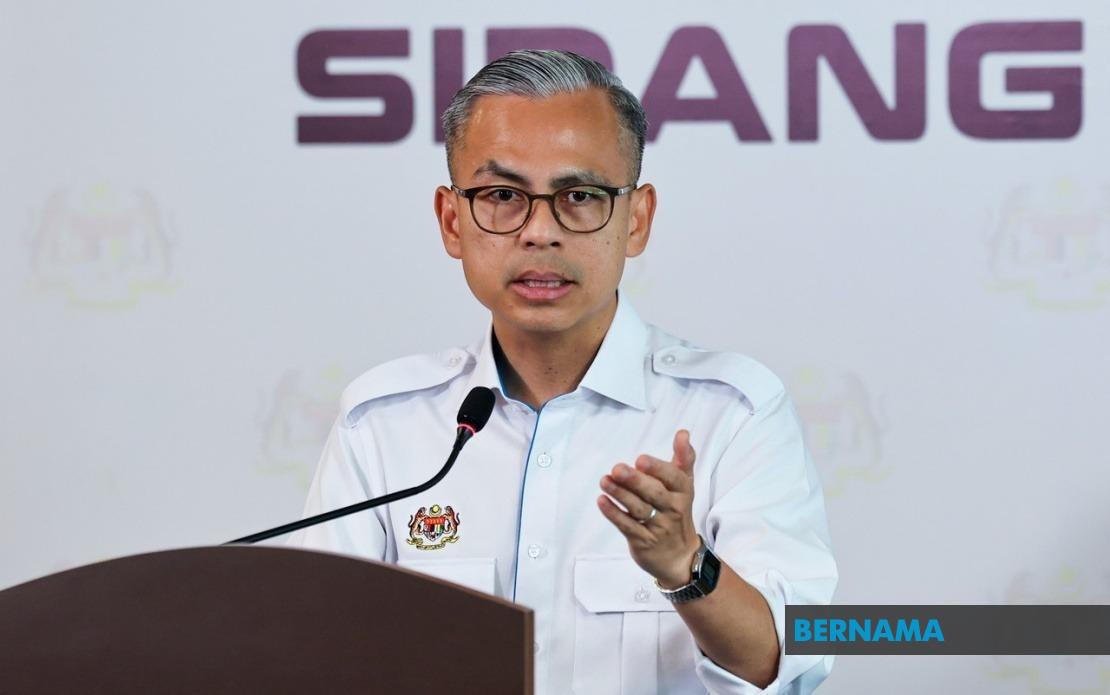
With just days until the full dress rehearsal, organisers of Malaysia's 2026 National Day parade have confirmed that nearly all preparatory work at Dataran Putrajaya is on track, leaving only minor technical adjustments to be resolved. Communications Minister Datuk Seri Fahmi Fadzil, who heads the 2026 National Day and Malaysia Day main committee, offered this optimistic assessment following an inspection of ongoing rehearsals, signalling that the celebration framework is substantially in place for the inaugural parade at the federal administrative capital.
The focus of current refinement efforts centres on streamlining the procedural flow of the event itself. Organisers have identified spacing inconsistencies between different parade contingents that require tightening to ensure the spectacle unfolds with greater visual precision and orderliness. According to Fahmi, several groups participating in the procession currently position themselves at distances that exceed optimal standards, creating gaps that detract from the unified presentation. These coordinating adjustments represent the category of work that will consume attention during the forthcoming full rehearsal, with expectations that such fine-tuning will push preparations to near-completion levels.
Weather cooperated fully during the recent inspection rehearsal, allowing organisers to assess contingent movements and positioning without the complications that rain or extreme heat might otherwise introduce. Beyond atmospheric conditions, Fahmi highlighted the notably strong participation and morale displayed by all groups involved, from security personnel to school students representing three states who form a critical component of the human graphics performance element. This collective enthusiasm suggests that logistical execution, rather than participant commitment, represents the primary remaining challenge.
The 2026 iteration promises several marquee elements that distinguish it from previous National Day celebrations. The Johor Military Force makes its inaugural appearance in a national parade, representing an expansion of uniformed service representation. More notably, a maritime asset dubbed the Ibrahim-class boat, a design concept attributed to His Majesty Sultan Ibrahim, King of Malaysia, will feature prominently. These new components carry symbolic weight beyond their visual spectacle, reflecting evolving national defence structures and royal patronage of ceremonial innovation.
A central organisational feature involves a multi-level structure engineered to accommodate approximately 1,500 student performers in the human graphics display. This staging platform has undergone rigorous safety assessment by Putrajaya Corporation, with Fahmi providing explicit assurance that all structural integrity requirements have been met. Observers have noted what appears to be slight movement in the framework, but Fahmi clarified that such motion falls squarely within permissible tolerance thresholds and actually serves a functional purpose. The platform requires inherent flexibility to accommodate the rhythmic movements of 1,500 young performers without compromising stability. Having been deployed twice previously without incident, the structure's track record offers additional confidence.
The positioning of this student platform has drawn attention for appearing slightly asymmetrical relative to its surroundings, a quirk that Fahmi attributed to the practical constraints of parade route geography and building alignment at the venue. Additionally, organisers reduced the performer complement from an originally planned 2,000 students to 1,500, which necessitated minor structural recalibration. While acknowledging these positioning considerations, Fahmi pledged to conduct technical reviews for subsequent celebrations to refine perceptions and eliminate any lingering visual irregularities.
For Malaysian observers and regional analysts, the 2026 parade represents more than ceremonial pageantry. The event reflects the federal government's capacity to coordinate large-scale public spectacles and the extent to which Malaysia's defence and ceremonial institutions have modernised. The inclusion of the Johor Military Force signals potential shifts in how Malaysia conceptualises military representation at national events, while the custom-designed maritime asset showcases royal investment in distinctive national symbols. These elements collectively underscore the government's commitment to innovation within traditional frameworks.
The decision to consolidate parade operations at Dataran Putrajaya rather than the traditional Merdeka Stadium location carries broader implications for how Malaysia positions its capital as a celebration venue. Putrajaya has undergone transformation in recent years, and hosting the nation's preeminent annual ceremony cements its status as more than an administrative hub. This geographic choice also influences logistics, crowd flow, and the urban experience of national commemoration for Kuala Lumpur-Klang Valley residents and tourists.
From a regional perspective, Malaysia's National Day arrangements merit observation as Southeast Asian nations increasingly invest in spectacular public ceremonies that blend traditional pageantry with contemporary technological capability. The human graphics element, now a standard feature across regional celebrations, demonstrates how countries compete subtly to demonstrate organisational sophistication. Thailand, Indonesia, and other neighbours similarly employ large-scale student formations, making Malaysia's 2026 iteration part of a broader regional trend toward maximising visual impact and coordination complexity.
The communications ministry's willingness to conduct multiple rehearsals and implement iterative refinements reflects changing standards for public event execution. Where previous celebrations might have proceeded with greater improvisation, contemporary practice demands multiple dry runs and technical verification. This methodological approach has become expected rather than exceptional, partly due to social media documentation that captures and critiques every procedural aspect in real time. Organisers must contend not merely with the physical event but with its simultaneous experience across digital platforms, where technical imperfections become instantly visible to national and international audiences.
With the dress rehearsal imminent, organisers face a compressed timeline to address remaining coordination issues before actual execution. The contingent spacing adjustments, structural positioning reviews, and logistics optimisation must conclude rapidly. However, Fahmi's confidence in near-completion suggests that substantive problems have been identified and assigned to working groups. The dress rehearsal itself will serve as the critical validation mechanism, revealing any residual gaps between planning and execution.
For Malaysian citizens following the preparations, the steady progression toward completion offers assurance that the 2026 celebration will proceed with professional execution. The emphasis on safety verification, participant morale, and coordination precision indicates that organisers have prioritised substance over superficial appearance. As the nation approaches its 69th independence commemoration, the carefully orchestrated pageantry at Dataran Putrajaya will stand as a contemporary expression of Malaysian national identity and governmental capability.

