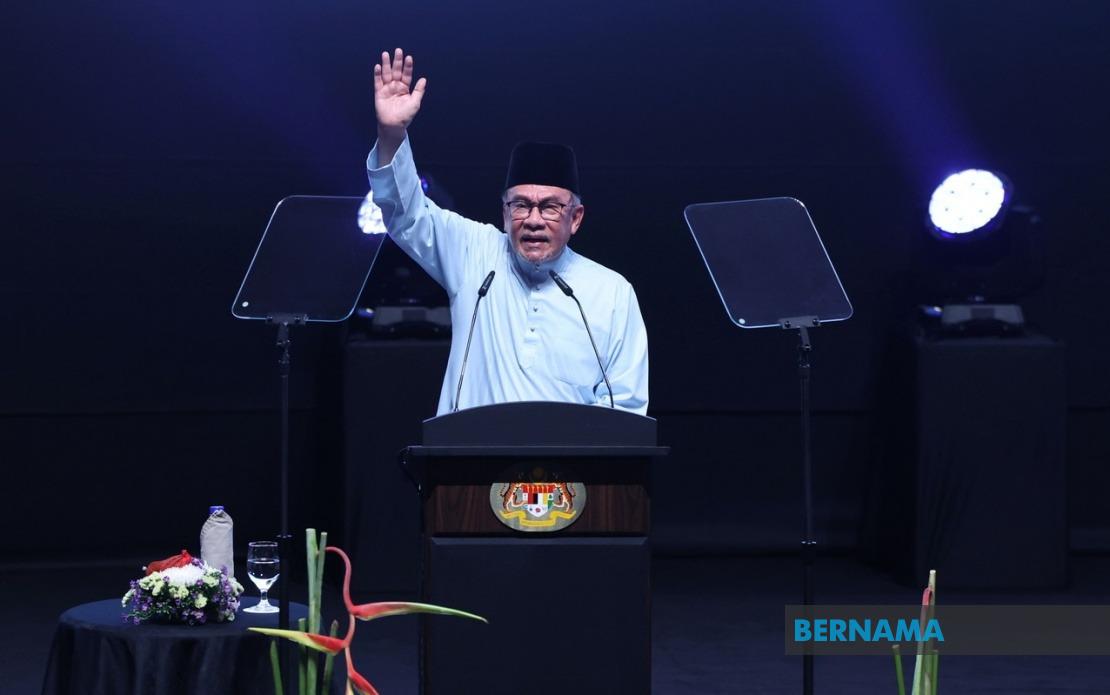
The 2026 National Day Prime Minister's Address Ceremony will now take place at the Putrajaya International Convention Centre (PICC) at 2 pm, the Ministry of National Unity announced on Thursday. The decision represents a significant logistical shift from the original venue, reflecting broader environmental and public health considerations shaping Malaysia's major national observances.
The timing adjustment was implemented following a comprehensive review of current circumstances, with organisers prioritising the welfare, health and comfort of all attendees alongside ensuring the ceremony proceeds without disruption. The 2 pm start time signals a deliberate move away from traditional scheduling patterns, suggesting planners sought to accommodate meteorological conditions and accommodate guests attending from across the country.
This event holds considerable symbolic importance within Malaysia's governance framework. The Ministry of National Unity characterised the ceremony as a vital occasion for the MADANI government to communicate its vision for national development, reinvigorating the nation's independence narrative whilst deepening patriotic sentiment among Malaysians. The platform provides an opportunity to articulate government priorities and reconnect the leadership with broader aspirations held by the citizenry.
The relocation from Dataran Merdeka in Kuala Lumpur to PICC emerged directly from escalating haze concentrations affecting the Klang Valley region. The National Day and Malaysia Day Celebration Working Committee, operating under the Ministry of Communications, determined that air quality conditions rendered the central Kuala Lumpur location unsuitable. This marks a pragmatic acknowledgment that environmental factors increasingly influence how Malaysia conducts major ceremonial events.
Malaysian Meteorological Department projections indicated that hazardous atmospheric conditions would persist across multiple states through August 31st. Sabah faced imminent hazy weather, whilst Johor, Melaka, Negeri Sembilan, Selangor, Kuala Lumpur and Putrajaya were experiencing elevated particulate concentrations that could worsen further. Such forecasts obligated organisers to implement contingency arrangements rather than proceed with original plans that might have compromised public health.
Putrajaya's selection as the alternative venue carries administrative logic, given that the capital already experiences haze conditions comparable to Kuala Lumpur, yet offers indoor facilities providing environmental control. The PICC represents a purpose-built venue capable of hosting large ceremonial gatherings with climate management systems unavailable at open-air locations like Dataran Merdeka. This choice signals growing infrastructure adaptation to environmental realities affecting tropical Asia.
The Ministry of National Unity framed the ceremony as embodying core national values, emphasising mutual understanding, respect and acceptance of Malaysia's multicultural composition. Officials explicitly invited all Malaysians to participate, positioning National Day observances as occasions for reinforcing social cohesion and celebrating the nation's diversity. This messaging underscores how the government leverages major ceremonies to promote unity narratives essential for managing a plural society.
The shift to an indoor venue and defined afternoon timing also carries implications for media coverage and public engagement strategies. Traditional Dataran Merdeka ceremonies benefited from symbolic centrality and accessibility, whereas PICC attendance may require greater logistical coordination. However, controlled indoor environments enable more sophisticated technical production capabilities, potentially reaching broader audiences through broadcast and digital platforms compensating for reduced physical accessibility.
For Southeast Asian observers, Malaysia's adjustment demonstrates how climate and environmental concerns increasingly shape state ceremonies and major public events across the region. Transboundary haze episodes originating from biomass burning in neighbouring countries regularly disrupt regional activities, forcing governments to demonstrate adaptive capacity in managing both environmental hazards and national symbolic observances. Malaysia's response reflects pragmatic governance prioritising public welfare over rigid adherence to traditional venue and timing conventions.
The PICC venue decision also reflects evolving urban governance patterns, with Putrajaya's development as an administrative centre increasingly hosting major national ceremonies previously concentrated in Kuala Lumpur. This gradual decentralisation of ceremonial spaces mirrors Malaysia's broader administrative geography whilst enabling governments to demonstrate infrastructure utilisation across the Federal Territories.
Invitations extended to all Malaysians underscore National Day's inclusive national messaging, positioning the ceremony as addressing the entire citizenry rather than elite political circles. The emphasis on fostering harmony, progress and prosperity grounds observances in practical governance objectives beyond ceremonial traditions. Officials thereby connect patriotic sentiment with tangible development aspirations and social cohesion requirements sustaining Malaysia's stability.
Looking forward, the 2026 National Day arrangements establish precedent for adapting major state ceremonies to environmental realities likely persisting across Southeast Asia. Malaysia's demonstrated willingness to relocate high-profile events rather than expose attendees to hazardous conditions may influence regional approaches to climate adaptation within governmental practice. The decision balances ceremonial significance with public health imperatives, suggesting that future national observances across the region will increasingly incorporate environmental considerations into planning frameworks.

