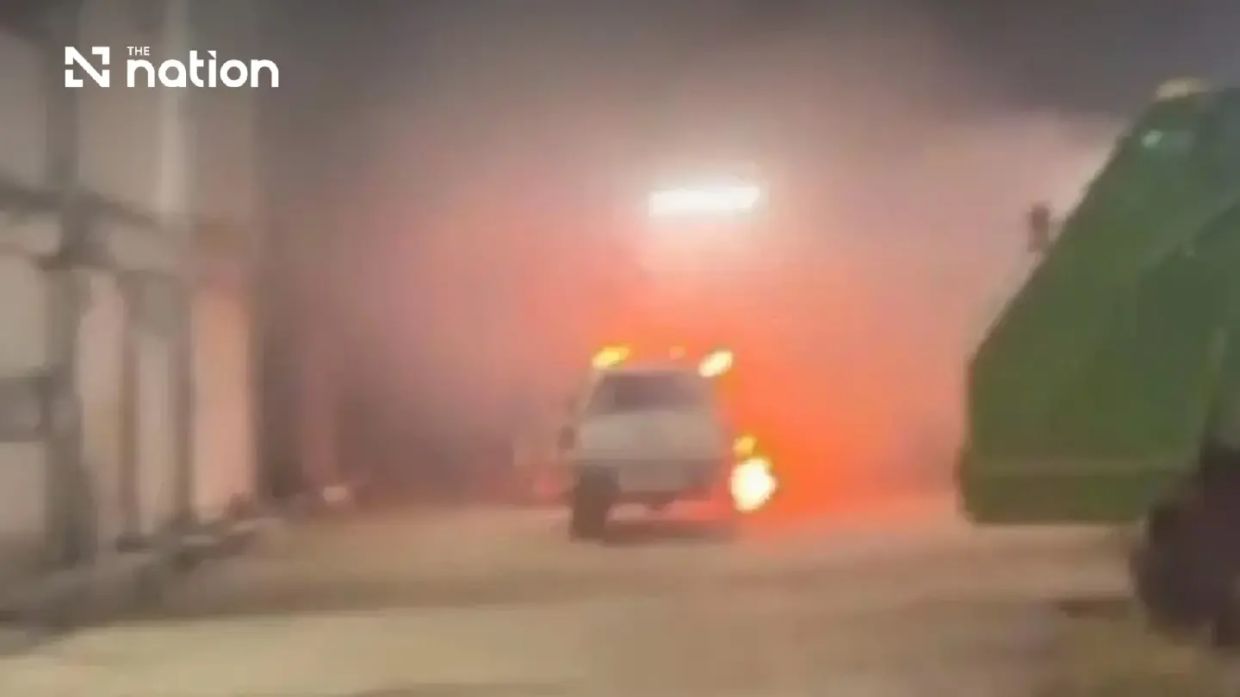
Military authorities in Thailand's southernmost Narathiwat province have imposed an emergency overnight curfew following a dramatic escalation in insurgent violence on Saturday evening, marking another concerning chapter in the long-running conflict affecting the country's troubled southern border region. The restriction on movement, enacted under the Martial Law Act of 1914, confined residents to their homes between 10:15 p.m. on Saturday and 6 a.m. on Sunday, representing a stark response to what security officials characterised as a coordinated campaign of destruction and intimidation.
Maj Gen Yodawut Phuengphak, who commands the Narathiwat Task Force, formally signed the emergency decree after multiple violent incidents unfolded simultaneously across the province. The decision invoked emergency powers granted under several sections of the 1914 Martial Law Act, granting military and police forces broad authority to conduct searches, restrict movement, and undertake tactical operations aimed at suppressing the insurgency and restoring order. Such declarations are not uncommon in Thailand's deep south, where separatist and militant groups have waged a decades-long campaign against state authority, but the breadth and apparent coordination of Saturday's attacks suggested a significant tactical shift.
The scale of the assault was considerable: authorities documented a total of 25 separate incidents distributed across three provinces, spanning 13 districts and 16 subdistricts. This geographical spread indicated that the violence was not concentrated in a single locality but rather represented a wider campaign designed to test security responses and demonstrate the insurgents' reach and organisational capability. The apparent simultaneity of these attacks—occurring within the same evening—implied a level of planning and coordination that has become increasingly apparent in recent years as militant factions have grown more sophisticated in their operational tactics.
The justification provided by military authorities emphasised protection of civilian lives and infrastructure, coupled with the necessity of preventing subsequent waves of violence. Officials stated that the curfew would enable security forces to establish effective control over movement and allow them to pursue those responsible for the attacks. Residents requiring essential movement during curfew hours were obliged to seek explicit permission from military personnel, police, subdistrict administrators, or village headmen, creating a system of approval that would theoretically allow authorities to track movement and identify suspicious activity.
One particularly brazen incident captured on video in Pattani province illustrated the brazen methodology employed by the assailants. The footage showed approximately three to four attackers approaching a 7-Eleven branch in Yaring district with military-style coordination. The gunman clad in white deliberately intimidated staff and customers, repeatedly shouting commands to evacuate while brandishing a firearm. His associates, dressed in black with obscured faces and armed with what appeared to be long guns, established a perimeter around the convenience store, systematically forcing terrified civilians to flee the premises. The gunman then discharged four shots into the air to amplify the psychological impact, after which the group systematically set the entire structure ablaze before retreating on pre-positioned motorcycles, leaving the building engulfed in flames.
This coordinated methodology—using intimidation, firepower, and arson in tandem—reveals how contemporary insurgent tactics have evolved beyond simple bombings. The deliberate targeting of commercial establishments, particularly international brands, carries both practical and symbolic significance. Such attacks damage the perception of safety in civilian spaces, undermine economic confidence in affected communities, and generate publicity for the militant cause. For Malaysia and other regional nations monitoring the situation, these tactics represent a concerning pattern that could potentially influence or inspire similar groups operating across Southeast Asia.
The Fourth Army Region and Narathiwat Task Force mobilised under the constitutional emergency provisions provided by martial law, granting them expansive authority beyond standard civilian law enforcement procedures. Military commanders were authorised to conduct warrantless searches, prohibit specific activities deemed threatening to public order, and exercise additional powers necessary to suppress the insurgency. Simultaneously, civilian administrators were directed to cooperate fully with military requests, effectively subordinating civilian governance structures to military operational requirements during the emergency period.
From a regional perspective, the escalation in southern Thailand's conflict carries implications for neighbouring Malaysia, particularly Kelantan and Terengganu, which share porous borders with the violence-affected areas. Cross-border movement of fighters, weapons, and supplies has historically characterised the insurgency, and periods of intensified violence often correlate with increased security concerns in adjacent Malaysian territories. Malaysian authorities typically coordinate closely with Thai counterparts during such episodes, implementing enhanced border monitoring and intelligence sharing.
The curfew represents a temporary measure rather than a permanent solution to the underlying grievances and political dynamics fuelling the insurgency. The southern Thai conflict, rooted in historical territorial disputes, cultural and religious identity issues, and governance concerns, has persisted through multiple phases of military crackdowns, peace negotiations, and ceasefire agreements spanning several decades. Emergency restrictions may suppress immediate violence through enhanced monitoring and restricted movement, but they do not address the fundamental political and social issues that continue to motivate armed resistance.
Security analysts have observed that the southern insurgency operates in cycles, with periods of intense violence alternating with relative quiet. Saturday's coordinated assault suggests that militant factions remain operationally capable and determined to maintain pressure on Thai authorities. The choice to strike multiple targets simultaneously demonstrates tactical sophistication and suggests adequate coordination mechanisms among what are often characterised as fragmented groups. This capability suggests that short-term military responses, while necessary for immediate public safety, will require complementary political and social engagement to achieve lasting stability.
The imposition of martial law curfews has become routine in Narathiwat and neighbouring Pattani and Yala provinces, where such measures have been implemented dozens of times over recent years. This normalisation of emergency restrictions raises questions about their long-term effectiveness and the possibility that repeated curfews may become counterproductive, generating civilian frustration and potentially driving recruitment for insurgent groups. International observers have occasionally expressed concern that prolonged emergency measures, while administratively convenient for maintaining order, may hinder the development of inclusive governance structures necessary for genuine conflict resolution.
The immediate response from authorities focused on tactical suppression and area control, with military forces pursuing those responsible for the attacks and security commanders promising enhanced vigilance. The coming days will likely see intensified checkpoints, patrols, and interrogations of suspects in affected districts. Intelligence gathering regarding the perpetrators' identities, organisational affiliations, and operational networks will proceed simultaneously, informing both immediate enforcement actions and longer-term strategic assessments of the insurgency's evolving capabilities and intentions.

