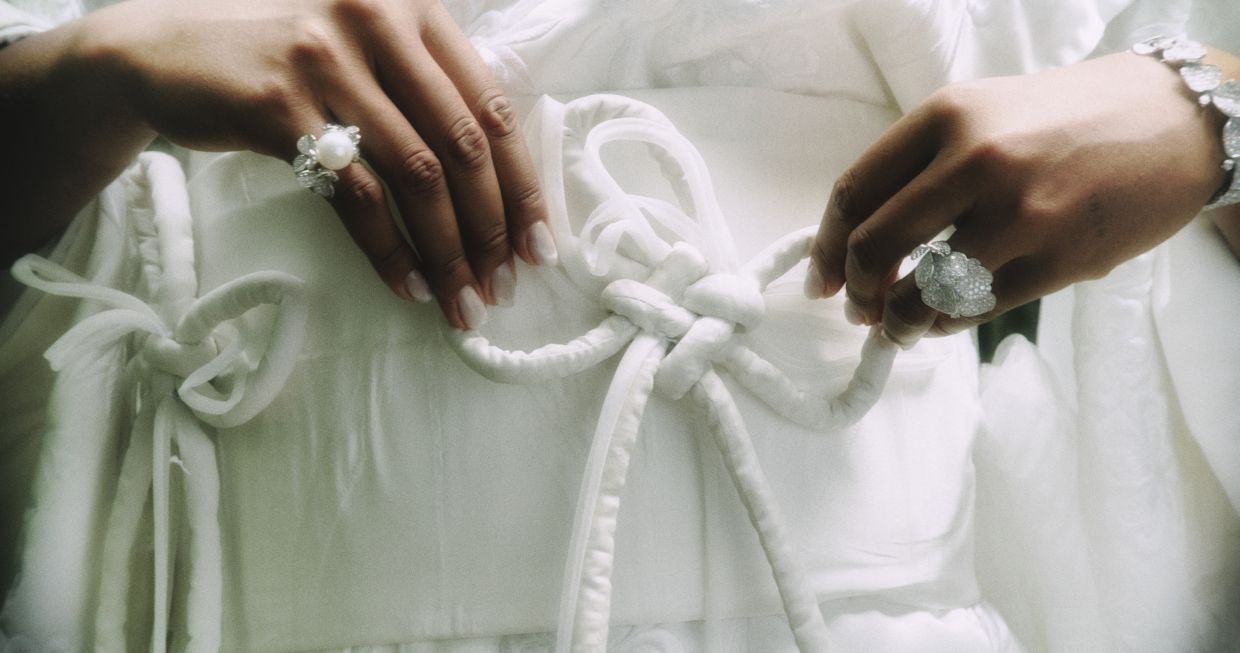
Naomi Osaka's arrival at Wimbledon on 29 June signalled yet another chapter in her ongoing reinvention of what an athlete's entrance can represent. The 14th-seeded player, despite managing a foot injury, graced Centre Court in an all-white ensemble by Hana Yagi, a Tokyo-based independent designer, that transcended typical sportswear to become wearable art. The piece, titled "Evolving Ceremony", drew inspiration from Japan's rich sartorial heritage, specifically the traditional kimono and the junihitoe, the elaborate twelve-layer dress worn by noblewomen during Japan's Heian period from 794 to 1185. This aesthetic choice represented far more than fashion—it was a deliberate cultural statement wrapped in contemporary design.
The construction of Osaka's Wimbledon gown exemplified an approach to sustainability increasingly rare in high-fashion spaces. Yagi sourced seven different textiles from vintage kimonos, traditional wedding garments, and deconstructed bridal wear, weaving historical pieces into a fresh design narrative. Beneath the dramatic outer layer sat a Nike performance dress adorned with Japanese kirigami-inspired floral appliques, micro-pleating, and a curved hem that referenced traditional paper-folding arts. Every element, from the Mikimoto pearls adorning her neck to the walk-on gown itself, reinforced a cohesive celebration of Japanese craftsmanship and contemporary vision. "Working with Hana allowed us to celebrate Japanese history and craftsmanship while creating something that feels entirely modern," Osaka explained, emphasizing the balance between heritage and innovation.
This Wimbledon entrance represents the culmination of a strategic fashion narrative that began at the Australian Open in January. That Melbourne moment introduced audiences to a Robert Wun jellyfish-inspired gown paired with a symbolic butterfly hat, visual metaphors for transformation and her identity as a young mother. The dress's outer layers were designed to be shed before competition commenced, establishing a template Osaka would refine throughout the season. At the French Open, she advanced this concept with a Kevin Germanier black corset and ballgown skirt, incorporating upcycled Nike materials and subtle references to the Eiffel Tower. When viewed as a trilogy, these three tournament appearances reveal a carefully orchestrated vision where Osaka uses the sport's most visible moments to communicate personal narratives and creative philosophy.
What distinguishes Osaka's approach from other fashion-forward athletes is her deliberate commitment to amplifying emerging designers and championing sustainable practices. While tennis has long featured athletes conscious of their sartorial presentation—Serena Williams pioneered using competition fashion to express personality, and Jannik Sinner leverages his role as a Gucci ambassador—Osaka operates on a different philosophical plane. Her stylist, Marty Harper, describes the strategy as giving "voices to new kids on the block," a commitment evident in partnering with Yagi, a designer still in her twenties who launched her Tokyo-based company after reaching the finals of Italy's International Talent Support competition in 2019. By providing such visibility to independent talent, Osaka transforms her tournament appearances into a platform for industry change.
The logistics underpinning Osaka's fashion moments demand meticulous engineering often invisible to television audiences. Each bespoke entrance gown must satisfy contradictory requirements: it must command attention from spectators in the stadium's highest rows whilst remaining removable within ninety seconds, the window available before play begins. Harper noted the brutal timeline: "We really only have three minutes to dress her, and she has less than one minute to undress" before match commencement. For the Wimbledon gown, Yagi conceived an ingenious solution by constructing the dress with nine detachable segments, each fastened with Velcro that allowed rapid disassembly while maintaining structural integrity throughout the entrance sequence. The dress includes an adjustable nearly ten-foot train calibrated for different court sizes, acknowledging that outer Wimbledon courts sit far enough from the players' lounge that full-length fabric could deteriorate during transit.
Yagi's statement about the design philosophy underscores the artistic ambition guiding these creations. "One of the key concepts was that the look would evolve as Naomi progresses," she explained, describing her experimental process ensuring the transformative visual moment felt organic rather than mechanical. This commitment to evolution extended beyond a single tournament, positioning the gown as a dynamic garment capable of recombination throughout Wimbledon's fortnight. The designer's willingness to problem-solve within severe practical constraints—creating couture-level work that functions as athletic wear—elevated the project beyond traditional fashion collaboration into specialized technical innovation.
Osaka's strategy reflects a broader recalibration of how elite athletes leverage competition moments for brand building and cultural influence. In contemporary professional sports, the tunnel walk has become as significant as on-court performance for generating social media engagement, press coverage, and cultural conversation. Osaka recognized early that this ceremonial moment offers distinct communicative possibilities unavailable during actual match play. By treating her entrances as a storytelling medium, she creates content that circulates independently from tournament results. Whether she advances or exits early, her sartorial choices dominate post-match conversation and sports journalism, ensuring visibility regardless of competitive outcome.
The choice to feature independent and emerging designers, rather than established luxury brands, carries additional strategic significance for Southeast Asian and Asian markets particularly. Osaka's visible support for designers like Yagi signals to younger creators across the region that global prominence remains achievable without corporate gatekeeping. For Malaysian and regional fashion professionals, watching Osaka's career trajectory demonstrates how athletes can reshape industry hierarchies by deliberately redirecting visibility toward underrepresented talent. This approach challenges the fashion establishment's traditional power structures, where major luxury conglomerates control athlete partnerships and media access.
Sustainability emerges as a critical undercurrent across Osaka's tournament appearances. Upcycling vintage kimonos, repurposing wedding garments, and incorporating recycled Nike materials into high-visibility gowns positions sustainability not as aesthetic afterthought but as creative requirement. This philosophy proves particularly resonant in Southeast Asia, where textile waste and fast fashion consumption accelerate environmental degradation. By demonstrating that elite sports fashion can incorporate sustainable practices without compromising visual impact or technical functionality, Osaka provides a template other athletes might emulate. Her choices suggest that competitive excellence and environmental responsibility need not exist in tension.
The personal dimension underlying these fashion moments deserves recognition. Osaka's references to transformation, motherhood, and cultural heritage through her gowns represent a departure from conventional athlete branding that typically emphasizes winning and dominance. By centering identity, family, and artistic expression, she expands discourse around what athletes can represent and how they might deploy their influence. The butterfly imagery from Melbourne, the Eiffel Tower nod at Roland Garros, and the Heian period references at Wimbledon collectively sketch a portrait of an athlete comfortable with vulnerability and introspection during sport's highest-stakes moments.
Beyond the immediate success of her entrance looks, Osaka's approach raises questions about the future of professional tennis presentation. As younger players observe the disproportionate media attention and cultural relevance generated by her tunnel walks, competitive pressure mounts to develop distinctive entrance strategies. This could evolve toward more ambitious, artistic, and culturally-grounded presentation across the sport. However, the financial and logistical barriers Osaka overcomes—custom couture construction, designer access, styling expertise, technical problem-solving—remain prohibitive for most competitors, potentially concentrating this type of innovation among the sport's highest earners.
Regardless of her Wimbledon tournament performance, Osaka has already secured what might be termed the "attention championship." Her pre-match entrances consistently generate more immediate conversation, social media activity, and critical analysis than many matches themselves. This represents a fundamental recalibration of how competitive athletes can influence cultural discourse. For observers across Malaysia and Southeast Asia, watching Osaka's strategic deployment of fashion, sustainability, and cultural representation provides both inspiration for what's possible and insight into how professional athletes increasingly shape industries beyond their primary competition.

