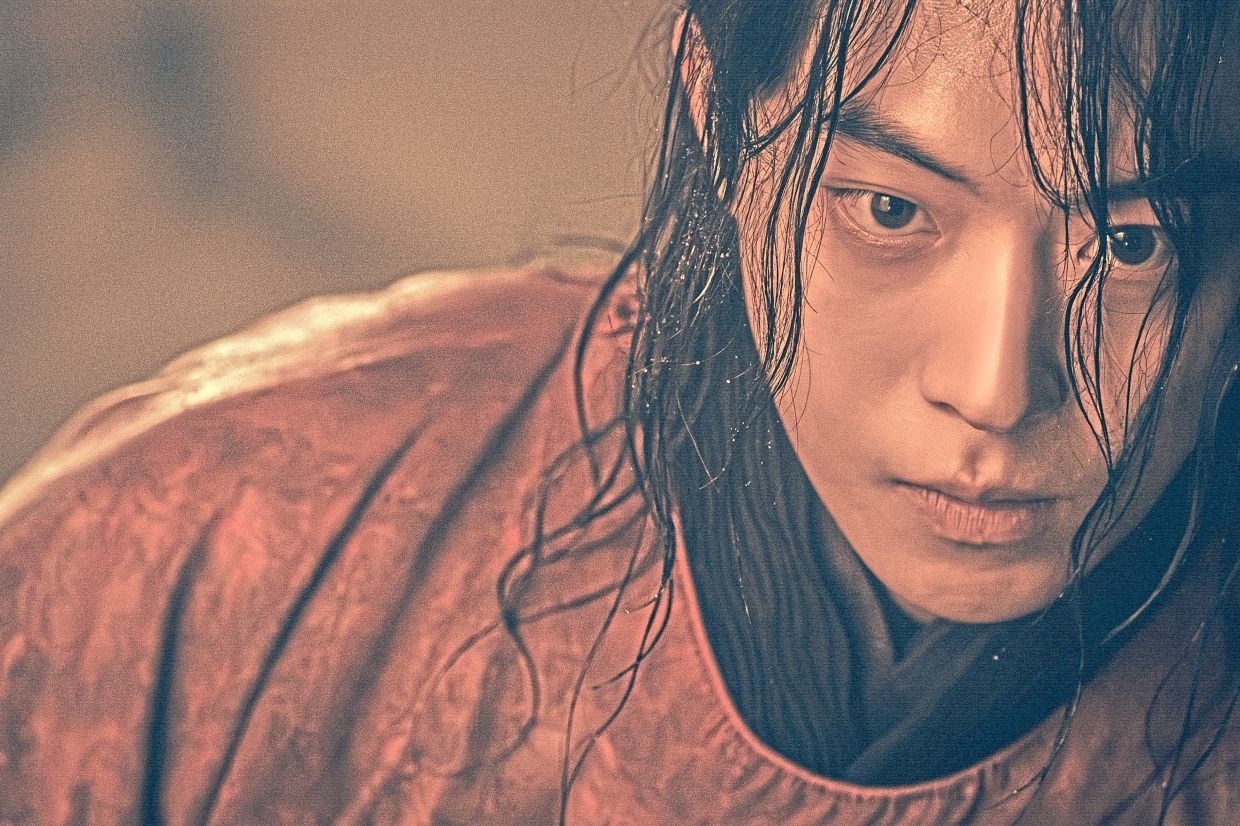
Actor Nam Joo-hyuk is stepping back into the spotlight with Netflix's latest period K-drama offering, 'The East Palace', a supernatural series that arrives as the streaming giant strengthens its summer programming across the region. The production represents a significant milestone for the South Korean actor, whose career trajectory faced considerable headwinds following bullying allegations that surfaced in June 2022—claims he consistently refuted as unfounded. The series marks his first major screen appearance since completing mandatory military service in September 2024, making it a closely watched test of audience reception and industry sentiment regarding his return to acting.
The narrative follows Gu-cheon, a character embodied by Nam, who possesses the extraordinary ability to navigate between the mortal world and the realm of spirits. Opposite him stands Roh Yoon-seo, whose character functions as a mysterious palace servant whose true identity remains central to the story's unfolding mystery. Their pairing is catalysed when a malevolent curse descends upon the royal palace itself, prompting the reigning King—portrayed by seasoned veteran Cho Seung-woo, known for acclaimed work in 'Stranger' and 'The King's Doctor'—to enlist the duo's services to break the supernatural affliction and restore order.
Director Choi Jung-kyu has positioned the series as an authentic celebration of Korean cultural heritage, deliberately weaving shamanistic traditions and folk mythology into the historical framework rather than imposing them artificially. In remarks at the production's press conference, Choi articulated a philosophy centred on narrative momentum and visual coherence, explaining that the traditional Korean elements would naturally emerge from the period setting itself. This approach reflects a broader trend in contemporary Korean television of grounding supernatural narratives in culturally specific spiritual systems, lending them credibility and depth that resonates particularly with domestic and diaspora audiences familiar with these traditions.
The production's visual vocabulary emphasises the splendour of classical Korean palace architecture and historically accurate costume design, creating an immersive historical tableau. Yet realising the series' supernatural dimensions demanded substantial investment in visual effects workflows, with Choi acknowledging the particular challenges this posed for the cast. The actors frequently performed opposite digitally rendered entities and characters that existed only in post-production compositing, requiring considerable imaginative discipline during principal photography. The director credited his post-production team with meticulous refinement of these sequences to ensure the folklore elements translated clearly and cohesively for the international viewership that Netflix's platform attracts.
Choosing to highlight Korean aesthetic principles in the visual design became a deliberate curatorial decision, given the narrative's deep roots in the nation's traditional cultural lexicon. Choi emphasised that significant effort was devoted to post-production to ensure narrative clarity whilst simultaneously capturing the distinctive visual language of Korean heritage arts. This technical sophistication extends beyond mere spectacle; it serves the storytelling by authentically presenting spiritual and supernatural phenomena through an explicitly Korean cultural lens, distinguishing the work from Western genre conventions that increasingly dominate streaming platforms.
Cho Seung-woo, the senior ensemble member, illuminated the series' thematic architecture by identifying a recurring visual motif that operates as a metaphorical anchor for the entire narrative. He referenced a pond that appears throughout the season as a surface of apparent tranquility concealing profound underlying turbulence—a visual metaphor for the masked tensions and hidden histories permeating the palace itself. Cho suggested that viewers attuned to this recurring image would develop richer interpretative frameworks for understanding character motivations and story developments, inviting active engagement rather than passive consumption. Such deliberate symbolic construction indicates a production cognisant of how streaming audiences increasingly seek layered narratives rewarding sustained attention.
For Nam specifically, the series carries substantial professional and personal significance beyond its entertainment value. The actor acknowledged the weighty responsibility he felt toward the production throughout filming, expressing determination to contribute meaningfully rather than become a liability for the ensemble. He revealed that he first encountered the script whilst fulfilling his military obligation, and the imaginative freedom afforded by military service paradoxically enabled him to envision the role authentically. This narrative of reflection during service—a nearly universal Korean male experience—provides emotional resonance to his return, suggesting personal growth and artistic maturation rather than mere career resumption.
The 2024 resolution of his bullying allegations strengthens his position for comeback consideration: two individuals identified as primary sources of the rumours were convicted of criminal defamation for fabricating and disseminating false allegations. This legal vindication, though arriving after considerable reputational damage, technically clarifies Nam's innocence in the public record. Whether audiences are prepared to move beyond the controversy remains an open question, particularly given ongoing sensitivity toward such allegations within Korean society. His casting in a major Netflix production suggests significant institutional confidence in his rehabilitation, though ratings and reception metrics will ultimately determine whether the comeback succeeds commercially.
The East Palace arrives amid intensifying competition within the Korean content space, where streaming platforms vie aggressively for subscriber attention through prestigious period dramas. Netflix's strategic positioning of the series as a summer anchor indicates confidence in both its production quality and Nam's audience appeal. For Malaysian viewers and broader Southeast Asian audiences, the series offers the familiar pleasures of Korean historical drama alongside supernatural elements that translate across cultural boundaries. The show's thematic exploration of duty, supernatural intervention in human affairs, and palace intrigue resonates across the region's own rich traditions of folklore and historical narrative.
The production also reflects contemporary trends in Korean television's internationalisation, where shows deliberately incorporate visual and narrative elements designed for global consumption whilst maintaining cultural authenticity. As Korean content becomes increasingly central to Southeast Asian entertainment consumption—particularly following the region's enthusiastic embrace of K-drama as a cultural phenomenon—productions like 'The East Palace' serve as cultural ambassadors. Nam's comeback thus carries implications extending beyond his individual career trajectory, representing a moment when Korean television navigates the complexities of casting decisions involving controversial figures whilst maintaining audience trust and institutional integrity.
Streamers across the region face persistent challenges in balancing commercial logic with audience expectations regarding moral accountability and public conduct. Nam's return signals Netflix's calculation that sufficient time has elapsed and legal vindication accumulated to warrant his re-entry into prominent roles. This gambit will undoubtedly attract critical scrutiny from viewers holding varying perspectives on appropriate consequences for controversial allegations, regardless of their ultimate adjudication. The series' success will therefore depend partly on the quality of its storytelling and production craft—areas where the creative team's evident investment and sophistication appear substantial.

