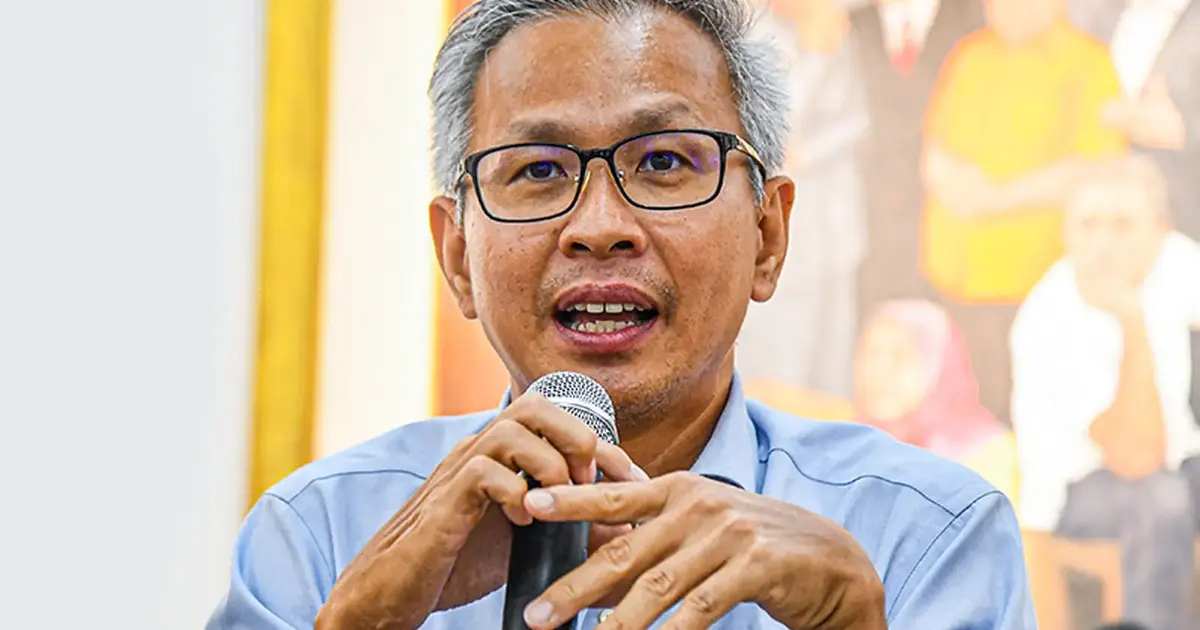
The civil case against former Prime Minister Najib Razak took a procedural turn as his counsel raised substantial objections to the testimony being offered by Democratic Action Party politician Tony Pua, who has emerged as a vocal critic of the 1Malaysia Development Berhad scandal. Representing Najib, senior lawyer Muhammad Shafee Abdullah contended that considerable segments of Pua's witness statement should be deemed inadmissible, setting the stage for a potentially protracted legal battle over what evidence the court should consider.
Pua, a long-time observer and commentator on the 1MDB affair since its initial emergence in 2015, has positioned himself as a key figure in documenting the controversial sovereign wealth fund's financial irregularities. His involvement stems from his tenure as an opposition legislator who consistently questioned the fund's governance and the movement of billions in government money. The challenge to his testimony reflects the broader adversarial dynamics now playing out in the civil courts, where the factual foundations of the 1MDB scandal continue to be contested despite multiple criminal convictions and international investigations.
Shafee's objections centre on the evidentiary standards that govern witness statements in Malaysian civil proceedings. The legal doctrine requires that witnesses testify to matters within their personal knowledge rather than hearsay, speculation, or conclusions they have drawn from documents and media reports. By targeting large portions of Pua's statement, Najib's counsel is essentially arguing that significant components rest on inadmissible bases—potentially including statements made by others, analysis of documents Pua did not create, and inferences rather than direct observation. This procedural manoeuvre is common in complex commercial litigation but carries particular weight in a high-profile case where public perception and credibility are intertwined with legal substance.
The timing of these objections is significant within the broader 1MDB narrative. While criminal prosecutions have concluded with guilty verdicts for various individuals connected to the fund, the civil litigation represents a parallel track where the government seeks recovery of misappropriated assets. Pua's role as a witness bridges the political and legal dimensions of the scandal—he possesses knowledge of how the 1MDB controversy evolved publicly, what investigations revealed, and how Malaysia's financial system was manipulated, yet much of his potential testimony may derive from secondary sources rather than direct involvement in events.
The objections raise fundamental questions about how courts should weigh evidence from politically engaged witnesses who have made careers partly around accountability for 1MDB. While Pua's documentary scrutiny and public advocacy have contributed valuable scrutiny of the fund's operations, translating that analysis into admissible courtroom testimony requires demonstrating a proper evidentiary foundation. Shafee's challenge thus reflects a legitimate legal principle: that even well-founded criticisms must meet formal standards if they are to influence judicial findings of fact.
This development also highlights the distinction between the criminal and civil domains. Criminal prosecutions, which have already secured multiple convictions, operated under different burdens of proof and evidentiary rules. Civil cases, by contrast, often involve broader documentary discovery but stricter scrutiny of expert opinions and hearsay. Should the court sustain Shafee's objections substantially, it could narrow the range of material available to support claims against Najib, potentially complicating efforts to establish liability and quantify damages in civil proceedings.
For Malaysian observers following the 1MDB saga, the procedural complexity underscores how legal accountability operates differently from public perception. The scandal's full narrative—how billions flowed through shell companies, how Goldman Sachs facilitated bond sales, how properties and assets were acquired—has been documented extensively through media investigations, official inquiries, and criminal trials. Yet translating that narrative into civil court findings requires witnesses to meet formal legal standards that may exclude large swaths of circumstantial or analytical material.
The broader context involves international dimensions as well. Other jurisdictions, including Singapore, the United States, and Switzerland, have pursued related civil and criminal cases involving 1MDB funds. Pua's potential testimony touches on matters that have received significant attention from foreign authorities and investigators. How Malaysian courts handle his evidence may have ripple effects for coordinated international efforts to recover stolen assets and establish clear accountability trails.
Shafee's manoeuvre also reflects the typical defence strategy in civil litigation against a politically prominent defendant. By challenging the evidentiary basis of key testimony early in proceedings, the defence can significantly weaken the plaintiff's case or force more careful substantiation of claims. Whether the court accepts these objections will depend on how the judge evaluates Pua's knowledge, the sources underlying specific statements, and the distinction between admissible facts and inadmissible opinion or hearsay.
For the government seeking to recover 1MDB assets through civil action, sustaining a case will require witnesses whose testimony meets stringent legal standards. Pua's exclusion or limitation could necessitate reliance on additional witnesses, particularly those with direct involvement in financial transactions or government decision-making. This may involve officials from the Ministry of Finance, Bank Negara Malaysia, or law enforcement agencies who can testify from personal involvement rather than analysis.
The unfolding legal proceedings demonstrate that while criminal justice has produced verdicts, civil remedies for asset recovery remain complex and procedurally challenging. Even witnesses with comprehensive knowledge of the scandal must navigate evidentiary rules that distinguish between what they directly know and what they have pieced together from other sources. As the 1MDB saga continues through various legal forums, these technical but consequential disputes over admissibility will shape what facts courts ultimately recognize and how liability is established.

