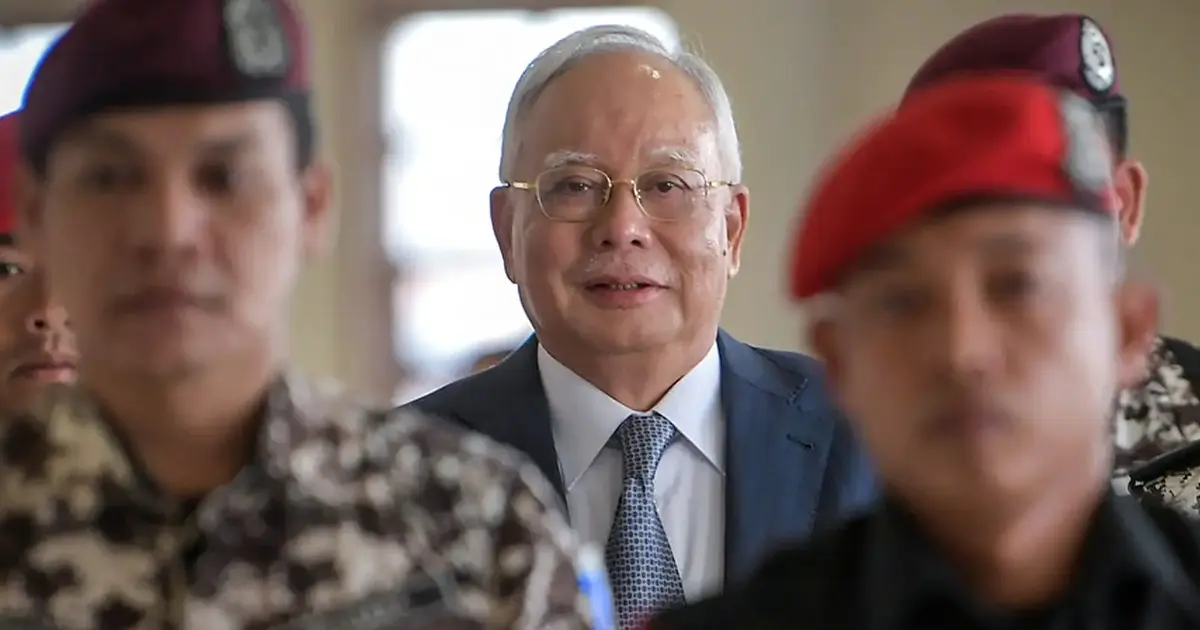
Former Prime Minister Najib Razak will make a personal appearance at a Court of Appeal hearing involving a significant legal challenge to Malaysia's royal pardons process. The appellate court has granted permission for him to attend the proceedings following an ex parte application filed on his behalf. The hearing centres on the Bar Council's legal challenge to a decision made by the Board of Pardons, a matter that carries implications for Malaysia's judicial independence and the treatment of high-profile political figures within the legal system.
The Bar Council's involvement in this case reflects broader concerns within Malaysia's legal fraternity about the transparency and scope of the royal prerogative of mercy. As the organised voice of Malaysian lawyers, the council has positioned itself as a custodian of constitutional principles, seeking judicial review of the pardons board's actions. This type of challenge is relatively uncommon in Malaysian legal proceedings, as the prerogative of mercy traditionally carries significant discretionary weight. The decision to mount such a challenge indicates the Bar Council's view that important principles of law and public interest were at stake in the original pardons decision.
The ex parte application procedure used to grant Najib's permission to attend is a standard legal mechanism allowing one party to approach the court without the opposing side present. In this instance, it enabled the former prime minister's legal team to request attendance without the Bar Council's immediate input. The fact that the Court of Appeal approved this application suggests the judiciary recognised legitimate grounds for his presence at a hearing that directly affects his legal standing and interests. Such permissions are typically granted when the applicant can demonstrate a material interest in the proceedings that warrants their participation.
Najib's legal battles have dominated Malaysian headlines and shaped public discourse around governance and accountability for several years. His previous convictions and subsequent legal interventions have made him a central figure in debates about the rule of law, political redemption, and the exercise of royal prerogative. His personal attendance at this hearing signals the gravity he and his legal advisers place on the outcome, and may also carry symbolic weight in reinforcing his engagement with the formal justice system despite his contentious public standing.
The pardons board's original decision has proven controversial, with the Bar Council's challenge reflecting scepticism among sections of the legal community about how the discretionary power was exercised. The judicial review process now underway will require the appellate court to examine whether the board acted within its constitutional mandate, considered relevant factors, and avoided arbitrary decision-making. For Malaysian legal observers, the hearing represents a potential landmark moment in defining the boundaries of royal prerogative and the courts' capacity to scrutinise executive decisions in this sensitive domain.
The court's willingness to hear the Bar Council's challenge at all demonstrates that Malaysian courts retain the capacity to review pardons decisions when proper legal grounds are established. This stands in contrast to some jurisdictions where the prerogative of mercy is viewed as completely beyond judicial review. The appellate hearing therefore serves as an important test of Malaysia's commitment to constitutional governance and the principle that even discretionary powers operate within legal limits.
For Southeast Asian observers monitoring Malaysia's judicial independence, this case provides insights into how the region's courts balance respect for constitutional traditions with the imperative to maintain rule of law. The hearing's outcome may influence how other jurisdictions within ASEAN approach similar constitutional questions about executive discretion and judicial review. Malaysia's approach to these foundational questions continues to shape regional discussions about balancing strong executive authority with meaningful legal safeguards.
The legal teams involved in this case face the technical challenge of establishing what grounds warrant judicial intervention in pardons decisions without fundamentally undermining the institution itself. This requires distinguishing between decisions that represent legitimate exercises of discretion and those that may cross into unreasonableness or procedural impropriety. The court's judgment will necessarily draw these lines, establishing precedent for how similar challenges may be handled in future cases.
Najib's attendance at the hearing represents more than a procedural formality; it underscores the personal stakes he holds in Malaysia's ongoing legal evolution. As courts increasingly subject executive decisions to structured review, former leaders and public figures navigate the intersection of political consequence and legal remedies. His presence at the appellate bench will likely attract public and media attention, maintaining public awareness of how the judicial system processes cases of national significance and political sensitivity.
The broader implications of this hearing extend to questions about Malaysian society's capacity for reconciliation and institutional reform. Whether through legal processes, pardons decisions, or appellate reviews, the nation continues to work through complex questions about accountability, mercy, and political rehabilitation. The Court of Appeal's examination of the Bar Council's challenge will contribute to how these questions ultimately find resolution within Malaysia's constitutional framework.

