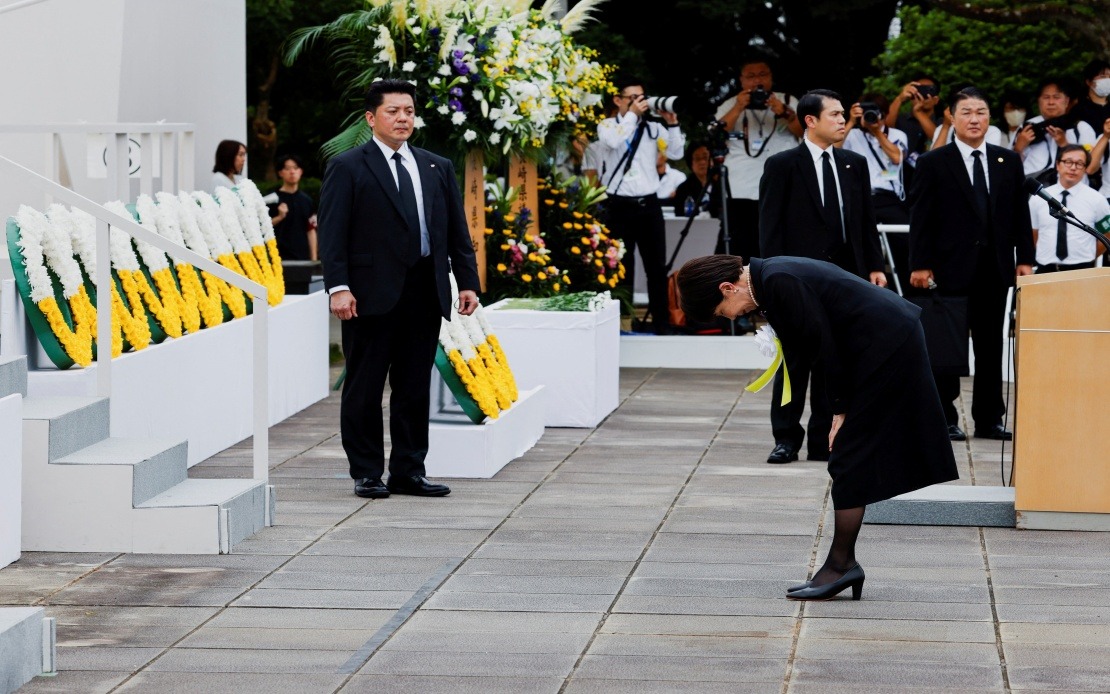
Nagasaki observed the 81st anniversary of the atomic bombing that devastated the southwestern Japanese city on Sunday, an occasion that underscored the profound human toll of nuclear warfare while contemporary global tensions have reignited fundamental questions about weapons arsenals and international security frameworks. The commemoration took place against a backdrop of escalating geopolitical complications and renewed discussion among Japanese political circles about whether traditional pacifist policies remain appropriate in today's strategic environment.
The official ceremony occurred at 11.02 a.m., marking the precise moment when the "Fat Man" plutonium device detonated over Nagasaki on August 9, 1945, three days following the destruction of Hiroshima. This timestamp holds particular significance as it marks the last instance in human history where nuclear weapons were employed in active conflict. The assembled crowd observed a moment of silence to honour the victims and survivors of that catastrophic event.
During the commemorative proceedings, Mayor Shiro Suzuki delivered remarks emphasizing that coexistence between humanity and nuclear weapons remains fundamentally incompatible. His message reflected longstanding Japanese pacifist sentiments rooted in the nation's post-war constitution. Suzuki called upon international leaders to pursue substantive progress toward nuclear disarmament rather than expanding arsenals or developing new weapons systems. Prime Minister Sanae Takaichi similarly participated in the ceremony, reiterating her administration's commitment to established policy frameworks governing nuclear weapons.
The United Nations Secretary-General Antonio Guterres transmitted a statement that was read during the proceedings, signalling international attention to the commemoration and the broader disarmament agenda. This gesture underscored how deeply the atomic bombings of 1945 continue resonating within global consciousness and multilateral institutions. The UN's continued engagement with these anniversaries reflects an implicit acknowledgment that Nagasaki and Hiroshima represent watershed moments in human civilization's relationship with destructive capability.
The destructive capacity unleashed upon Nagasaki defies comprehension even in historical retrospect. Approximately 74,000 residents perished by year's end 1945, with countless others enduring lifelong health complications stemming from radiation exposure and thermal injuries. The blast and its aftermath constituted one of history's most concentrated human tragedies, fundamentally altering how societies understand warfare's potential consequences. These figures provide context for understanding why Japanese public opinion has historically maintained strong opposition to nuclear weapons, even as strategic circumstances have evolved.
Japan's current nuclear policy rests upon three foundational nonnuclear principles: the nation neither produces, possesses, nor permits nuclear weapons on its territory. Following Thursday's Hiroshima commemoration, Prime Minister Takaichi explicitly confirmed that her government remains committed to upholding these principles despite mounting pressure from certain political quarters questioning their continued relevance. This reaffirmation proves significant given recent strategic developments in Northeast Asia and ongoing debates within Japan's defense establishment about appropriate responses to security challenges.
The international nonproliferation framework has faced considerable strain in recent years. The Nuclear Non-Proliferation Treaty review conference, convened biennially in principle, concluded in May without achieving consensus following an extensive monthlong session in New York. This represented the third consecutive review conference unable to produce a unified outcome, indicating deepening fractures within the international consensus supporting nonproliferation architecture. Such divisions complicate efforts to prevent weapons proliferation while simultaneously addressing concerns raised by nations viewing nuclear deterrence as essential to their security.
For Southeast Asian observers, these developments carry particular implications given regional dynamics and the role major powers play in broader strategic calculations. Japan's steadfast commitment to nonnuclear principles despite external pressures demonstrates how institutional frameworks and historical consciousness can shape policy trajectories even amid shifting geopolitical conditions. Malaysia and other Association of Southeast Asian Nations members have consistently supported nonproliferation objectives and nuclear-weapon-free zone concepts, positioning them as stakeholders in whether international norms constraining nuclear weapons ultimately strengthen or weaken.
The aging hibakusha population—survivors of the atomic bombings—represents a diminishing but irreplaceable historical resource. The officially recognized survivor population now averages 86 years of age, creating urgency around preserving and transmitting firsthand accounts of nuclear warfare's human dimensions. These survivors and supporting organizations undertake deliberate efforts ensuring that subsequent generations comprehend not merely historical facts but visceral realities of atomic warfare's consequences. Their testimonies constitute powerful counterweights to abstract strategic arguments sometimes dominating policy discussions.
Japan's surrender arrived six days after Nagasaki's destruction on August 15, 1945, concluding the Pacific War and establishing conditions for Japan's subsequent pacifist orientation. This historical trajectory—from devastating nuclear strikes to constitutional renunciation of military force—has profoundly shaped Japanese identity and policy preferences across subsequent decades. Contemporary political debates about revising elements of this framework prove contentious precisely because they challenge foundational post-war assumptions about national identity and international responsibility.
The persistence of nuclear weapons in multiple nations' arsenals despite eight decades of demonstrated destructive capacity raises uncomfortable questions about humanity's capacity for restraint and learning from catastrophe. Japan's commemoration ceremonies annually confront these tensions between historical memory and contemporary security calculations. For Malaysia and other nations without nuclear weapons, the Nagasaki anniversary serves as periodic reminder that nonproliferation commitments require constant political reinforcement as strategic circumstances change and new technologies emerge.

