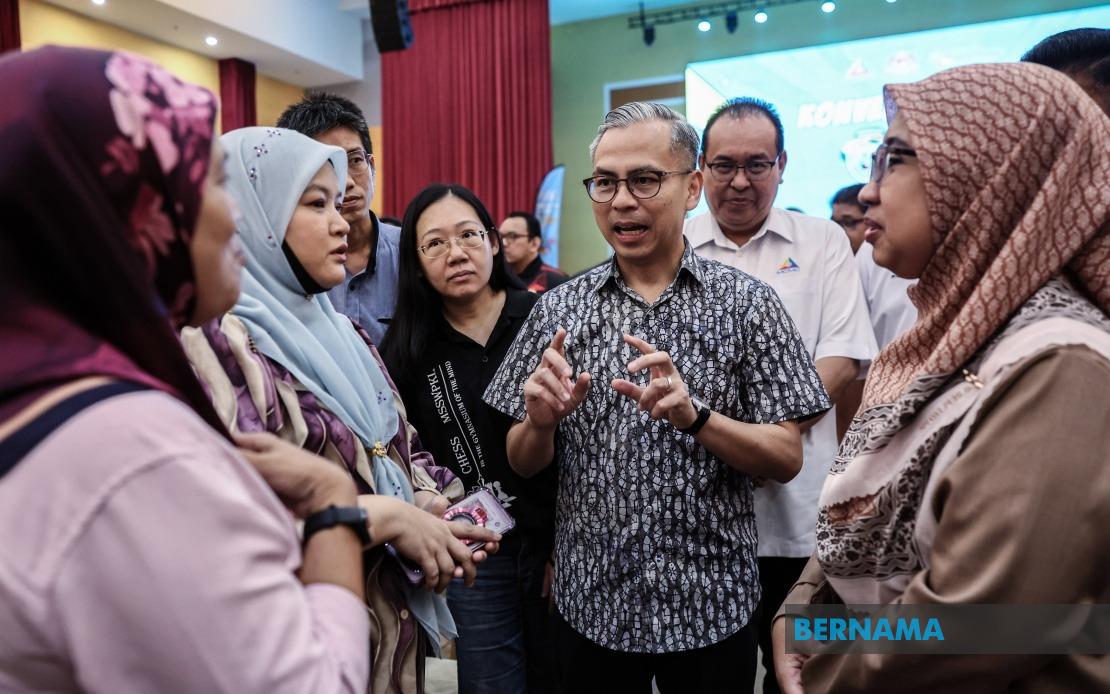
The government's MyKhas allocation serves the residents and voters within parliamentary constituencies rather than functioning as a personal entitlement scheme for Members of Parliament, according to Communications Minister Datuk Seri Fahmi Fadzil. Speaking at a press conference in Kuala Lumpur on August 8, the PKR Information Chief underscored that the fund operates strictly under the Prime Minister's authority and is deployed exclusively to address the welfare needs of local communities across Malaysia.
Fahmi's statement reinforces the government's position that public allocations represent a collective responsibility toward constituents rather than individual privileges for elected officials. He noted that even he, as a senior government figure, cannot access MyKhas for personal use. This clarification comes as the MADANI administration continues to emphasise that all government funding mechanisms prioritise the wellbeing of ordinary Malaysians over the interests of political representatives.
The allocation framework has been formally enshrined within the Malaysia Plan and national Budget documents, designating MyKhas as a special provision that falls directly under the Prime Minister's oversight. This institutional embedding ensures that disbursement decisions remain centralised rather than distributed among individual MPs, creating a standardised approach to constituency-level spending across the country. By formalising the mechanism through official government planning documents, the administration has sought to prevent misuse and ensure transparent allocation procedures.
Prime Minister Datuk Seri Anwar Ibrahim previously reiterated that government resources channeled to parliamentary constituencies serve the collective interest of residents and do not constitute the exclusive right of any elected representative. This principle reflects a broader philosophical stance within the current administration regarding the relationship between government funding and elected officials. The PM indicated that such funds can be directed toward essential infrastructure and community facilities, including schools, religious institutions, mosques, and drainage systems that benefit entire constituencies.
The distinction between constituency development funds and personal parliamentary allowances addresses longstanding concerns about potential misuse of public resources by elected officials. By positioning MyKhas as a community-focused mechanism rather than a personal benefit scheme, the government attempts to rebuild public confidence in how taxpayer money is allocated and spent. This approach acknowledges growing scrutiny of political expenditure and responds to demands for greater accountability in how development funds reach ordinary Malaysians.
For constituencies governed by opposition parties, the government has established a parallel application process through the Implementation Coordination Unit under the Prime Minister's Department. This mechanism ensures that opposition-held areas can still access MyKhas allocations, thereby preventing the fund from becoming a tool for political patronage or exclusion based on electoral outcomes. The existence of such administrative channels demonstrates an attempt to maintain the fund's developmental purpose across the entire nation, irrespective of local political allegiances.
The MyKhas framework represents a significant shift in how Malaysian governments conceptualise the relationship between parliamentary representation and public spending. Rather than treating constituency allocations as instruments through which individual MPs maintain political influence or personal authority, the formalised system emphasises collective responsibility and transparent distribution mechanisms. This approach aligns with broader international trends toward performance-based budgeting and accountability-driven governance frameworks.
For Malaysian voters and residents, the clarification carries practical implications regarding how development resources reach their communities. By centralising decision-making authority within the Prime Minister's office, the system theoretically insulates funding allocation from localised political patronage networks. However, the effectiveness of such arrangements depends heavily on the political will of those administering the fund and the robustness of oversight mechanisms designed to monitor disbursement.
The government's emphasis on constituency welfare as the primary purpose of MyKhas also reflects contemporary political pressures to demonstrate tangible benefits to voters. Rising expectations for infrastructure development, service improvement, and quality-of-life enhancements mean that modern governments must articulate clear pathways through which taxpayer contributions translate into visible community benefits. MyKhas, in this context, functions as both a policy tool and a political communication strategy.
Understanding the MyKhas mechanism proves essential for Malaysian citizens seeking to access government support for local development projects. Residents in opposition-held constituencies should be aware that funding remains accessible through formal application procedures, dispelling any perception that electoral politics determines eligibility. Similarly, supporters in government-held areas should recognise that resource allocation follows transparent criteria rather than reflecting personal relationships with their MPs.
The formalisation of MyKhas within official planning documents also carries implications for governmental continuity and consistency. By embedding the mechanism within the Malaysia Plan, successive administrations inherit an established framework for distributing constituency-level resources. This institutionalisation reduces the risk of ad-hoc policy changes based on shifting political priorities or individual leadership preferences, thereby providing greater predictability for local authorities and community organisations planning development initiatives.

