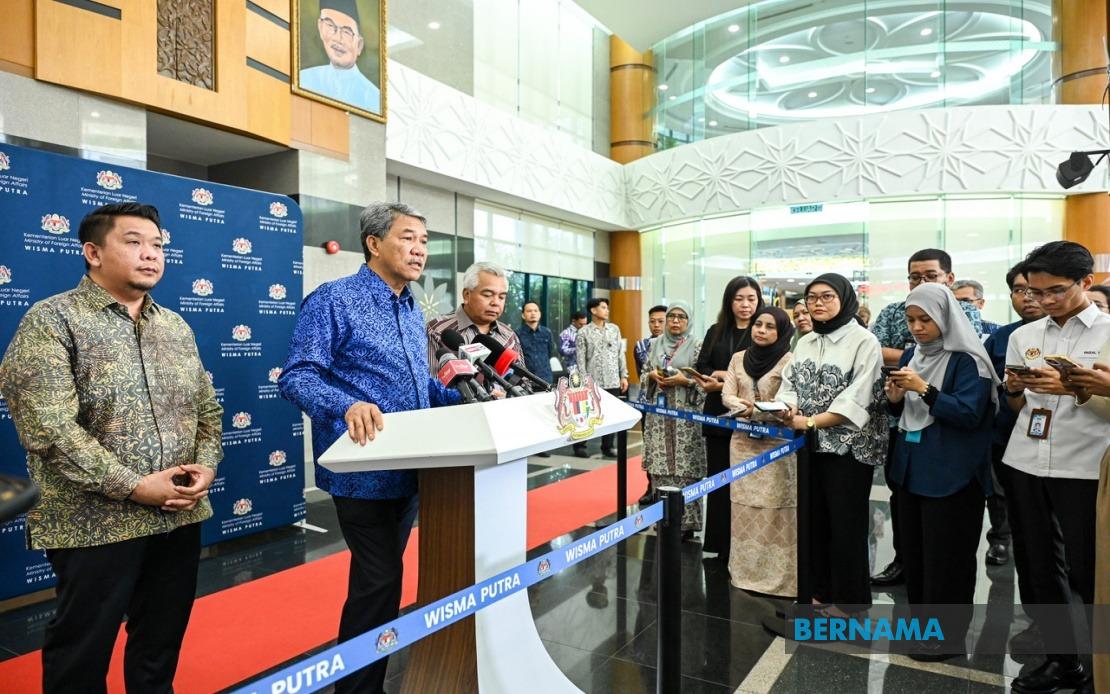
Malaysia's Foreign Minister Datuk Seri Mohamad Hasan has confirmed that Myanmar has signalled its readiness to undertake a large-scale maritime repatriation programme involving 5,000 of its nationals currently sheltering in the region. The announcement, made during remarks at the 59th ASEAN Day celebration in Putrajaya on Monday, represents a potentially significant development in addressing the protracted refugee crisis that has strained Malaysia's resources and tested regional solidarity over recent years.
During his recent bilateral engagement with Myanmar's newly appointed Foreign Minister Tin Maung Swe, Mohamad conveyed that the Myanmar administration has pledged to facilitate the transportation of these individuals back home via maritime routes. However, the Foreign Minister underscored that any such operation must prioritise the wellbeing and security of those involved, indicating that Malaysia will not compromise on humanitarian standards simply to expedite departures. This cautionary stance reflects international best practices regarding forced displacement and acknowledges the vulnerabilities of sea-based movements, particularly when undertaken under pressure or with inadequate safeguards.
The identification and documentation of the 5,000 individuals targeted for repatriation has already been completed by Malaysian authorities, suggesting that preparatory groundwork for the operation has advanced beyond preliminary discussions. Mohamad noted that whilst no concrete timetable has been established, there is mutual agreement that acceleration of the repatriation timeline is desirable. This represents a delicate balance between addressing Malaysia's burden as a host nation and ensuring that haste does not compromise the rights and safety of vulnerable populations.
An important contextual element that Mohamad emphasised is the misconception that Myanmar's refugee crisis involves solely the Rohingya community. The Malaysian Foreign Minister pointed out that diverse ethnic minorities—notably the Chin and Karen populations—have similarly fled persecution and conflict, yet receive considerably less international attention and advocacy. This broadening of the narrative is significant for Southeast Asian audiences, as it demonstrates that the humanitarian challenge extends far beyond singular ethnic or religious narratives and encompasses multiple overlapping displacement crises requiring nuanced, differentiated responses.
The repatriation programme also reflects ASEAN's collective commitment to addressing the Myanmar crisis, though the regional bloc's approach has drawn criticism from human rights organisations concerned about the safety conditions awaiting returnees. Mohamad indicated that the issue is being treated as a matter of regional concern requiring coordinated action among member states rather than bilateral problem-solving. This multilateral framing aligns with ASEAN's preference for consensus-based diplomacy, though it also highlights the bloc's constraints in compelling substantive changes within Myanmar itself.
Central to ASEAN's strategic approach is the Five-Point Consensus (5PC), a framework endorsed in 2021 following Myanmar's military coup. This agreement emphasises dialogue, humanitarian assistance, and cessation of violence, though its practical implementation has been questioned as fighting has intensified in various regions. Mohamad reiterated that the 5PC must remain the cornerstone of ASEAN's Myanmar policy, arguing that any modifications require formal return to ASEAN summit negotiations rather than unilateral adjustments by individual governments or secretariat bodies.
For Malaysia specifically, successful repatriation of these 5,000 individuals would represent meaningful progress in reducing the refugee population that has accumulated over years of regional instability. Malaysia currently hosts one of the world's largest refugee populations, with Rohingya and other Myanmar nationals comprising significant segments. The economic and social pressures of accommodating such numbers have intensified domestic political sensitivities, making repatriation an priority policy objective for successive Malaysian administrations regardless of political complexion.
However, fundamental questions persist regarding conditions awaiting returnees in Myanmar. While the repatriation discussions focus on logistics and timelines, critics argue that insufficient attention is being paid to post-arrival protection mechanisms, resettlement support, and security guarantees for individuals from communities targeted by the military regime. The shipping operation itself raises practical concerns about vessel capacity, duration of passage, onboard conditions, and coordinated port reception arrangements—details that remain conspicuously absent from current announcements.
The Mohamad-Tin Maung Swe meeting also signals Myanmar's recognition that continued refugee outflow damages its international standing and creates diplomatic friction with neighbouring states bearing the repatriation burden. By offering sea-based repatriation, Myanmar's military leadership may be attempting to address regional grievances whilst simultaneously managing domestic narratives around national sovereignty and territorial integrity. From Naypyidaw's perspective, facilitating returns demonstrates responsiveness to international pressure without necessarily addressing the underlying drivers of displacement.
For Malaysia and the broader Southeast Asian region, the credibility of this repatriation initiative will ultimately depend on transparent monitoring, independent verification of returnee welfare, and sustained diplomatic engagement. ASEAN's Myanmar engagement strategy, whilst diplomatically respectful of state sovereignty, must be accompanied by robust accountability mechanisms ensuring that repatriation programmes do not inadvertently compound existing vulnerabilities or facilitate forced returns to unstable environments.
The pathway forward requires Malaysia and other frontline states to maintain principled positions on refugee protection standards whilst working pragmatically with Myanmar authorities to achieve orderly, humane repatriation. Success will be measured not merely by the number of individuals transported but by their successful reintegration, security, and access to livelihoods in their home communities. Until such assurances materialise, the shipping programme remains a procedurally important but substantively incomplete solution to Myanmar's deepening humanitarian catastrophe.

