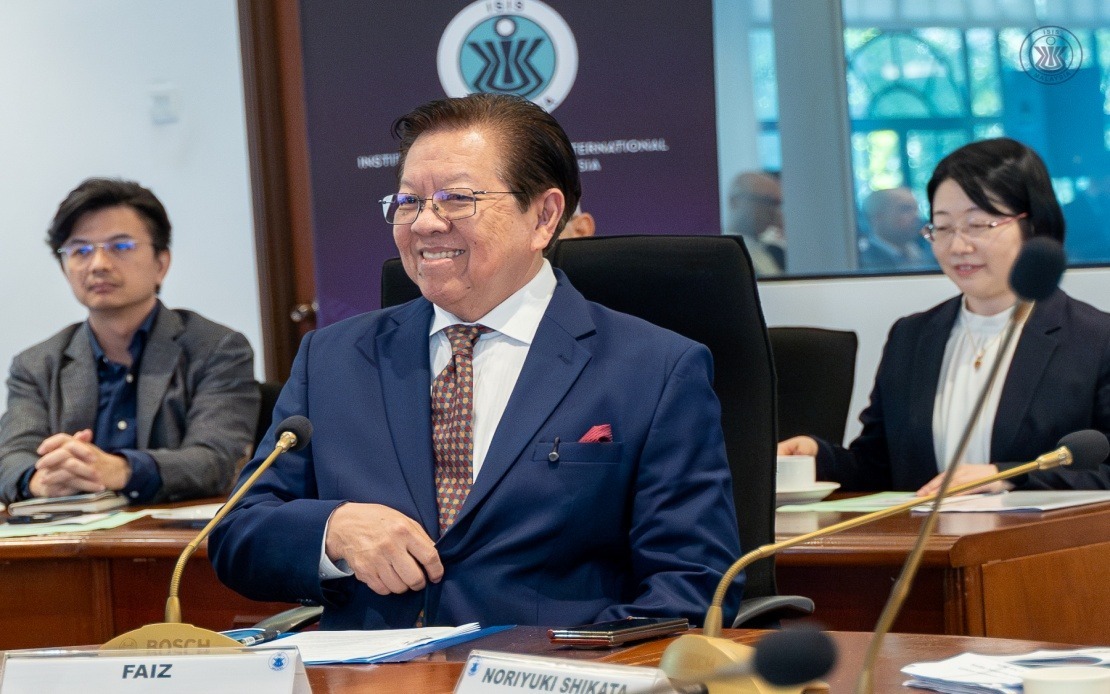
The 39th Asia-Pacific Roundtable opens in Kuala Lumpur this week with an unusual focus: a dedicated caucus examining Myanmar's deteriorating political and humanitarian situation, signalling that regional think-tanks and policy experts are prepared to engage more candidly on the issue than official ASEAN channels have permitted. The three-day forum, organised by the Institute of Strategic and International Studies (ISIS) Malaysia and running until July 2, will bring together approximately 400 participants from 30 countries to deliberate on the region's most pressing strategic challenges, with Myanmar emerging as a central preoccupation.
Datak Prof Dr Mohd Faiz Abdullah, ISIS Malaysia's executive chairman, explained that the dedicated Myanmar caucus reflects frustration with the diplomatic constraints evident at the recent ASEAN Summit in Cebu, Philippines. At that gathering, he noted, discussion of Myanmar remained circumscribed by the official positions countries were willing to articulate publicly, limiting the depth and frankness of the conversation. The Asia-Pacific Roundtable, by contrast, operates within the "Track 2" framework—a less formal diplomatic channel where think-tanks, academics, and former officials can explore contentious issues with greater intellectual freedom and fewer governmental inhibitions.
This shift towards more robust Myanmar discussion within the roundtable framework reflects a broader regional recognition that the crisis demands sustained analytical attention. Since the military coup in February 2021, Myanmar has descended into civil conflict, with armed resistance movements challenging junta control across multiple regions. The humanitarian toll has been catastrophic, generating refugee flows that have affected neighbouring countries including Malaysia, Thailand, and Bangladesh. By creating a dedicated space for Myanmar experts, practitioners, and think-tank representatives, the 39th APR aims to move beyond diplomatic platitudes and explore potential solutions or at least sharpen understanding of the conflict's trajectories and implications for regional stability.
The timing of this emphasis on Myanmar coincides with growing concerns across Southeast Asia about the spillover effects of the conflict. Malaysia, which hosts a significant Rohingya refugee population and maintains complex relations with Burma's various armed groups, has particular stakes in Myanmar's future. The dedicated caucus will likely examine the humanitarian dimensions of the crisis, the role of external powers in either exacerbating or potentially moderating the conflict, and the prospects for eventual reconciliation or further fragmentation. These conversations, conducted among informed regional specialists rather than constrained by official protocol, can generate nuanced policy perspectives that might eventually inform more pragmatic government approaches.
Beyond Myanmar, the roundtable will address an interconnected array of regional security concerns that collectively define the contemporary Asia-Pacific strategic landscape. The South China Sea remains a perennial focal point, with ongoing tensions over maritime sovereignty claims, freedom of navigation, and the militarisation of disputed features. West Asian developments, particularly the Israeli-Palestinian conflict and broader Middle Eastern geopolitical competition, carry significant implications for Southeast Asian nations dependent on Middle Eastern energy supplies and concerned about regional radicalization. Trade protectionism and tariff wars, driven partly by US-China competition, threaten the open regional trading environment upon which Southeast Asian economies have historically relied for prosperity and growth.
Energy security emerges as another critical theme, reflecting the region's vulnerability to supply disruptions and the transition challenges accompanying the global shift towards renewable energy and decarbonisation. Malaysia, a significant energy producer, faces the dual challenge of sustaining its own energy security while positioning itself advantageously within the emerging clean energy landscape. Artificial intelligence represents the forward-looking dimension of the roundtable's agenda, as nations grapple with how to harness AI's potential for economic and social benefits while managing risks of technological disruption, data security vulnerabilities, and the widening of inequality between early adopters and lagging economies.
The 39th APR's overarching theme—"Accelerating agency and action"—suggests an impatience with passive analysis or incremental responses to these interconnected challenges. Regional leaders and thinkers increasingly recognise that the Asia-Pacific faces simultaneous pressures from great power competition, transnational threats, economic volatility, and climate change. This framing calls for more decisive regional agency, stronger intra-ASEAN coordination, and clearer articulation of Southeast Asian interests and red lines rather than simply reacting to events shaped by external powers. The roundtable seeks to identify regional catalysts and potential leadership within this complex geopolitical environment.
The growth of the Asia-Pacific Roundtable itself testifies to its enduring relevance within regional policy circles. Beginning 39 years ago with merely 30 to 40 participants, the event now attracts 400 experts from 30 countries, reflecting its maturation into one of the world's top 20 strategic-security-focused conferences. This expansion mirrors the Asia-Pacific region's rising salience in global affairs and the increasing need for sophisticated, multi-stakeholder dialogue on issues transcending national borders. ISIS Malaysia, through ASEAN-ISIS—a network of Southeast Asian policy institutes and think-tanks representing virtually every ASEAN member state—has successfully positioned the roundtable as a premier platform for candid, constructive conversation among regional experts.
The Track 2 format offers distinct advantages over official diplomatic channels, particularly for challenging issues like Myanmar. Participants can speak more frankly, explore unpopular or contrarian views without official consequences, and build personal relationships and mutual understanding across national lines. These informal networks often prove influential in shaping elite opinion and informally influencing government policy over time. Malaysian policymakers and business leaders attending the roundtable will gain unfiltered insights into how regional peers assess critical challenges and perceive Malaysia's role and responsibilities within the broader strategic architecture.
For Malaysia specifically, the roundtable offers a valuable opportunity to contribute regional perspective to global conversations. As ASEAN chair at various points and as a nation with significant economic and strategic interests across the entire Asia-Pacific, Malaysia's thinking on issues from Myanmar to the South China Sea to AI governance carries weight within regional councils. The participation of Malaysian think-tanks, government advisors, and business leaders in substantive deliberations helps ensure that Southeast Asian interests and viewpoints are articulated forcefully in discussions that shape regional understanding of critical issues.
The three-day format allows for both plenary sessions addressing broad themes and smaller, focused caucuses like the Myanmar discussion, enabling both panoramic regional assessment and deep dives into particular crises or sectors. This structure mirrors the complexity of contemporary regional governance, where leaders must simultaneously manage immediate crises, address structural long-term challenges, and anticipate emerging threats. By bringing together practitioners alongside academic experts, the roundtable bridges the theory-practice gap that often complicates policy formulation.
As regional tensions mount and external powers intensify their competition for influence, forums like the Asia-Pacific Roundtable become increasingly valuable as spaces for candid, expert-level dialogue on behalf of ASEAN. The decision to dedicate substantial attention to Myanmar reflects collective recognition that the crisis cannot remain confined to official ASEAN statements or relegated to secondary status. Instead, understanding Myanmar's trajectory and exploring potential regional roles in managing the crisis demands the sustained analytical engagement that the 39th APR now promises to provide.

