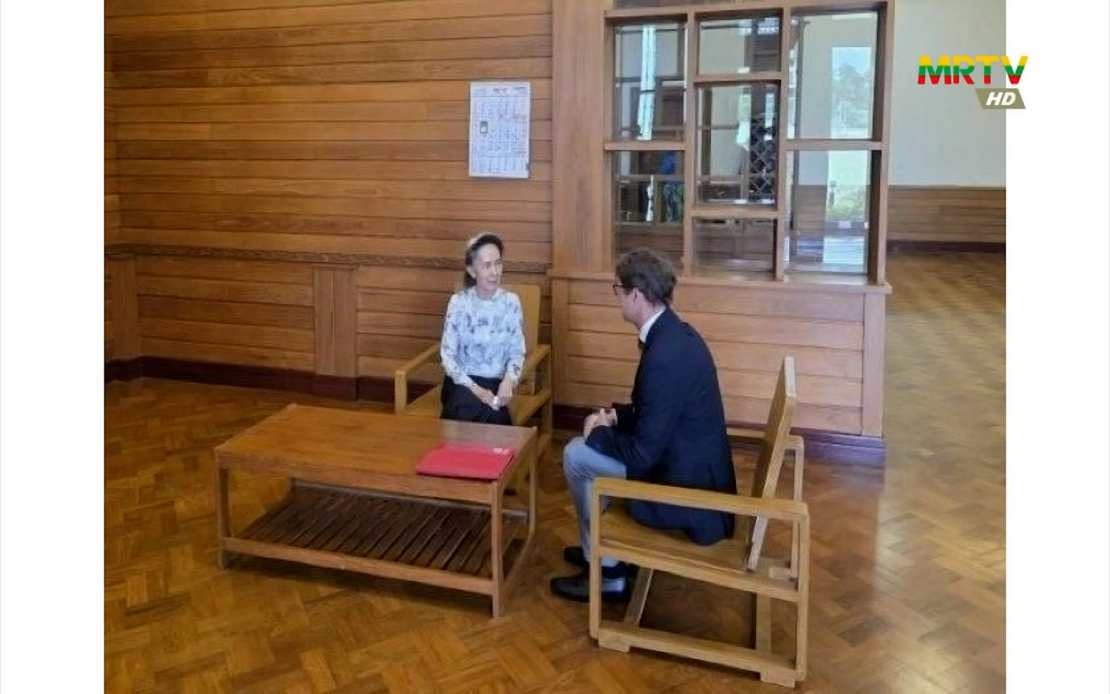
Myanmar's military-backed administration has permitted an International Committee of the Red Cross representative to meet with detained former leader Aung San Suu Kyi, according to a government statement released on Monday. The meeting between Suu Kyi and Arnaud de Baecque, the ICRC's Resident Representative to Myanmar, occurred in the capital city of Naypyitaw. The announcement comes as neighbouring Southeast Asian countries intensify their diplomatic efforts to secure independent verification of the health and wellbeing of the 81-year-old political figure who has been held in custody since Myanmar's military orchestrated a coup d'état in February 2021.
The meeting represents a significant development in international efforts to maintain contact with Suu Kyi, whose exact health status and physical location have remained largely opaque to the outside world. Since the military's seizure of power more than three years ago, foreign leaders and diplomatic envoys have been unable to meet with her publicly, leading to widespread speculation about her condition. The junta has repeatedly asserted that Suu Kyi enjoys good health, yet these claims have not been independently verified by international observers, fuelling concerns among her supporters and allied governments across the region.
The Myanmar government provided photographic evidence of the encounter, showing Suu Kyi dressed in traditional Burmese clothing seated across from Baecque in a minimally furnished room with wooden panelling. The images offer a rare glimpse into her current living environment, though the exact date and location of the photographs could not be independently confirmed. Among the four images released was a photograph of a birthday cake inscribed with her name and the date 19.6.2026, suggesting the images may have been taken on or around her birthday in June this year. The cake photograph provides circumstantial evidence that Suu Kyi remains alive, though it does not permit assessment of her overall health condition.
Suu Kyi's legal predicament remains grave. Following a series of closed military trials in 2022, she was convicted of multiple charges including corruption, election fraud incitement, and violations of state secrecy legislation. The initial sentence imposed was 33 years imprisonment. Through subsequent reductions—first to 27 years and later trimmed by one-sixth in April—her remaining sentence now stands at approximately 18 years, according to members of her legal defence team. Her supporters and international human rights organisations maintain that these charges were engineered specifically to eliminate her from Myanmar's political landscape and prevent her return to power.
The consequences of Myanmar's coup have extended far beyond Suu Kyi's personal situation. Her detention marked the end of a decade-long democratic experiment that had allowed her to become the de facto leader of the nation following the 2015 elections. Her removal from power has plunged Myanmar into profound instability, with widespread civil unrest, armed conflict between resistance forces and military troops, and economic deterioration characterising the country's trajectory. The nation of 51 million people faces deepening humanitarian crises and has become increasingly isolated within the international community.
Concerns about Suu Kyi's physical health have grown persistent among her family and international observers. Her son, Kim Aris, disclosed to journalists in December of last year that he has received virtually no direct communication with his mother, obtaining only sporadic and indirect information about her medical conditions. He reported that she has experienced cardiac, bone, and dental problems, though the precise severity and current status of these ailments remain unknown. His fear that she could die while in detention without his knowledge underscores the isolation and opacity that have characterised her imprisonment.
Regional governments have increasingly mobilised diplomatic channels to press Myanmar's military leadership for improved access to the detained leader. Thailand's Foreign Minister Sihasak Phuangketkeow, speaking after a meeting between Myanmar's foreign affairs officials and representatives from the Association of Southeast Asian Nations in Bangkok last month, explicitly called for international access to Suu Kyi to validate the military's repeated assertions about her health status. Similarly, the Philippines formally requested in May that Myanmar permit an ASEAN special envoy to visit her, a request that was rebuffed by the junta.
The military's approach to Suu Kyi's detention reflects its broader effort to consolidate control and neutralise potential domestic opposition. In late April, following a military-orchestrated election that installed former junta leader Min Aung Hlaing as Myanmar's president, authorities announced that Suu Kyi had been transitioned to house arrest. This shift in her detention status occurred within Myanmar's carceral system, representing a modification rather than a genuine improvement in her circumstances. The house arrest designation, while technically distinct from prison confinement, still constitutes unlawful detention of a political figure imprisoned on charges widely regarded as baseless and retaliatory.
Suu Kyi's political importance to Myanmar cannot be overstated. As the daughter of General Aung San, who led Myanmar's independence struggle and is revered as a founding father of the modern nation, she carries profound symbolic weight. During a previous period of house detention from 1989 to 2011, lasting 15 years in total, she delivered stirring speeches to crowds of supporters who gathered outside the gates of her family residence on the shores of Yangon's Inya Lake, becoming an international symbol of resistance to military authoritarianism. Her status as a Nobel Peace Prize recipient further elevated her prominence and made her a figure of global significance in struggles for democracy and human rights.
The ICRC's access to Suu Kyi, while ostensibly positive, must be understood within the context of Myanmar's careful management of her public image and international perception. The military remains reluctant to permit broader independent scrutiny, suggesting that the Red Cross meeting may represent a limited concession designed to alleviate international pressure while stopping short of genuine transparency. The photographs themselves were carefully curated and released by government officials, raising questions about their authenticity and the conditions under which they were taken. International observers and human rights organisations will likely regard this development as an insufficient step towards genuine accountability and verification of her wellbeing.

