Penang's ambitious Mutiara Line Light Rail Transit project has entered a decisive phase with Malaysia Rapid Transit Corporation announcing the selection of Malaysian Resources Corporation Berhad and Theta Edge Berhad as joint venture partners to deliver the project's comprehensive railway systems infrastructure. The RM3.028 billion System Turnkey Contract represents a pivotal moment for the initiative, enabling the detailed engineering of complex rail operations to proceed simultaneously with ongoing civil construction throughout the alignment.
The significance of this appointment lies in its approach to project coordination. By allowing railway systems design to advance in tandem with ground-level construction activities, MRT Corp has created efficiencies that reduce timeline risks and ensure that both the physical infrastructure and operational systems remain perfectly calibrated for eventual service launch. This parallel methodology has proven effective in similar rapid transit projects across Southeast Asia, where fragmented project phases often lead to costly delays and integration challenges.
The systems contract encompasses seven distinct packages covering the full spectrum of modern rail operations. These include electric train procurement and depot maintenance facilities, sophisticated signalling architecture paired with automatic platform screen doors, trackwork with conductor rail systems, comprehensive electrical distribution networks, real-time supervisory control systems, integrated telecommunications and IT infrastructure, and automated fare payment mechanisms. Each component represents cutting-edge technology that must function seamlessly with the others, underscoring why selecting an experienced joint venture partner was essential for project success.
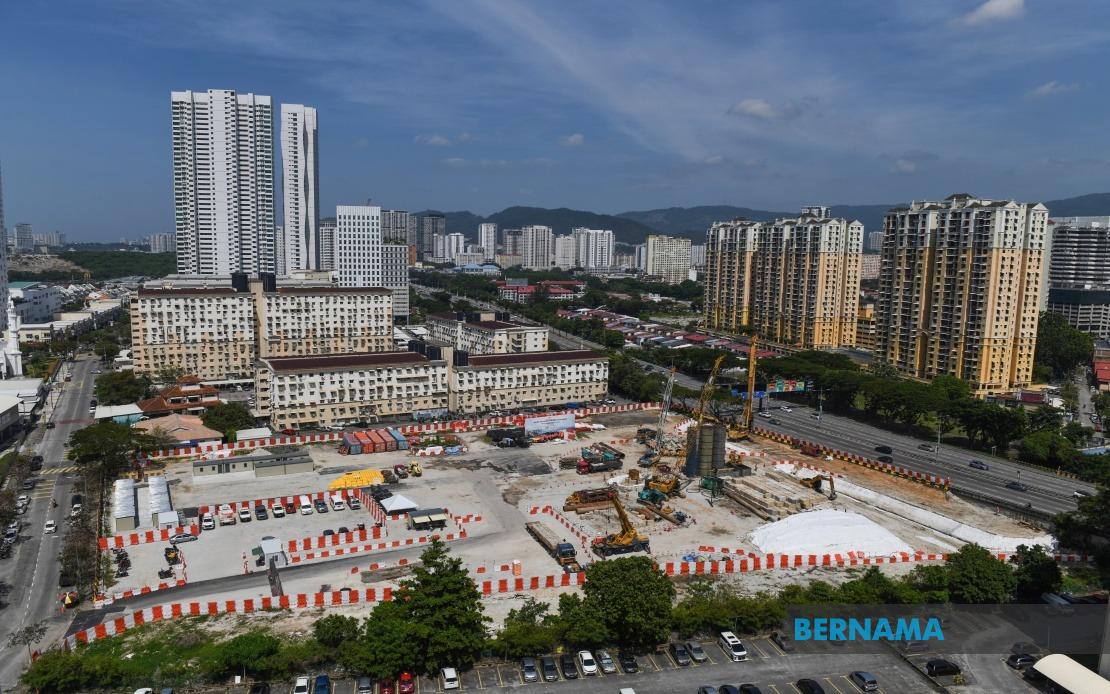
Civil construction activity continues accelerating across the Silicon Island to Komtar alignment. Current progress demonstrates tangible momentum, with 45 pile caps now completed and 32 pier columns erected as construction activity spreads across 14 of the planned 19 construction sections. This geographic distribution of active work zones suggests a well-sequenced approach designed to manage logistics and workforce deployment efficiently across the challenging Penang landscape.
Land acquisition, often the hidden bottleneck in major infrastructure projects, has achieved notable success through coordinated effort between federal authorities, the Penang State Government, and implementing agencies. With 93 percent of required land now available for the first civil contract phase, the project has cleared a significant administrative hurdle that frequently derails Southeast Asian infrastructure initiatives. This accomplishment reflects improved intergovernmental cooperation and demonstrates how transparent land acquisition processes can accelerate development.
The tender process for the Civil Main Contract 2 package, which will extend the alignment from Komtar toward Penang Sentral, remains on trajectory for contract award in November 2026. This phased approach to procurement allows the project team to incorporate lessons learned from the first phase while maintaining momentum toward the overall completion timeline. The staged tendering also distributes financial commitments more evenly and reduces the initial capital requirements faced by the state and federal governments.
Local industry participation has exceeded expectations under the existing civil contract, with Bumiputera involvement now surpassing 20 percent of total contract value. This outcome reflects growing capacity within Malaysian construction firms to handle complex transportation projects and demonstrates that competitive procurement processes can simultaneously achieve excellence and local economic development objectives. As the project advances, opportunities for local technology companies and service providers in signalling, telecommunications, and systems integration will expand considerably.
At Silicon Island, site preparation activities have commenced to establish the project's operational depot facility. The Penang State Government's handover of the Tapak Pesta site in April 2026 enabled rapid mobilization, with existing structures removed and the location now ready for depot construction. This facility will serve as the maintenance and storage hub for the rail fleet and represents a vital component of the operational infrastructure necessary to sustain daily service delivery.
For Malaysian and Southeast Asian observers, the Mutiara Line advancement carries broader implications. Penang's investment in rapid transit reflects regional trends toward congestion management through public transport rather than road expansion alone. As cities throughout Malaysia and neighboring countries grapple with increasing vehicular density and environmental concerns, successful execution of projects like Mutiara Line provides proven models for integrated urban mobility solutions. The project's emphasis on local industry development also suggests a template for how infrastructure mega-projects can strengthen domestic supply chains and technical expertise.
The phased construction approach and technology integration strategy deployed on Mutiara Line represent evolution in how Malaysian authorities manage complexity in major transport infrastructure. Unlike earlier generations of development projects where civil works and systems installation occurred sequentially with substantial integration challenges, this parallel methodology acknowledges that modern rail operations demand seamless coordination between infrastructure and technology from project inception. As construction progresses through 2026 and into eventual commissioning phases, the collaborative framework established between MRT Corp, the joint venture contractors, and government agencies will face its most rigorous test, with outcomes likely to influence how future national infrastructure projects are structured and executed.

