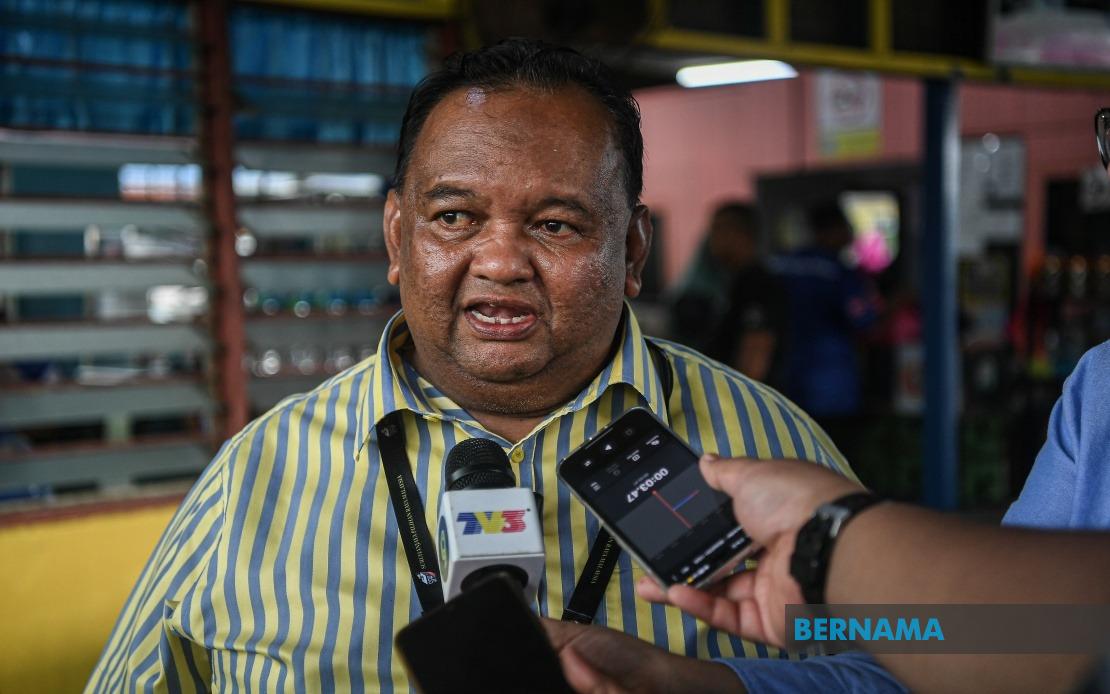
Johor's Sedili state constituency will see a closely contested three-way battle on July 11, with Barisan Nasional incumbent Muszaide Makmor positioning himself as the architect of rural economic transformation through ambitious agro-technology initiatives and large-scale industrial expansion. Seeking to retain his seat, Muszaide has unveiled a campaign platform centred on modernising farming practices across Felda settlements and launching an integrated palm oil mill expected to generate over 200 new jobs for local youth.
The core of Muszaide's development agenda involves scaling up agricultural innovation projects that have been piloted in partnership with two major Malaysian universities. Universiti Putra Malaysia and Universiti Malaysia Terengganu have been collaborating on specialised farming ventures, including giant freshwater prawn hatcheries and mud crab breeding operations along the Sedili river systems, as well as ginger cultivation schemes. By expanding these initiatives into Felda land blocks, Muszaide argues he can unlock new income streams for second-generation Felda settlers, many of whom have historically struggled with limited economic opportunities beyond traditional palm oil cultivation.
The freshwater aquaculture projects already underway in Sungai Sedili Kecil and Sungai Sedili Besar represent a deliberate pivot toward higher-value agricultural commodities that require technical expertise but promise substantially better returns than conventional farming. When Muszaide visited the community of Aping Timur, residents reportedly expressed keen interest in replicating these models within Felda zones, viewing diversified agriculture as a lifeline against rural exodus and economic stagnation. This grassroots enthusiasm underpins the incumbent's confidence that his second-term manifesto speaks to genuine community aspirations rather than top-down policy imposition.
Equally significant to Muszaide's campaign is the promised establishment of a large-scale, integrated palm oil mill within the Sedili district. Such a facility would represent a major industrial anchor, creating direct employment for more than 200 young workers while theoretically strengthening backward linkages to local smallholder producers and forward integration toward downstream processing. The incumbent frames this infrastructure investment as essential to stemming youth migration and revitalising the domestic economic cycle, preventing talented young Johoreans from gravitating toward urban centres or leaving the state entirely. In the context of rural Malaysia's chronic employment challenges, the promise of 200 jobs carries considerable electoral weight.
Muszaide's optimistic growth narrative, however, faces serious challenge from his opponents. Perikatan Nasional candidate Rasman Ithnain, a former Sedili assemblyman, has raised uncomfortable questions about incomplete rural development that casts doubt on BN's execution track record. Rasman notes that although nearly 3,000 second-generation Felda beneficiaries have secured land titles through earlier efforts, most have been unable to construct or occupy homes on their allocated plots, forcing them into an untenable position of servicing monthly mortgage repayments to Syarikat Perumahan Negara Berhad whilst their houses remain vacant and unusable.
The housing impasse stems from a deeper infrastructure deficit that has been politically contentious. Rasman alleges deliberate delays in approving basic infrastructure development—roads, utilities, water connections—due to partisan political calculations, suggesting that BN's administrative machinery has failed to translate land ownership into functional family homes and thriving communities. This critique strikes at the heart of development credibility, implying that grand manifestos about agricultural expansion and new mills ring hollow when sitting Felda residents cannot even access clean water reliably or build shelters on their own properties.
Water supply disruptions constitute another flashpoint in Sedili's electoral debate. Rasman has elevated the water crisis to top priority, describing it as the most acute problem facing traditional villages and Felda settlements, with shortages particularly acute during festive seasons when domestic demand surges. Whilst Muszaide has emphasised forward-looking agricultural and industrial projects, Rasman has pivoted to pressing basic infrastructure needs, challenging voters to prioritise immediate hardship over future promises. Should Rasman regain the mandate, he pledges to persuade the Johor state government to pursue federal financing—possibly through a special loan facility—to resolve the water utility crisis, noting that Johor has already cleared its water sector debt account.
The contrast between the two visions reflects deeper tensions within rural development discourse. Muszaide's agro-tech and industrialisation strategy assumes that modern value-added production, supported by university partnerships and sizeable capital investment, provides the most sustainable path to shared prosperity. Rasman counters that without foundational utilities and functional housing, such aspirational projects remain inaccessible fantasy for communities still struggling with elementary service delivery. Both arguments possess internal logic, yet they appeal to different voter priorities and tacitly challenge the assumption that BN's previous decade of stewardship has adequately addressed fundamental rural needs.
Pakatan Harapan candidate Amirul Husni Onn enters the three-cornered contest as a third force, though the original source material contains limited detail regarding his specific campaign platform or policy differentiation. The three-way split could prove consequential in a constituency where BN's traditional dominance may be eroded if opposition votes concentrate effectively behind either PN or PH. Across Johor's 56 state seats, 172 candidates are competing in the July 11 election, with early voting scheduled for July 7, making Sedili one of dozens of marginal battlegrounds that will collectively determine the state government's composition and policy direction.
Sedili's contest encapsulates broader questions about rural Malaysia's development trajectory. Can agro-technology and industrial investment genuinely improve livelihoods and retain youth in farming communities, or do such initiatives require prior resolution of elementary infrastructure and housing inadequacies? Is BN's development record sufficient to warrant continued electoral trust, or has governance fatigue and incomplete execution eroded voter confidence in its ability to deliver on past and future commitments? The July 11 outcome in Sedili will provide one answer among many across Johor, collectively signalling whether rural constituencies remain convinced by ruling-coalition promises or are turning toward alternative political leadership.

