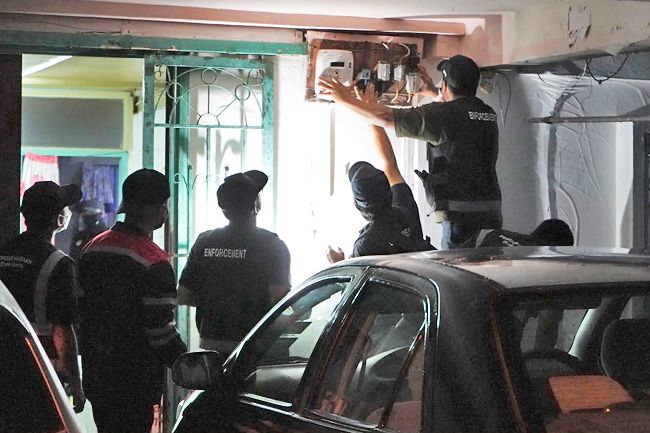
Brunei's law enforcement agencies have moved swiftly to address compliance failures across the capital, with a coordinated operation in Bandar Seri Begawan yielding significant breaches in immigration, employment, and utility regulations. The multi-agency action, spanning two locations within the city, resulted in the Immigration and National Registration Department detaining one foreign male and one foreign female for investigation under the country's Immigration Act, signalling renewed efforts to tighten border and residency controls.
The operation revealed systemic weaknesses in how employers manage foreign workers in Brunei, a concern that resonates across Southeast Asia where informal employment arrangements often mask poor working conditions. The Labour Department identified three separate violations under Section 81 of labour legislation, with employers failing to furnish appropriate housing for their workforce and neglecting basic environmental sanitation standards at accommodation facilities. Such oversights represent not merely administrative lapses but potential threats to worker welfare and public health, particularly in shared housing arrangements where standards deteriorate without proper oversight and accountability mechanisms.
Additional labour law breaches compound the picture of inadequate regulatory compliance. Two further offences were documented under Section 86, specifically the failure to declare worker accommodation details within foreign worker licences. This documentation gap creates blindspots for authorities attempting to monitor workplace conditions and enforce minimum standards, allowing unscrupulous employers to operate outside transparent frameworks. For Malaysia and other regional nations managing significant migrant workforces, such findings underscore how documentation failures can perpetuate labour exploitation and undermine official oversight systems designed to protect vulnerable populations.
Electrical safety violations emerged as a secondary but important concern during the sweep. The Department of Electrical Services detected two separate breaches under the Electricity Act, Chapter 71. While specific details of these violations remain undisclosed, electrical code violations frequently signal broader facility management problems and pose genuine risks to occupants, particularly in worker accommodation where crowding amplifies hazard exposure. The simultaneous discovery of electrical and housing violations at the same locations suggests interconnected regulatory failures rather than isolated incidents.
The Human Trafficking Investigation Unit's involvement reflects contemporary concerns about modern slavery in Southeast Asia, though investigators cleared the operation of human trafficking indicators after interviewing 19 individuals across both sites. This cautious approach represents best practice in identifying exploitation, as trafficking often masquerades as ordinary labour arrangement failures. The absence of trafficking findings, while potentially reassuring, does not diminish the seriousness of documented labour and immigration violations, which themselves create conditions enabling exploitation if left unaddressed.
The scale of the operation underscores Brunei's commitment to enforcement, with more than 200 personnel drawn from multiple government agencies. Acting Superintendent Mohamad Noor Abd Rahman, commanding the Brunei-Muara Police District, directed the initiative, which mobilised resources across the Royal Brunei Police Force's specialist units alongside immigration, customs, labour, electrical, and municipal authorities. The coordination reflects recognition that modern compliance challenges span jurisdictional boundaries, requiring agencies to share intelligence and deploy complementary enforcement capabilities.
The comprehensive agency roster involved illustrates how contemporary regulatory challenges demand integrated responses. The inclusion of the Narcotics Control Bureau and Internal Security Department alongside labour and electrical bodies suggests authorities are simultaneously pursuing multiple enforcement priorities, though the specific contribution of security-focused agencies to this particular operation remains unclear from available details. The Religious Enforcement Division's participation reflects Brunei's legislative framework governing religious affairs, adding a distinctive regional dimension to the enforcement approach.
For Southeast Asian nations grappling with similar workforce management issues, the Brunei operation offers instructive lessons about enforcement coordination. Malaysia, in particular, hosts far larger migrant populations and faces comparable challenges around accommodation standards and documentation compliance. The visibility and scale of Brunei's operation may signal elevated expectations for employer accountability in the region, potentially prompting similar initiatives elsewhere and creating pressure for Brunei's regional neighbours to demonstrate comparable enforcement vigour.
The timing and breadth of this enforcement action reinforces the Royal Brunei Police Force's stated commitment to safeguarding public safety and worker well-being throughout Brunei-Muara District. Rather than representing an isolated crackdown, the operation appears part of a sustained enforcement strategy addressing workplace standards and regulatory compliance. Success in such initiatives depends not merely on identifying violations but on ensuring meaningful consequences that deter future non-compliance and incentivise employers to adopt preventive compliance measures.
Regional observers will watch whether these enforcement actions produce substantive changes in employer behaviour or represent episodic operations without lasting deterrent effect. The detected violations suggest employers operated despite clear legal obligations, indicating either insufficient awareness of requirements or insufficient concern about detection and consequences. Future enforcement credibility depends on demonstrating that violations identified lead to meaningful penalties and remediation requirements, establishing genuine accountability mechanisms rather than symbolic enforcement gestures.

