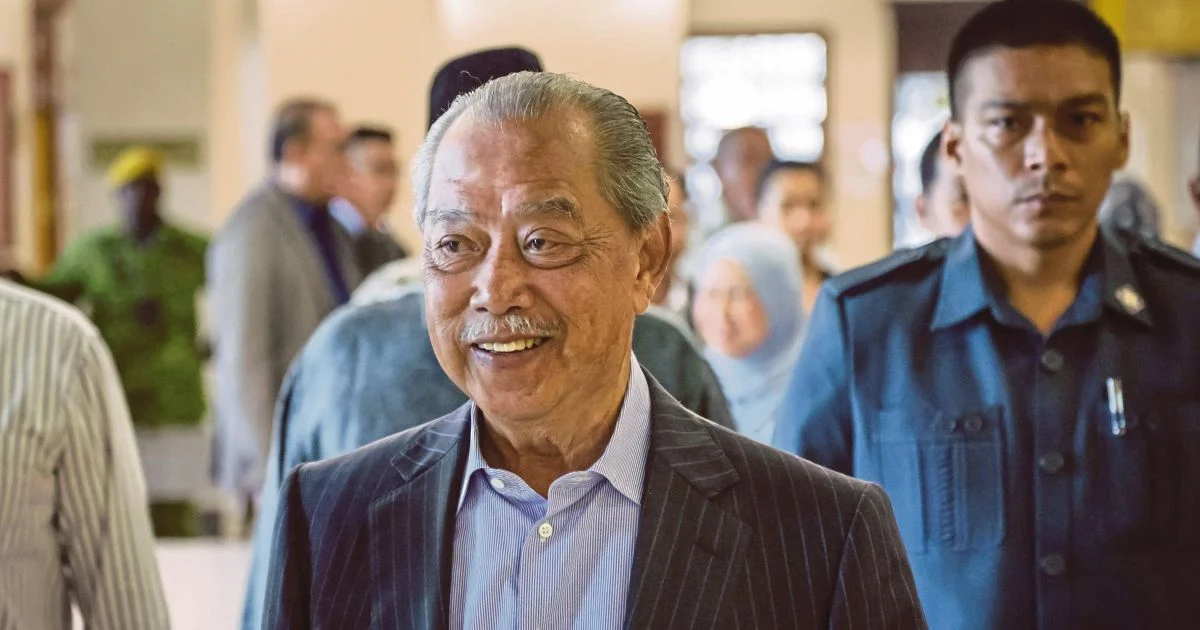
Perikatan Nasional's leadership has signalled bullish expectations about the opposition coalition's electoral prospects in Johor, with party chief Tan Sri Muhyiddin Yassin indicating that a path to government remains viable despite their decision to contest a reduced number of seats. The Bersatu president's confidence, expressed in Pagoh, underscores the coalition's conviction that strategic seat allocation and voter consolidation can overcome what appears at first glance to be a numerical disadvantage in a fractious state political environment.
The decision to contest 33 seats represents a selective rather than comprehensive campaign strategy by Perikatan Nasional in Johor, Malaysia's second-most populous state. This approach differs markedly from saturation campaigns that field candidates across all available positions, suggesting the coalition has identified specific constituencies where ground organisation and voter sentiment favour their prospects. Such targeted deployment reflects broader calculations about resource efficiency and electoral concentration in a state where political loyalties have shifted considerably over recent election cycles.
Johor's political landscape has grown increasingly competitive and unpredictable following the collapse of established party structures at both state and federal levels. The state experienced significant realignment in recent years, with traditional power bases fragmenting across multiple political entities. This volatility creates openings for disciplined coalitions that can consolidate support in particular regions, potentially yielding disproportionate representation relative to their statewide seat count. Muhyiddin's optimism likely rests partly on tactical intelligence regarding performance in key marginal constituencies where PN campaigns have concentrated effort.
Bersatu's own position within Malaysian politics has undergone dramatic transformation since the party's establishment less than a decade ago. From its origins as a breakaway vehicle from the United Malays National Organisation, it has repositioned itself repeatedly, negotiating partnerships and accommodations with various coalitions depending on prevailing political circumstances. Within Perikatan Nasional, Bersatu functions as a significant player alongside other component parties, bringing organisational capacity and leadership depth to the alliance's overall standing. Muhyiddin's tenure as the coalition's de facto leading voice carries weight among its constituent membership and supporters.
The Johor contest carries implications extending beyond the state boundaries. As Malaysia's largest single-state bloc of representatives outside Selangor and Sabah, Johor's electoral outcome influences the balance of power at federal level by affecting the composition of parliament and shifting coalition dynamics in Kuala Lumpur. Any coalition capable of commanding Johor's state assembly would wield considerable leverage in parliamentary negotiations and national government formation. This amplifies the strategic significance that Perikatan Nasional places on the state election outcome, explaining leadership investment in projecting confidence despite apparent numerical constraints.
The timing of Muhyiddin's statements reflects the coalition's need to maintain activist morale and external perception of viability. Election campaigns live partly on momentum and narrative momentum; coalitions perceived as potentially losing struggle to attract volunteers, campaign funds, and persuadable voters. By articulating confidence in PN's Johor prospects, the party leadership seeks to reinforce internal unity and project an image of strength to undecided constituencies. Such public positioning serves multiple audiences simultaneously, addressing both party faithful and potential swing voters evaluating their voting calculations.
Geographical concentration within specific Johor districts may provide PN with strategic advantages that aggregate seat numbers alone do not capture. If the 33 contested seats cluster in regions where the coalition possesses strong organisational presence or demographic advantages, seat-to-vote conversion rates could exceed their proportional representation. This explains how an opposition fighting substantially fewer contests than rivals might still achieve proportionally significant outcomes. The coalition's risk calculation presumably reflects confidence in identifying and executing performance in their chosen battlegrounds.
The broader Southeast Asian context demonstrates that coalition flexibility in seat contests frequently produces surprising outcomes. Thai, Indonesian, and Filipino elections have repeatedly yielded governments from coalitions that did not contest every available seat or that contested fewer seats than rivals. Strategic alliances, vote concentration, and post-election coalition arithmetic can produce outcomes that defy proportional expectations. Malaysia's own electoral history contains instances where seat counts and coalition calculations produced unexpected government formations, lending historical precedent to Muhyiddin's position.
Peikatan Nasional's internal composition affects its electoral efficiency in Johor specifically. The coalition includes entities with varying levels of state-level organisation and grassroots penetration. Some components may enjoy disproportionate strength in particular Johor regions, concentrating their electoral power precisely in areas where PN has deployed candidates. Such internal synergies between coalition partners could amplify overall performance beyond what simple aggregate candidate numbers suggest.
For Malaysian voters, particularly those in Johor, the election presents fundamental choices about state governance direction and policy priorities. The competitive calculus between Perikatan Nasional and other political forces shapes the range of policies feasible under different government configurations. The fact that an opposition coalition contesting fewer seats expresses genuine optimism suggests the state's electorate faces a genuinely contested and uncertain outcome, rather than predetermined results. This unpredictability has long characterised Johor politics, contributing to the state's reputation as a closely watched indicator of broader national political trends.

