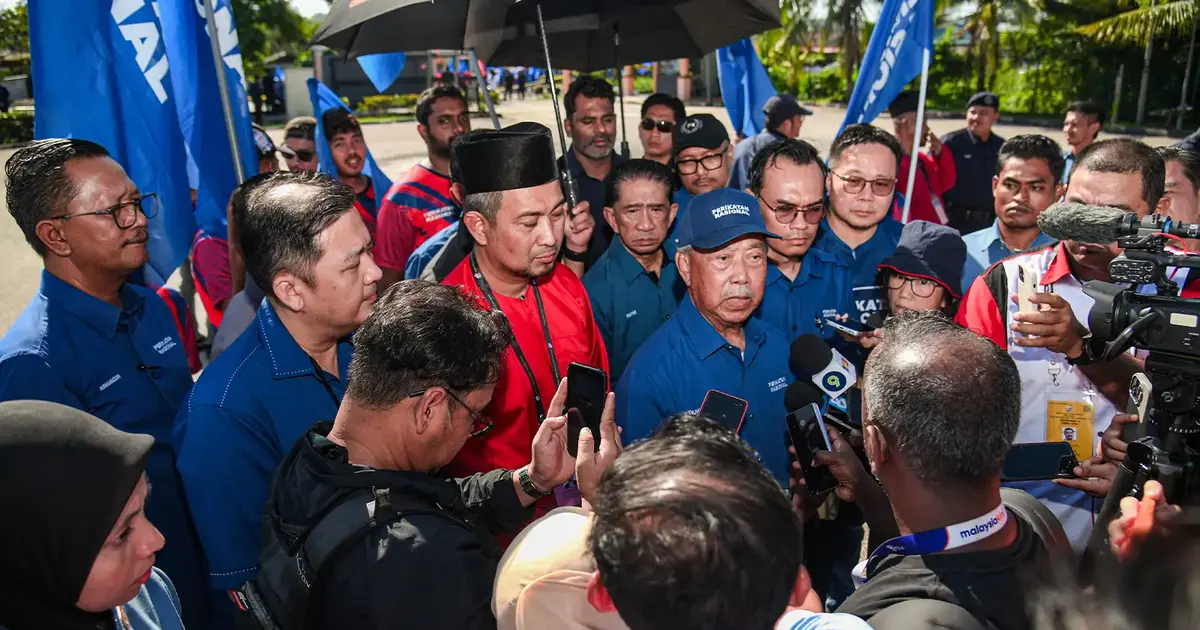
Muhyiddin Yassin, the president of Bersatu and a leading figure in Perikatan Nasional, has expressed confidence that the coalition is well-positioned to take control of state governments in upcoming electoral contests. Speaking to party members and supporters, Muhyiddin outlined his assessment that PN's existing strength, combined with potential backing from sympathetic parties not formally part of the coalition, creates a viable pathway to state-level political dominance. His remarks underscore ongoing manoeuvring within Malaysia's complex multi-party political landscape, where coalition mathematics often determine which grouping forms the administration.
Central to Muhyiddin's optimism is the coalition's ability to forge alliances beyond its formal membership. He specifically cited Muda, the relatively newer political party founded by Muhammad Azmin Ali, as an example of a potential ally that could provide crucial support if needed. This reflects a broader strategy within Perikatan Nasional to cultivate relationships with smaller parties and independent politicians who may share common policy objectives or harbour reservations about competing coalitions. In Malaysia's fractionalised political environment, such flexible alignment mechanisms have repeatedly proven decisive in determining which coalition reaches the threshold required to form government.
The confidence Muhyiddin has expressed requires contextualisation within the current state of Malaysian politics. Perikatan Nasional has undergone significant evolution since its formation, experiencing periods of substantial growth and occasional setbacks. The coalition's composition and electoral viability vary considerably across different states, with strong footholds in certain regions whilst facing steeper challenges elsewhere. Muhyiddin's assertion therefore likely reflects optimism about specific state contests or particular regions where PN calculations suggest mathematical feasibility, rather than a blanket prediction applicable nationwide.
The mention of Muda as a potential coalition partner signals interesting developments within the broader anti-Pakatan Harapan camp. Muda, which has positioned itself as a reformist alternative appealing to younger voters and those seeking change from established political structures, represents exactly the type of supplementary support that could prove decisive in closely contested state elections. Such partnerships would demonstrate how coalitions in Malaysian politics remain fluid and negotiable, with individual parties maintaining flexibility about their formal and informal associations depending on electoral circumstances and bargaining outcomes.
From a strategic standpoint, Muhyiddin's public statements serve multiple purposes beyond merely expressing internal confidence. They communicate strength to party members and supporters, potentially attracting swing voters and undecided politicians who might be more inclined to back what appears to be a winning coalition. Simultaneously, such declarations can influence intra-coalition dynamics, as other PN component parties and prospective allies assess whether to maintain or intensify their commitment to the coalition's electoral prospects. In this sense, political messaging and actual coalition strength become mutually reinforcing—projections of viability can themselves contribute to creating the conditions for that viability.
The strategic environment surrounding state governments in Malaysia carries particular weight because these administrations control significant resources and patronage networks that can influence federal-level politics. Control of state governments provides platforms for local policy implementation, opportunities to reward political allies, and valuable experience for politicians seeking higher office. For Perikatan Nasional, demonstrating the ability to form and effectively manage state governments is essential for establishing its credibility as a national-level governing force capable of executing policy agendas and rewarding supporters.
For Malaysian voters and observers monitoring coalition dynamics, Muhyiddin's statements highlight the fluid nature of political alignment in the country. The ease with which parties like Muda can shift from operating independently to becoming coalition partners—or from partnering with one coalition to supporting another—reflects both the weakness of institutional party structures and the strength of personality-driven, pragmatic political negotiation. This pattern has significant implications for governance quality and accountability, as shifting coalitions can complicate long-term policy implementation and create uncertainty about which party ultimately bears responsibility for particular government decisions or failures.
Looking forward, the credibility of Muhyiddin's assessment will ultimately be tested through electoral results. Perikatan Nasional's actual performance in upcoming state elections, whenever they occur, will determine whether the coalition's current positioning translates into concrete political gains. Multiple factors beyond coalition mathematics influence electoral outcomes, including public sentiment regarding specific policies, the perceived performance of current governments, leadership appeal, campaign effectiveness, and local issues particular to individual constituencies. Muhyiddin's confidence therefore represents an opening statement in extended negotiations and electoral contests rather than a prediction of inevitable outcomes.
For Southeast Asian observers and international stakeholders monitoring Malaysian political developments, coalition formation dynamics at the state level offer important insights into the country's broader democratic processes. They demonstrate how Malaysian political actors navigate between maintaining distinct party identities and seeking electoral advantage through flexible alliances. These micro-level coalition negotiations often foreshadow subsequent shifts in federal-level alignments, making state-level politics a crucial barometer for understanding the trajectory of national political competition and the evolving balance of power between competing coalitions that periodically vie for control of federal government.

