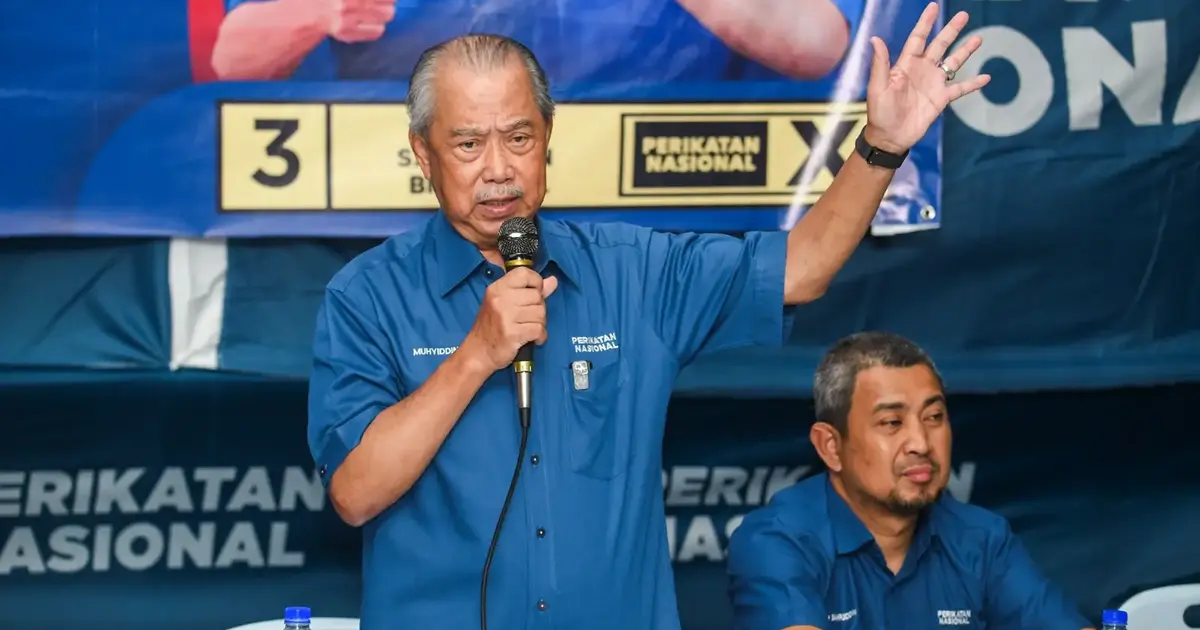
Bersatu president Muhyiddin Yassin has suggested that discussions surrounding Najib Razak's possible release from prison are intertwined with political calculations related to Johor's forthcoming state election. The former prime minister, who was convicted in July 2020 on abuse of power charges, remains a highly polarizing figure in Malaysian politics, and any move regarding his custodial status immediately triggers wider questions about the motivations behind such decisions.
Muhyiddin's statement carries particular weight given Bersatu's positioning within Malaysia's fractured political landscape. The party, which he leads, has served as a coalition partner in various government arrangements, giving his observations credence as someone operating within elite political circles. His willingness to publicly articulate a connection between Johor state politics and Najib's situation suggests that the matter extends beyond legal technicalities and enters the realm of electoral strategy.
The conviction that resulted in Najib's incarceration stemmed from his role in the 1Malaysia Development Berhad scandal, one of the most significant corruption cases in the nation's recent history. Although Najib has maintained his innocence and mounted legal challenges, his 2020 conviction established a legal marker that cannot be easily erased, regardless of subsequent executive interventions or appeals. This foundational legal reality frames all subsequent discussions about his release, whether through royal pardon, sentence reduction, or other mechanisms.
Johor's status as Malaysia's second-largest state by population and its historical significance in Malaysian politics make its electoral calendar consequential for national coalitions. Any state government that emerges from Johor elections carries symbolic weight and practical influence over federal arrangements. The timing of conversations about Najib's status relative to these elections therefore becomes strategically relevant, as different political actors calculate how his release might affect voter sentiment and coalition dynamics.
Muhyiddin's framing of the issue highlights a persistent tension in Malaysian democracy between the formal independence of judicial and executive processes and the undeniable reality that such processes operate within a political context. His suggestion that electoral calculations influence decisions about convicted figures represents a direct acknowledgment that law and politics remain deeply entwined in Malaysia's institutions, contrary to aspirations for institutional separation.
The former Bersatu-led government and subsequent coalition arrangements have repeatedly encountered questions about the handling of cases involving senior figures from previous administrations. These questions reflect broader anxieties within Malaysian society about whether courts and executive bodies operate according to consistent principles or whether outcomes depend on political affiliations and power dynamics. Muhyiddin's comments, intentionally or otherwise, reinforce perceptions that strategic political considerations shape outcomes that officially rest on legal and bureaucratic grounds.
For Johor specifically, the state election represents an opportunity for the state's electorate to directly influence national political alignments. Historically, Johor's electoral outcomes have reverberated through federal politics, affecting coalition stability and ministerial arrangements. An election campaign that unfolds against a backdrop of uncertainty regarding Najib's status introduces an additional variable that campaigns must navigate, potentially reshaping voter priorities and party strategies.
The Najib question also reveals divisions within Malay-Muslim-based political parties, which have traditionally competed for the loyalty of this demographic. Different parties within this political space adopt varying positions on how to treat the former prime minister, reflecting both principled differences about accountability and pragmatic calculations about electoral appeal. Some voters view Najib's conviction as essential accountability for corruption, while others regard it as politically motivated persecution, and these divergent perspectives translate into electoral consequences.
Muhyiddin's willingness to articulate the Johor-Najib connection publicly suggests that denying such linkages has become increasingly untenable within Malaysian political discourse. Rather than obscuring the intersection of legal processes with electoral timing, senior figures now openly acknowledge that these domains influence one another. This transparency, while perhaps reducing hypocrisy, also underscores the challenges that Malaysia's institutions face in maintaining public confidence in their independence and neutrality.
The coming weeks and months will test whether Muhyiddin's analysis proves prescient. Should Najib's release occur in proximity to Johor's electoral timeline, his observations will gain retrospective validation. Conversely, if release decisions proceed independently of electoral calculations, the claim will appear overstated. Either outcome will provide evidence about whether Malaysia's key institutions operate primarily according to legal logic or whether political context remains the decisive factor in determining outcomes affecting the nation's most prominent figures.

