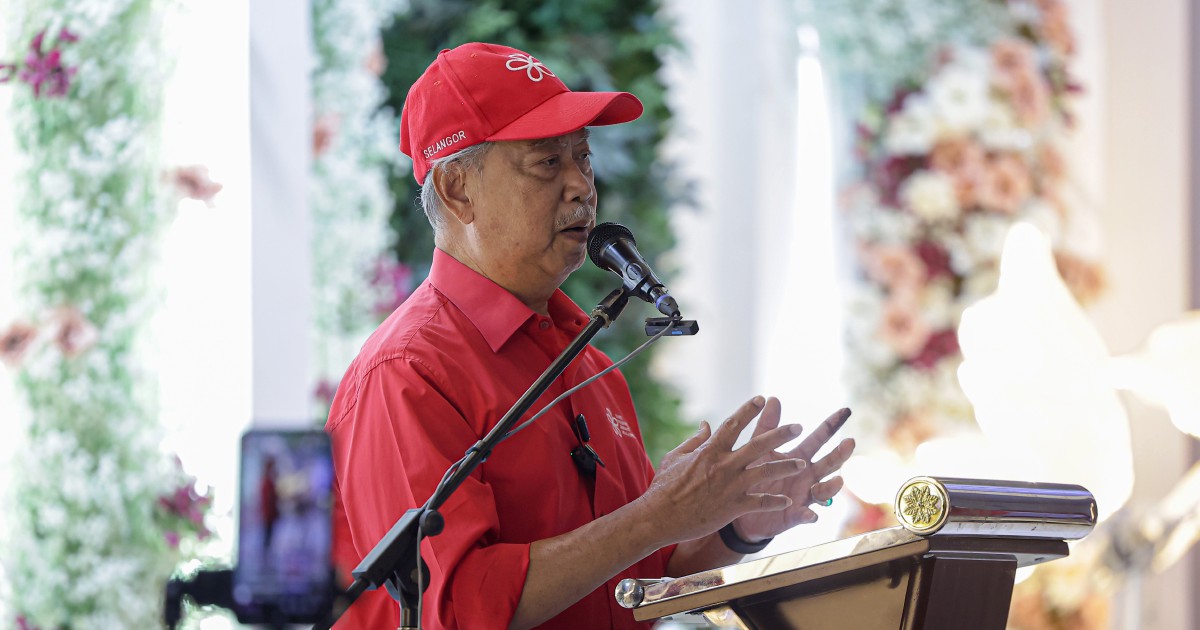
Tan Sri Muhyiddin Yassin, leading the Bersatu party, has moved swiftly to rebuff criticism from Umno's leadership over his party's decision to field candidates in the Negri Sembilan state election. The barb came from Datuk Seri Mohamed Khaled Nordin, who holds the position of vice-president in Umno, Malaysia's longest-established political party. Khaled's characterisation of Bersatu as playing a "spoiler" role—a term suggesting the party exists merely to divide opposition support—has provoked a sharp defensive response from Muhyiddin as both parties jockey for position ahead of the polling.
The dispute reflects deeper tensions within the ruling coalition that has governed Malaysia since the 2022 general election. Bersatu, the newer entity within this alliance, has increasingly sought to establish its own independent political footprint rather than operating as a junior partner entirely dependent on Umno's organisational machinery. The Negri Sembilan contest has become a microcosm of these internal coalition frictions, with Umno evidently keen to consolidate its traditional strongholds while Bersatu pursues its own electoral ambitions across the state.
Muhyiddin's response underscores a fundamental disagreement about coalition dynamics and the role each party should play. Rather than accepting Khaled's framing, Bersatu's president has chosen to challenge the premise itself—suggesting that Umno's criticism stems from concern about losing its monopoly on Negri Sembilan rather than from any principled position about coalition unity. This confrontational tone indicates that surface-level alliance cohesion continues to mask significant strategic divergences beneath.
For Malaysian voters in Negri Sembilan, this intra-coalition sparring raises questions about the nature of the government's commitment to shared governance. The state, located in the heart of the peninsula between Kuala Lumpur and the southern corridor, holds particular importance as a bellwether region. Its electoral outcomes have historically influenced political momentum at the national level, making it strategically valuable beyond its own political dynamics.
The timing of this quarrel also matters. State elections in Malaysia often serve as intermediate tests of ruling coalition strength and public sentiment toward government policies. As inflation pressures persist and economic growth remains moderate, Negri Sembilan voters are likely weighing whether current leadership is delivering on basic governance priorities. Coalition members competing directly against each other risks diluting their message and creating confusion among voters about what they actually stand for collectively.
Bersatu's argument essentially rests on the principle that as a coalition partner with ministerial representation and parliamentary seats, the party has legitimate grounds to contest elections independently. Muhyiddin could reasonably contend that coalition membership does not mean total political subordination to Umno's interests. This perspective has gained currency within Bersatu circles, particularly as the party seeks to establish its own power base and prevent being absorbed into a larger entity over time.
However, Umno's concern is not entirely without merit from a strategic perspective. When coalition partners field competing candidates in the same constituency, vote-splitting becomes a real risk, potentially allowing opposition parties to snatch seats that would otherwise fall to the government. This zero-sum dynamic has plagued coalition governments elsewhere in Southeast Asia and represents a genuine governance hazard. Khaled's "spoiler" language, while cutting, addresses a substantive problem about coalition electoral strategy.
The dispute also highlights how Malaysia's coalition politics have evolved since the transformative 2020 Muafakat Nasional period. Previously, such disagreements might have been resolved through backroom negotiations or delegated to top leadership mediation. The public nature of this exchange suggests that the traditional hierarchy for resolving internal coalition tensions may be weakening, or that both parties feel sufficiently empowered—or emboldened—to air grievances openly.
For observers across Southeast Asia watching Malaysia's political development, this moment reveals how even parties sharing government find themselves in fundamental competition for resources, legitimacy, and voter support. The Negri Sembilan election will provide empirical evidence of whether such intra-coalition contests harm the government's overall electoral prospects or whether voters can compartmentalise their choices sufficiently to support multiple government parties.
Muhyiddin's willingness to challenge Khaled directly also signals confidence within Bersatu about its electoral prospects in certain Negri Sembilan constituencies. Rather than backing down, the party appears to be doubling down on its independent identity. This could either represent strategic strength—the party genuinely believes it can win seats—or could reflect desperation about Bersatu's need to demonstrate relevance and secure electoral victories to justify its continued existence as a separate political entity.
The coming weeks will test whether this public disagreement escalates further or whether coalition leadership manages to channel the competition into manageable bounds. Negri Sembilan voters, meanwhile, will navigate a more complex political landscape than they might have anticipated, with the governing coalition itself presenting multiple competing options rather than a unified slate.

