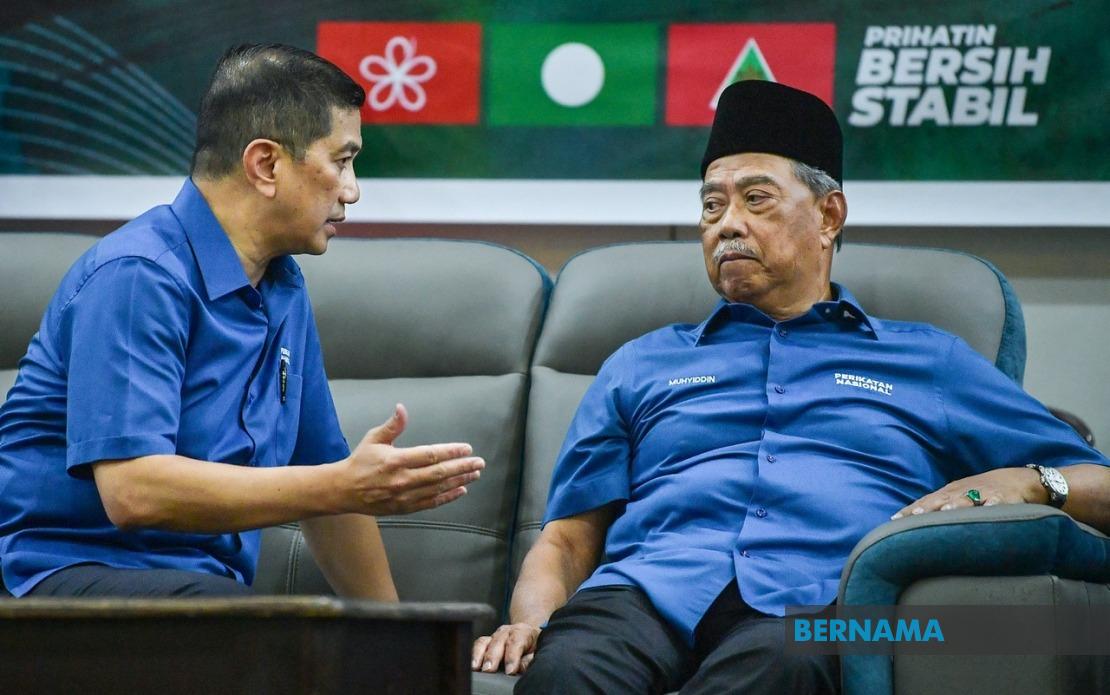
Former Prime Minister Tan Sri Muhyiddin Yassin has expressed support for a suite of economic relief measures announced by the government this week, positioning them as meaningful steps toward addressing the persistent financial pressures facing ordinary Malaysians and the business community. The Bersatu president's endorsement comes as Prime Minister Datuk Seri Anwar Ibrahim unveiled six immediate initiatives designed to ease the cost-of-living crisis and stimulate economic activity across multiple sectors.
Among the centrepiece announcements is the restoration of the RON95 fuel subsidy eligibility cap, which will increase from 200 litres to 300 litres per month. This expansion represents a direct intervention in household budgets, particularly for those dependent on vehicles for work and daily transportation. Muhyiddin acknowledged this as a practical measure to help both urban and rural populations manage transport costs in an environment of sustained global oil price volatility. The adjustment essentially increases the volume at which consumers can purchase subsidised petrol, reducing the gap between the subsidised rate and the open market price for many motorists.
Parallel to fuel relief, the government has raised the e-Invoicing exemption threshold for businesses, now extending relief to enterprises with annual sales up to RM3 million. This administrative simplification carries significant implications for Malaysia's small and medium-sized enterprise ecosystem. Many family-run operations and emerging traders operating just below the RM3 million revenue mark will be spared the compliance burden of mandatory digital invoicing systems, effectively reducing their operational and technology costs. For a nation where MSMEs represent a crucial engine of employment and innovation, such threshold adjustments function as quiet but meaningful support mechanisms.
Beyond immediate relief, the package includes substantial capital injections targeted at specific constituencies. An additional RM1 billion has been earmarked for micro-credit facilities serving small traders, complemented by RM200 million in direct grants for petty traders, night market vendors, and women operating home-based businesses. These allocations reflect recognition that informal and semi-formal economic participants—often excluded from conventional banking channels—require tailored financial support. Women entrepreneurs, who frequently operate within constrained capital environments, stand to benefit particularly from this targeted funding approach.
Muhyiddin stressed that the timeliness of disbursement would prove decisive in determining the real-world impact of these initiatives. Government announcements often lose effectiveness when allocation procedures lag or when eligible recipients face bureaucratic obstacles accessing funds. His emphasis on prompt ministry action reflects understanding that the window of public confidence in relief efforts can narrow quickly if promised assistance fails to materialise within reasonable timeframes. The credibility of government economic policy, particularly among lower-income households already stretched financially, depends on execution matching rhetoric.
The package also addresses public service delivery infrastructure through targeted sectoral investments. An additional RM500 million allocated for school maintenance reflects acknowledgment that educational facilities deterioration directly undermines quality of teaching and learning. Simultaneously, digitalisation of healthcare services and provision of artificial intelligence software subscriptions for youth signal the government's intent to modernise public service delivery while building digital competencies among younger populations. These investments represent longer-term capability enhancement rather than immediate consumer relief, yet their importance in reducing future service delivery costs and improving efficiency justifies inclusion in a comprehensive relief strategy.
Muhyiddin's statement, however, contained implicit criticism couched in diplomatic language. His call for government review of taxation and subsidy rationalisation policies suggests concern that certain measures—such as goods and services taxation or selective subsidy withdrawal—may be contributing to inflationary pressures on households. This framing invites consideration of whether the government's current policy architecture creates unintended burdens even as new relief measures attempt to counter them. The former premier's suggestion implies a need for holistic policy review rather than purely additive relief efforts.
The broader context for these initiatives involves Malaysia's challenging macroeconomic environment. Global inflation remains elevated, transportation costs continue pressuring household budgets, and local wage growth has not uniformly kept pace with cost-of-living increases. For many Malaysians, particularly in urban centres and among lower-income households, discretionary purchasing power has contracted noticeably over recent years. Against this backdrop, targeted relief packages serve both immediate economic purposes and political necessity, signalling government responsiveness to constituent concerns.
Muhyiddin's support, despite his current position as opposition figure, reflects the cross-party consensus that cost-of-living pressures demand intervention. This bipartisan acknowledgment suggests that relief measures may enjoy sufficient political backing to survive implementation without major obstruction. Importantly, his conditional endorsement—welcoming announced steps while urging "further comprehensive measures"—indicates that opposition actors view current initiatives as addressing only partial aspects of the larger problem.
The September 1 implementation date provides the government opportunity to demonstrate administrative capacity in executing complex, multi-agency programmes. Success in rolling out these initiatives efficiently could strengthen public confidence in government capability and potentially improve approval ratings ahead of future budget cycles. Conversely, implementation delays or incomplete reach to target populations could reinforce perceptions of government ineffectiveness in addressing citizen needs.
Looking forward, Muhyiddin's reference to Budget 2027 suggests anticipation of more substantial structural interventions beyond these immediate measures. This timeframe indicates that the government likely faces pressure to develop longer-term solutions to cost-of-living pressures rather than relying on successive rounds of temporary relief. For Malaysian households, the critical question involves whether these announced measures represent genuine turning points in affordability trends or merely tactical adjustments offering temporary respite before pressures intensify anew.
The package's success will ultimately depend on factors beyond government control—including global commodity prices, currency exchange rates, and regional economic dynamics. However, the announced initiatives do demonstrate commitment to providing targeted support across multiple constituencies: motorists, small traders, students, healthcare users, and technology-adopters. This multisectoral approach acknowledges that cost-of-living challenges manifest differently across society, requiring correspondingly varied interventions rather than one-size-fits-all solutions.

