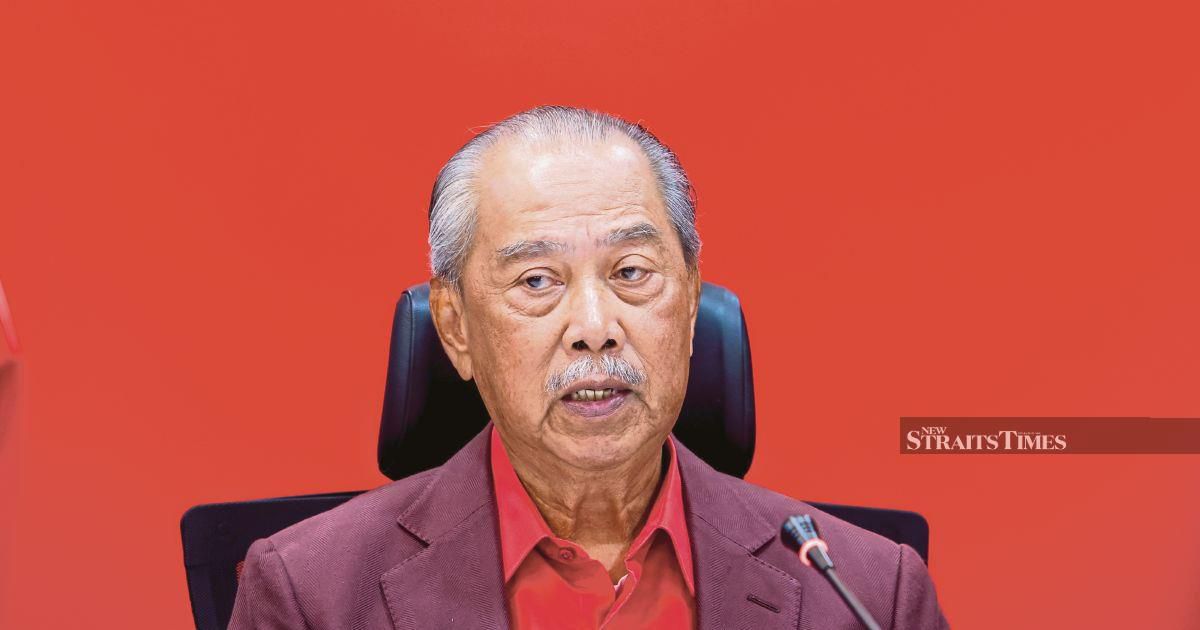
Bersatu president Tan Sri Muhyiddin Yassin has alleged that Umno is orchestrating a plan to destabilise the unity government that was established through a coalition arrangement with Pakatan Harapan. The accusation represents an escalation in internal tensions within Malaysia's current ruling coalition and reflects the persistent friction between Bersatu and its larger coalition partner.
Muhyiddin's assertion carries particular weight given his experience leading the Perikatan Nasional government, which collapsed in 2021 amid internal divisions and withdrawals of parliamentary support. The Bersatu leader appears to be drawing parallels between the strategies that previously undermined his administration and what he characterises as Umno's current approach towards the present government structure. This comparison underscores the fragility of coalition governments in Malaysia's contemporary political landscape, where shifting alliances and defections have repeatedly destabilised administrations.
The unity government was formed as a stabilising arrangement following the 2022 general election, bringing together Pakatan Harapan's secular-progressive wing with Umno, a Malay-Muslim party traditionally associated with the right. This partnership was designed to provide parliamentary stability and prevent further political turbulence after a series of government collapses and shifting coalitions that had marked Malaysian politics since 2018. However, the coalition has remained fractious, with regular disagreements over policy direction and ministerial appointments creating persistent friction.
Umno's position within the unity government has been strategically important yet historically uncertain. The party joined the coalition partly to avoid being sidelined in opposition, having lost significant ground in the 2022 election. Nevertheless, tensions between Umno's traditional base and Pakatan Harapan's supporters have created repeated challenges to coalition cohesion. Bersatu's accusation suggests that Muhyiddin views Umno as potentially reverting to the destabilisation tactics that characterised earlier coalition collapses.
The internal dynamics of the unity government have been further complicated by competing narratives about governance priorities. Umno has sought to emphasise traditional concerns relating to Malay-Muslim interests and economic development in Bumiputera communities, while Pakatan Harapan has pushed for institutional reforms and anti-corruption measures. Bersatu, though smaller than both partners, has attempted to position itself as a stabilising force even as it maintains distinct policy preferences on religious and constitutional matters.
Muhyiddin's warning also reflects broader concerns within the coalition about maintaining parliamentary numbers. Despite commanding a numerical majority in parliament, the unity government depends on the sustained participation of multiple parties with divergent ideological foundations. The loss of even a small number of parliamentarians through defection or withdrawal could jeopardise the government's ability to pass legislation and maintain executive authority. Historical precedent in Malaysian politics demonstrates that such defections can occur rapidly and can be catastrophic for governing coalitions.
The accusation must be understood within the context of Bersatu's own vulnerable position. As the smallest major component of the unity government, Bersatu has limited leverage in coalition negotiations and decision-making structures. Muhyiddin may be using public accusations against Umno to shore up support among Bersatu's core constituencies and to signal to other coalition partners that Bersatu remains vigilant against destabilisation attempts. This positioning could be interpreted as an attempt to establish Bersatu as an indispensable coalition partner despite its numerical weakness.
Regional implications of coalition instability in Malaysia warrant consideration. Southeast Asian observers have noted that Malaysia's political volatility affects regional economic confidence and diplomatic coherence within ASEAN frameworks. A collapse of the current government or further coalition fragmentation could disrupt Malaysia's participation in regional initiatives and its engagement with neighbouring countries. The region has experienced enough political uncertainty in recent years to make further Malaysian instability a matter of regional concern.
The unity government faces multiple policy challenges requiring sustained parliamentary cooperation. Addressing economic inequality, managing religious and ethnic sensitivities, implementing anti-corruption measures, and balancing development priorities all depend on maintaining coalition discipline. Defections or parliamentary disruptions would complicate these already difficult governance tasks. Muhyiddin's accusations suggest that he views the coalition as facing genuine risks to its continued operation.
Bersatu itself emerged from the earlier Perikatan Nasional experiment and carries some responsibility for that government's collapse. The party's current positioning as a defender of coalition stability may appear paradoxical to observers with longer memories of Malaysian politics. Nevertheless, Muhyiddin's experience leading a government that fell apart may genuinely inform his concern about similar patterns recurring within the present arrangement.
The accusations reflect the deeper challenge facing multi-party coalitions in Malaysian politics. With no single party commanding a decisive parliamentary majority, governments require constant negotiation, compromise, and compromise. The unity government has survived longer than many observers expected, but Muhyiddin's warnings suggest that maintaining this arrangement remains contingent and fragile.

