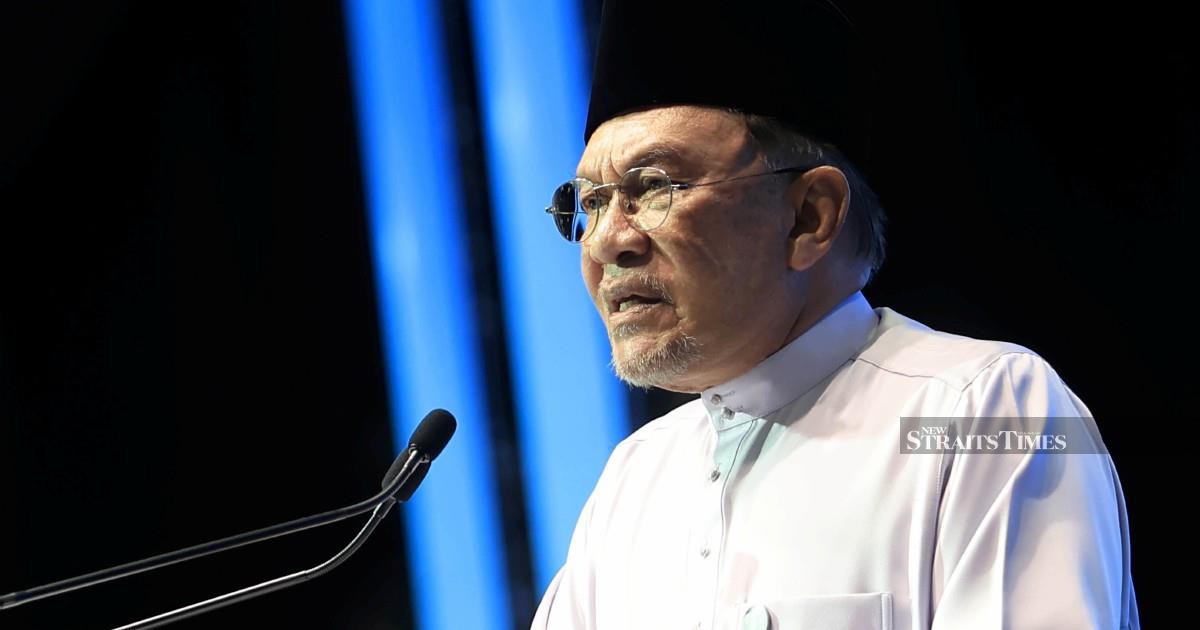
The Muar district office has moved to quash allegations that Prime Minister Datuk Seri Anwar Ibrahim encountered obstacles in accessing the Penghulu Mukim Sungai Balang Complex for a planned community engagement initiative during the Johor elections campaign period. District officials released a formal statement rejecting suggestions that the Prime Minister faced any impediments to using the government facility for the event scheduled in the preceding month.
The denial comes amid heightened political scrutiny in Johor, where electoral politics has intensified scrutiny of administrative conduct and the impartiality of government institutions. Such allegations carry particular weight during campaign periods, as they risk inflaming perceptions of partisan conduct by state machinery. By addressing the matter directly, the district office sought to establish that standard procedures governed the facility's usage and that no special circumstances or restrictions applied to the Prime Minister's intended engagement.
The Penghulu Mukim Sungai Balang Complex, a government-administered venue in the Muar parliamentary constituency, typically hosts various civic and community activities. Government complexes in Malaysia often serve multiple stakeholders across the political spectrum, and their management protocols are meant to ensure equitable access regardless of political affiliation. The district office's clarification appears designed to underscore this principle and rebut any suggestion that administrative neutrality had been compromised.
Muar, located in central Johor, represents a politically significant constituency that has historically witnessed competitive electoral contests. The district encompasses diverse communities and serves as an important bellwether for broader political dynamics within the state. Allegations concerning government facility access during election periods resonate beyond individual incidents, as they touch upon fundamental questions about the conduct of elections and the role of public administration in maintaining democratic integrity.
The timing of such claims during active campaigning suggests that opposition figures or critics may have raised concerns about the availability of government resources for political activities. In Malaysia's electoral context, concerns about the privileged access of ruling coalition politicians to government venues and resources have periodically emerged as campaign issues, reflecting broader anxieties about the relationship between administrative apparatus and political competition.
The district office's categorical denial indicates an effort to establish that proper protocols were followed in managing the facility's bookings and usage. Government premises nationwide operate under established administrative guidelines that specify how spaces can be reserved and utilized. These procedures theoretically apply uniformly to all applicants, though practical implementation and perception thereof sometimes diverge during politically charged periods.
By issuing a formal statement through the district office, Johor's administrative authorities positioned themselves to control the narrative around the incident and prevent the matter from gaining broader political momentum. Such clarifications, while often routine, carry symbolic importance during elections when public confidence in institutional impartiality directly influences voting behaviour and overall political legitimacy.
The incident, whether real or perceived, reflects the heightened sensitivity surrounding government institutions' conduct during electoral campaigns in Malaysia. Election management authorities and administrative officials face constant scrutiny to ensure that state resources are allocated fairly and that no political party receives unfair advantage through preferential access to government facilities or personnel. Any suggestion to the contrary risks undermining public trust in the electoral process itself.
For Prime Minister Anwar, who has made considerable political capital from anti-corruption messaging and institutional reform, any allegations regarding differential treatment or administrative obstruction hold particular resonance. His administration has positioned itself as committed to cleaning up governance and ensuring meritocratic conduct across institutions. The swift denial from the Muar district office aligns with this broader political project of asserting that administrative standards are being maintained and enforced.
The community engagement programme mentioned in the original incident would have served as a platform for the Prime Minister to interact directly with Muar constituents, an important component of election-period political activity. Such events allow national leaders to address local concerns, demonstrate responsiveness to grassroots issues, and build political support. Access to suitable venues for such activities therefore carries practical and symbolic importance for governing party campaigns.
The incident also illustrates how routine administrative matters can acquire political significance during elections. What might ordinarily be a straightforward facility booking issue becomes subject to interpretation through a political lens, with different parties reading the same events as evidence supporting their preferred narratives about institutional conduct and electoral fairness.
Government facility management during election campaigns remains an area where administrative transparency proves particularly valuable. Clear documentation of booking procedures, approval processes, and usage conditions helps establish that decisions were made according to standard protocols rather than political considerations. The district office's willingness to address the matter publicly contributes to this transparency objective, though it also indicates that questions about its conduct had gained sufficient circulation to warrant formal response.

