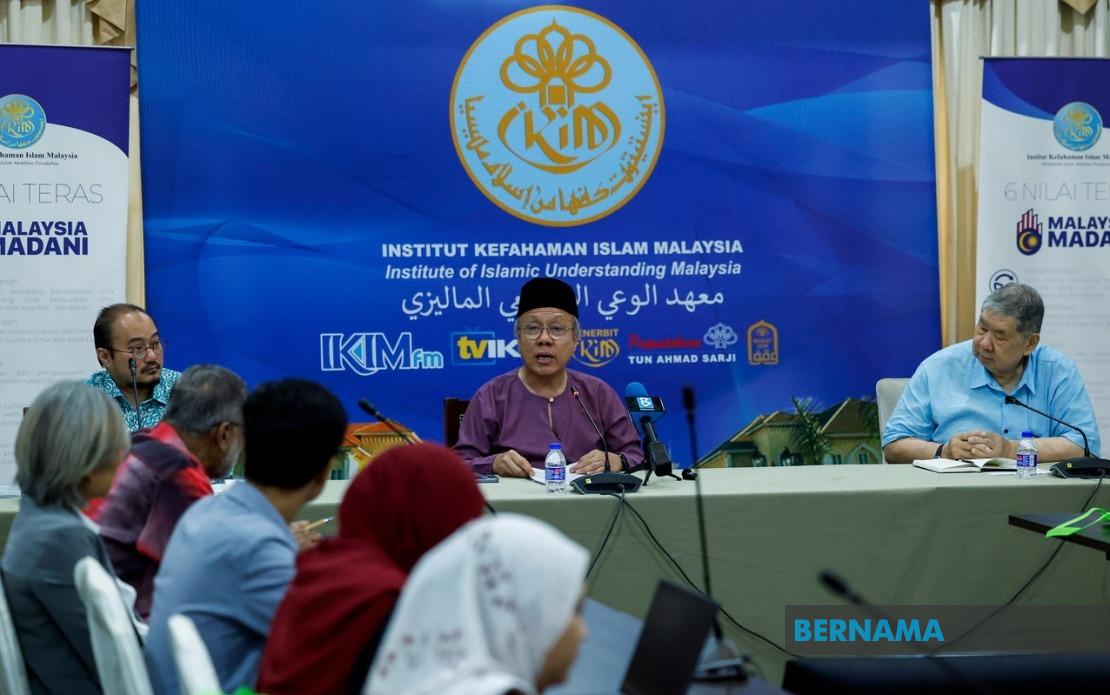
Three major Malaysian institutions joined forces on August 14 to equip media practitioners with deeper knowledge of the Tabung Haji Royal Commission of Inquiry, recognising that accurate journalism plays a crucial role in restoring public confidence in the embattled Islamic pilgrimage fund. The Malaysian Press Institute, the Institute of Islamic Understanding Malaysia and Lembaga Tabung Haji convened the closed-door briefing at IKIM's headquarters in Kuala Lumpur, attracting over two dozen journalists alongside senior leadership including TH Group Managing Director and Chief Executive Officer Mustakim Mohamad, MPI president Datuk Yong Soo Heong and IKIM Director-General Associate Professor Datuk Dr Mohamed Azam Mohamed Adil.
The initiative reflects growing recognition that the narrative surrounding Tabung Haji's challenges—rooted in governance and management failures that emerged through the RCI process—requires careful, informed communication to prevent misinterpretation or politicisation. Over nearly two hours, Mustakim conducted an extensive session detailing the RCI's scope and findings, while answering substantive questions from journalists tasked with translating complex institutional and financial matters for the Malaysian public. This direct engagement between the institution's leadership and the press represents a deliberate strategy to bridge the information gap that often widens during periods of institutional crisis or scrutiny.
MPI president Yong described the collaboration as a significant milestone in responsible journalism, emphasising that media practitioners needed access to verified information about the concrete steps Tabung Haji is implementing to rebuild depositor and investor trust. The programme's focus on accuracy carries particular weight given the sensitivities surrounding an institution managing funds destined for the Islamic pilgrimage—a religious obligation affecting millions of Malaysian Muslims and their families. By facilitating direct dialogue between TH management and newsrooms, the three organisations sought to prevent speculation and rumour from filling information vacuums.
Yong further suggested that this model could be replicated across Malaysia's states through expanded dialogue sessions and community town halls, indicating an intention to systematise efforts to communicate TH's recovery narrative beyond metropolitan media hubs. Such geographical expansion would address potential information asymmetries between federal and state-level coverage, ensuring consistent messaging reaches depositors and their communities regardless of location. The emphasis on dialogue over one-way communication reflects contemporary understanding that media literacy programmes succeed only when they create genuine space for journalists to interrogate claims and develop nuanced understanding.
A particularly noteworthy framing emerged from IKIM's Mohamed Azam, who explicitly cautioned against interpreting the TH RCI as a matter of religious or racial controversy. His intervention serves an important function in the Malaysian context, where institutional failures affecting Muslim institutions can inadvertently become politicised along communal lines. By anchoring the discussion firmly in governance, management integrity and institutional accountability, Mohamed Azam attempted to redirect public discourse toward universal principles of organisational stewardship applicable to institutions regardless of their religious or cultural character. This positioning matters significantly for Tabung Haji specifically, given its unique standing as a state-backed entity managing funds within an Islamic framework while operating within Malaysia's secular legal system.
Mohamed Azam's emphasis on trust as the core issue strikes at the heart of Tabung Haji's predicament. The institution functions not merely as a financial entity but as a custodian of a pillar of Islamic faith—one that depositors entrust with savings often accumulated over years of personal sacrifice. When management failures compromise that trust, the damage extends beyond balance sheets into spiritual and communal confidence. By urging journalists to communicate this narrative, Mohamed Azam implicitly acknowledged that media coverage shapes public perception of whether Tabung Haji remains worthy of that sacred trust, making accurate reporting not merely an informational matter but one with implications for religious practice and family planning across Muslim communities.
The literacy programme also underscores an often-underappreciated dimension of institutional recovery: the media's role as intermediary between management intent and public understanding. Journalists attending the briefing would return to newsrooms equipped not just with facts but with deeper contextual appreciation of management strategies, timeline considerations and the institutional logic behind remedial measures. This informed reporting becomes particularly valuable when covering incremental progress, which might otherwise appear inconsequential without proper explanation of its significance within broader recovery architecture. The difference between a journalist with surface-level knowledge and one with contextual depth often determines whether coverage illuminates genuine progress or contributes to sustained scepticism.
For Malaysian readers, the timing and substance of this initiative carry broader implications beyond Tabung Haji itself. The RCI process, while sometimes politically contentious, represents Malaysia's institutional mechanisms for investigating serious governance failures within public entities. The commitment by MPI, IKIM and TH to support informed media coverage reflects confidence in transparent accountability processes and recognition that public institutions ultimately depend on citizen confidence sustained through honest, accurate communication. The programme demonstrates that institutional leadership and media practitioners, despite sometimes adversarial relationships, share mutual interest in narratives grounded in verifiable fact rather than speculation or manipulation.
The collaborative structure also reveals evolving approaches to stakeholder engagement in contemporary Malaysia. Rather than relying solely on official announcements or reactive responses to critical coverage, the three institutions proactively created space for media literacy and direct dialogue. This reflects maturation in understanding that in an information-saturated environment, institutional credibility depends on demonstrating openness to scrutiny and commitment to informed public discourse. The decision to involve IKIM as co-organiser particularly signals recognition that religious and cultural dimensions of public trust require input from entities specialising in interfaith and intercultural understanding.
Looking forward, the programme's potential replication across states suggests a model other Malaysian institutions might adopt when facing significant governance challenges or requiring public confidence restoration. By investing in media literacy rather than merely conducting public relations exercises, institutions acknowledge that journalists serve essential democratic functions in helping citizens understand complex organisational matters. Whether this particular initiative significantly shifts media coverage remains to be seen, but the commitment to evidence-based journalism and structured dialogue between institutions and the press represents a constructive approach to navigating the intersection of governance, accountability and public communication in Malaysia's evolving democratic ecosystem.

