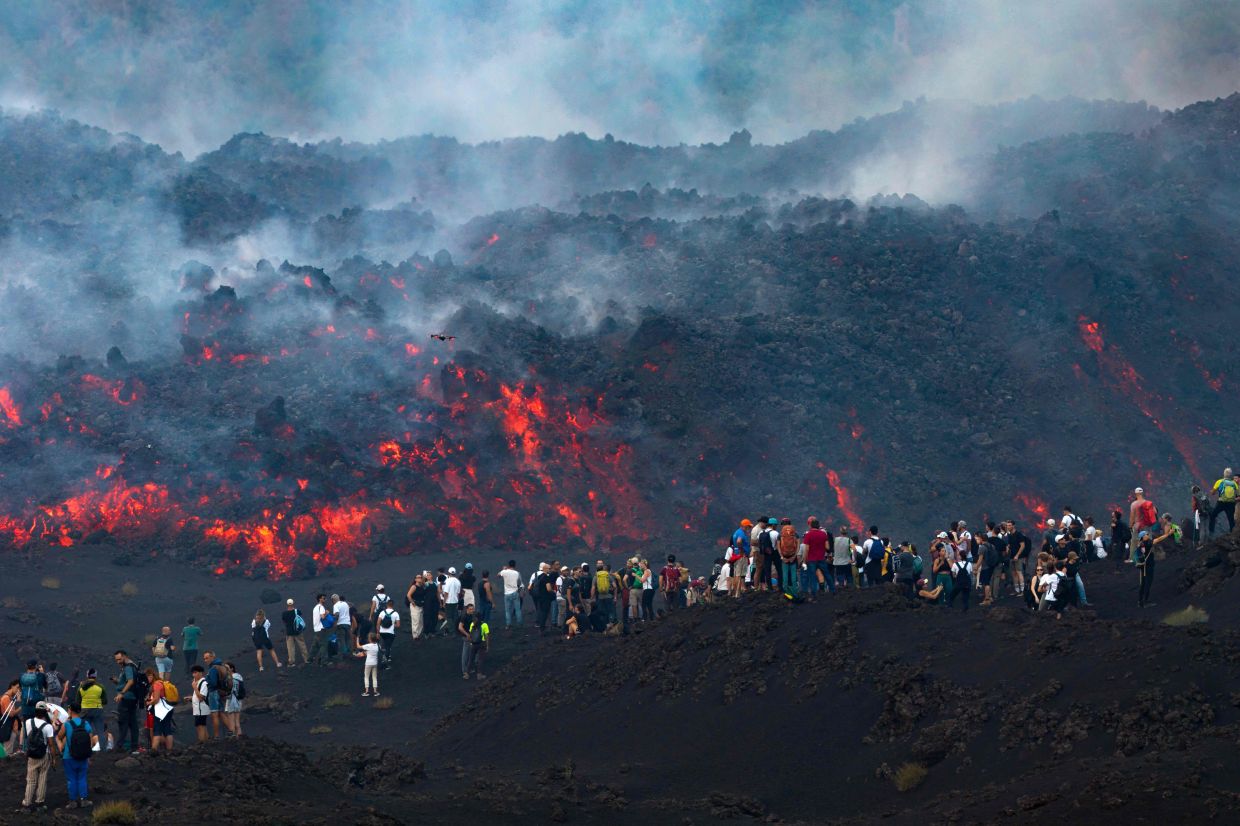
Captivating footage of molten lava cascading down Europe's tallest active volcano has triggered an unprecedented influx of visitors to Mount Etna in Sicily, generating both business opportunities and serious safety headaches for local authorities and tourism operators. The Italian volcano has maintained intense eruptive activity over several consecutive days, projecting ash high into the atmosphere and sending glowing streams of lava down its slopes—a spectacle that has proved irresistible to adventure-seekers and photographers worldwide.
The surge in visitor numbers represents an extraordinary challenge for the guides and tour companies operating on Etna's slopes. Daniele Perricelli, a 41-year-old guide operating with the Guide Etna company, reports that his operation normally accommodates several dozen climbers each evening during peak summer tourism. However, the current eruption has fundamentally transformed demand patterns, with the company now fielding approximately 300 daily requests—a threefold increase compared to typical summer seasons. This extraordinary surge reflects not merely curiosity but a deeper human fascination with active geological forces and the allure of witnessing raw natural power at close quarters.
Peers in the guiding profession have characterised the current phenomenon as a "touristic eruption," a term capturing both the commercial appeal and the unprecedented visitor volume. Ernesto Maria Magri, another experienced local guide, explains that the eruption attracts such diverse audiences because viewing opportunities remain accessible and relatively controlled, distinguishing Etna from more dangerous or remote volcanic sites. Notably, the phenomenon extends beyond external tourists—local Sicilian residents have also joined the nightly ascents, though some approach the slopes informally and without proper preparation, potentially creating disorder and safety risks on the mountain itself.
The infrastructure supporting safe tourism on Etna faces considerable strain under these unprecedented numbers. According to current regulations, visitors may climb independently to approximately 2,400 metres altitude, but ascending beyond that threshold requires accompaniment by licensed guides. Perricelli estimates that roughly 2,000 people attempt the climb each evening, transforming the footpaths into congested routes ill-suited to handling such density. Among the most visibly troubling observations have been climbers wearing entirely inappropriate footwear—flip-flops have been spotted among ascending groups—and several high-profile visitors, including Italian television personality Diletta Leotta, have drawn criticism on social media for positioning themselves dangerously close to active lava flows while photographing the phenomenon.
Guides emphasise that while proximity to flowing lava can indeed be achieved relatively safely in lower-altitude zones where the molten material has substantially cooled, the broader mountainous environment remains inherently unstable and unpredictable. Perricelli underscores that navigating Etna successfully requires expertise in "reading the mountain"—interpreting subtle signs of geological instability and volcanic behaviour that untrained visitors cannot perceive. Those attempting unguided ascents forfeit this critical knowledge, exposing themselves to hazards ranging from toxic gas concentrations to sudden ground collapses or unexpected eruption intensification. He has called upon state authorities to strengthen regulatory oversight and enforcement, preventing inadequately prepared individuals from accessing dangerous elevations.
The volcanic activity has triggered significant disruption to Sicily's crucial transportation infrastructure. Italy's civil protection authority has maintained a yellow alert for Mount Etna—the second-highest classification on a four-tier warning system—indicating frequent eruptions with potential for escalating explosiveness. The ash plumes rising from the volcano have repeatedly forced the closure of Catania International Airport, the principal gateway serving eastern Sicily and one of Italy's most visited regions. Since the eruptions intensified last Saturday, media reports indicate hundreds of flights have been cancelled, stranding passengers and disrupting travel schedules across a wide network.
Catania airport's strategic importance to regional tourism and commerce cannot be overstated. The facility processed approximately 12 million passenger movements throughout 2024, serving as a critical connection point for visitors destined for Sicily's renowned beaches, historical sites, and Mediterranean attractions. The repeated flight cancellations and operational restrictions caused by volcanic ash represent a substantial economic impact, affecting airlines, accommodation providers, restaurants, and other tourism-dependent businesses throughout the island. This paradoxical situation—where Etna's eruption simultaneously attracts tourists yet disrupts their ability to access the region—illustrates the complex interplay between natural phenomena and modern tourism systems.
The current eruption reflects Etna's characteristic volatility rather than an anomalous event. As Europe's most active volcano, Etna maintains a near-perpetual state of activity, with eruptions occurring at intervals measured in months or years. However, the visibility and intensity of the present eruption cycle, combined with the rapid dissemination of striking imagery through social media and international news platforms, has created conditions for surge in visitor numbers. This convergence of geological activity and digital communication technology presents authorities with novel management challenges, as traditional visitor management strategies struggle to accommodate exponentially increased demand.
The tension between facilitating tourism and ensuring visitor safety encapsulates broader questions about managing popular natural attractions. Sicily's tourism economy depends substantially on its natural attractions, including Etna itself, yet uncontrolled visitor access to active volcanic sites creates genuine hazards. Professional guides operate within regulatory frameworks designed to balance these competing interests, but those frameworks assume relatively stable visitor volumes and climber behaviours. The current situation demonstrates that extraordinary natural events can rapidly overwhelm existing safety infrastructure, potentially creating conditions where individual decision-making becomes the primary determinant of personal risk—a situation no regulatory system can entirely prevent.
Looking ahead, Sicilian authorities face a multifaceted challenge. Strengthening enforcement of climbing regulations, implementing capacity limits, and perhaps expanding guide-based tourism offerings could help manage visitor flows more effectively. However, the fundamental appeal of witnessing active volcanism—the primal human attraction to natural forces—suggests that visitor pressure may persist for as long as the eruption remains visually spectacular and accessible. For the tourism sector and local communities, this represents both unprecedented opportunity and considerable operational stress.

