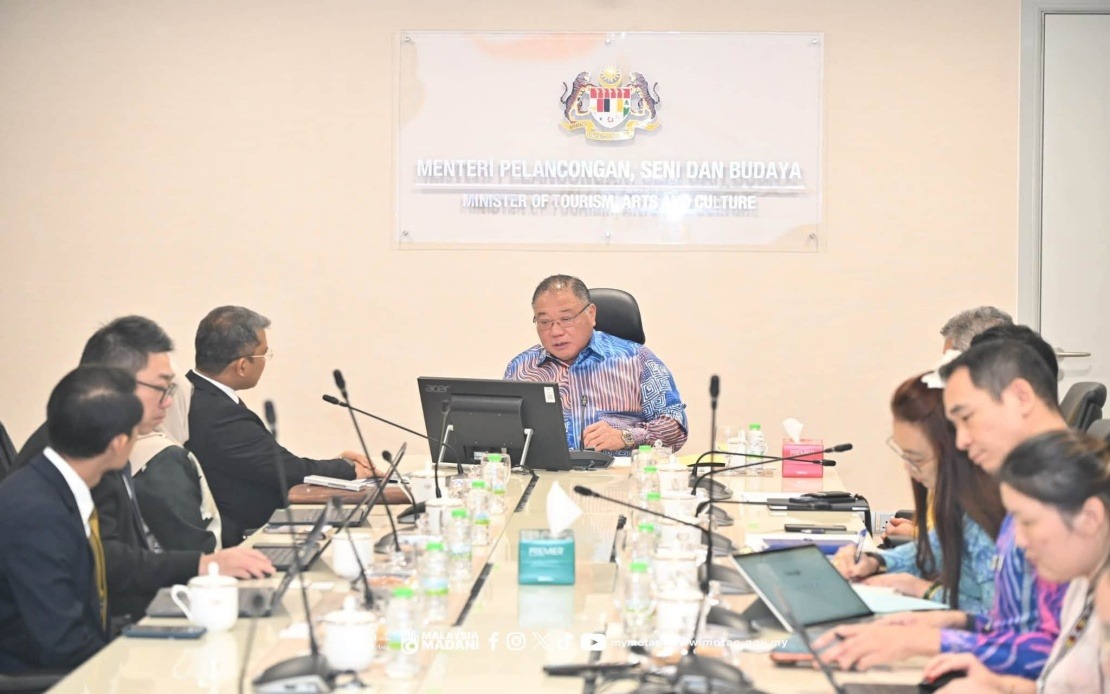
Malaysia's push to establish itself as a premier global tourism destination has moved into higher gear with a reinforced strategic alliance between the Ministry of Tourism, Arts and Culture (MOTAC) and Malaysia Aviation Group (MAG). The partnership, discussed during a recent meeting between Tourism, Arts and Culture Minister Datuk Seri Tiong King Sing and MAG Group president and chief executive officer Captain Nasaruddin A Bakar, underscores the government's determination to leverage aviation capacity as a critical driver for the extended Visit Malaysia Year 2026 campaign.
The Visit Malaysia Year 2026 initiative, which was originally set to conclude this year but has now been extended into next year, represents a significant bet on tourism's contribution to Malaysia's economic growth and international reputation. By lengthening the campaign period, policymakers are signalling confidence that sustained marketing efforts, coupled with infrastructure and service improvements, can deliver measurable increases in visitor arrivals. The extended timeline also provides the tourism and aviation sectors with additional breathing room to align their strategies and execute coordinated initiatives that would be difficult to accomplish under tighter deadlines.
A cornerstone of the strengthened partnership involves expanding Malaysia Aviation Group's international footprint across strategically important markets. India, China, and Europe have emerged as priority regions for network expansion, reflecting demographic trends and economic patterns that suggest rising outbound travel capacity from these regions. These markets represent enormous pools of potential visitors; India's growing middle class and China's recovering post-pandemic tourism appetite make them particularly attractive targets. Europe, meanwhile, offers high-value leisure and business travellers with longer average stays and higher spending patterns. By securing expanded flight capacity and favourable routing through MAG, Malaysia positions itself to capture a larger share of this international travel demand.
Beyond traditional gateways, both organisations have identified emerging leisure destinations as opportunities for differentiation. The exploration of Fukuoka as a new flight destination signals an openness to tap secondary Asian cities that feed tourism demand to regional hubs. Fukuoka, located in Japan's Kyushu region, represents a growing source of leisure travellers and connects Malaysia to networks that extend throughout Japan and the wider Asia-Pacific. Such route development would complement existing connectivity while potentially opening new passenger segments who might not otherwise have convenient access to Malaysia.
The seasonal demand challenge that confronts Malaysia's tourism sector receives explicit attention in the partnership framework. By developing joint marketing and promotional strategies focused on the shoulder and low seasons, MOTAC and MAG aim to smooth out the pronounced peaks and troughs that characterise Malaysia's tourism calendar. The low season typically coincides with Malaysia's monsoon period and the northern hemisphere's summer holidays, when competing destinations attract higher volumes. Strategic pricing, bundled offerings, and targeted messaging can shift consumer behaviour and fill otherwise underutilised aircraft capacity during these periods, improving financial returns for both entities.
Load factor optimisation—the percentage of available seats actually sold on flights—remains a persistent concern for regional airlines. MOTAC's collaboration with MAG on promotion strategies during weak demand periods directly addresses this operational reality. Higher load factors translate to improved unit economics for the airline and generate additional visitor numbers that benefit hotels, attractions, restaurants, and guides throughout Malaysia's tourism ecosystem. This virtuous cycle, where improved air access leads to more visitors and broader economic benefits, justifies the government's investment in the partnership.
The partnership also prioritises elevating service standards across the entire passenger journey. Improvements to cabin facilities, in-flight catering, and cabin crew training reflect recognition that tourism competitiveness increasingly depends on the quality of the travel experience itself, not merely destination attractions. Malaysian carriers operating on long-haul routes to Europe, India, and China directly compete with established regional and global carriers on factors like seating comfort, meal quality, and staff professionalism. Investments in these areas signal that MAG recognises the imperative to match or exceed competitor offerings to justify premium positioning and customer loyalty.
Supporting the domestic tourism ecosystem emerges as a crucial ancillary benefit of strengthened government-aviation coordination. By deliberately channelling increased visitor volumes through Malaysian aviation infrastructure, local ground operators, hospitality businesses, and tourism service providers gain expanded market access without needing to develop international marketing capabilities independently. MOTAC's explicit commitment to amplifying benefits for domestic industry players acknowledges that tourism's multiplier effects depend on keeping spending within the local economy rather than leaking to international competitors.
The broader strategic calculus underlying this partnership reflects Malaysia's positioning within intensifying regional tourism competition. Thailand, Vietnam, Indonesia, and the Philippines all aggressively pursue international visitors and possess comparable cultural, natural, and historical assets. Differentiation through superior air connectivity, competitive pricing, and exceptional service quality becomes essential. Furthermore, as Southeast Asian middle classes expand and intra-regional travel grows, Malaysia's geographic position at the region's centre becomes an advantage only if air infrastructure and pricing make it accessible and attractive relative to alternatives.
Government and private sector coordination on tourism development carries lessons for Malaysian policymakers beyond aviation and tourism narrowly construed. The partnership model demonstrates how strategic alignment between regulatory ministries and operational companies, underpinned by shared growth objectives and performance metrics, can generate outcomes superior to either party acting independently. This collaborative framework could potentially extend to other infrastructure sectors where government interest in economic outcomes aligns naturally with private sector commercial incentives.
The economic implications for Malaysia warrant careful attention from observers of the country's post-pandemic recovery trajectory. Tourism previously constituted a significant foreign exchange earner and employment generator, particularly in coastal states and cultural centres. Renewed strategic focus on expanding visitor volumes addresses both macroeconomic objectives—foreign exchange earnings and balance-of-payments support—and microeconomic goals benefiting regional and local communities dependent on tourism. If successfully executed, the Visit Malaysia Year 2026 campaign, powered by expanded aviation capacity and coordinated marketing, could deliver tangible benefits to Malaysia's growth prospects while enhancing the country's international profile.

