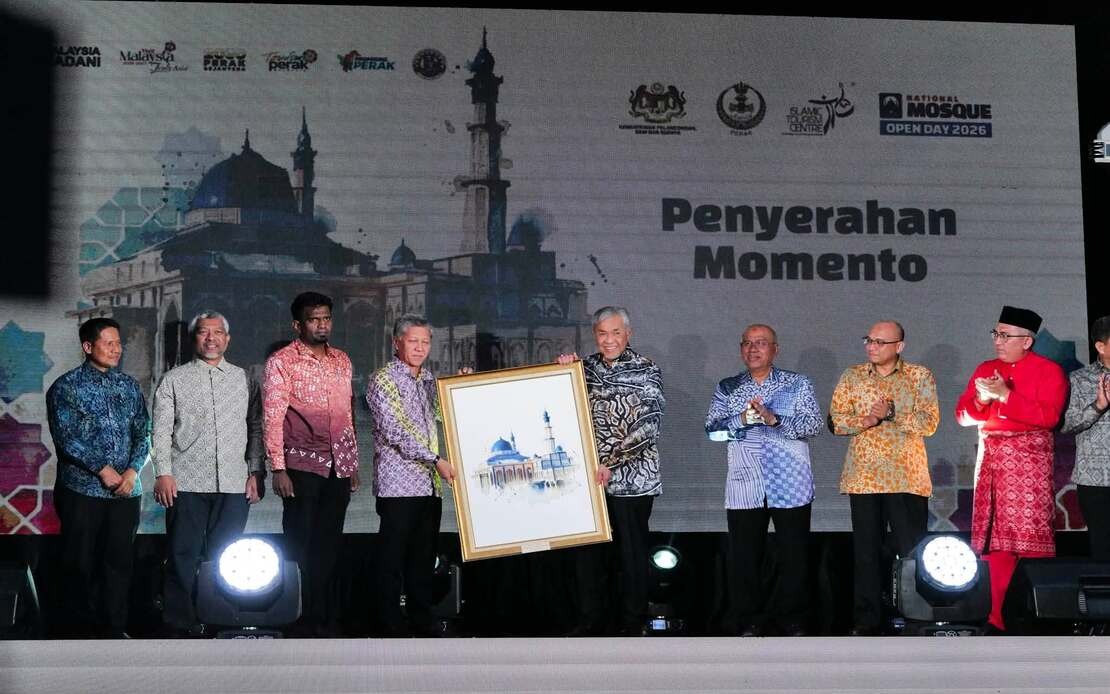
Deputy Prime Minister Datuk Seri Dr Ahmad Zahid Hamidi has articulated a vision for Malaysian mosques that extends beyond their traditional spiritual role, positioning them as vital components of the nation's tourism infrastructure. Speaking at the National Mosque Open Day 2026 event in Bagan Datuk on August 15, he emphasised that mosques can simultaneously serve as places of worship, centres for Islamic education and preaching, and attractive destinations for tourists seeking to understand Malaysia's religious heritage and cultural identity.
The underlying philosophy Ahmad Zahid presented reflects a modernist approach to cultural tourism that is gaining momentum across Southeast Asia. Rather than viewing religious institutions as spaces cordoned off from secular visitors, he advocated for a welcoming model where mosques become gateways through which international and domestic tourists can experience Islam as practised in Malaysia. This approach recognises that many visitors arrive with incomplete or stereotypical understandings of Islamic culture, and mosques positioned as tourism products could serve an important educational function by demystifying Islamic practices and values for people of all backgrounds.
A critical element of Ahmad Zahid's proposal involves the experiential dimension of tourism. He suggested that visitors should leave Malaysia not merely with photographs of architectural beauty, but with substantive memories of the hospitality and Islamic values they encounter in person. This distinction is significant because it implies a deeper engagement than passive sightseeing—visitors would interact with community members, observe actual worship practices, and potentially participate in educational programmes. Such encounters, if managed thoughtfully, could foster more nuanced understanding of Islam in Malaysia and counteract misconceptions prevalent in many source markets.
The National Mosque Open Day initiative exemplifies the practical implementation of this tourism-integration concept. By designating specific periods when mosques open their doors to the general public for guided tours, educational sessions, and cultural activities, organisers create controlled environments where both Muslim and non-Muslim visitors can engage respectfully with Islamic institutions. Ahmad Zahid stressed that these programmes should be replicated nationwide, creating a network of accessible mosque-based experiences that collectively position Malaysia as a destination for Islamic heritage tourism.
Concurrent with this vision, the Islamic Tourism Centre has been formalising the integration of mosques into the tourism ecosystem by designating selected institutions as "Tourism Mosques." Masjid Tuminah Hamidi in Bagan Datuk, which Ahmad Zahid's family established as a waqf in 2023, has earned the distinction of being Malaysia's 98th Tourism Mosque—a designation awarded partly due to its distinctive architectural features and its integrated gallery functioning as a centre for Islamic knowledge. This formal recognition system creates incentives for mosques to enhance their facilities and develop tourist-friendly infrastructure.
The broader statistics underscore the scale of potential. With 6,851 mosques currently operating nationwide, the existing designated Tourism Mosques represent a fraction of possible participants. The Islamic Tourism Centre's ambition to significantly increase this number indicates confidence in the economic and cultural viability of mosque-based tourism. However, expansion requires coordinated effort across multiple stakeholders, including the Department of Islamic Development Malaysia (JAKIM) and state-level Islamic religious authorities, which are now developing standardised guidelines to facilitate participation while maintaining spiritual integrity.
Supporting infrastructure initiatives have been developed to ensure the success of this ecosystem. The Muslim-Friendly Tourism and Hospitality Assurance and Recognition programme establishes quality standards for institutions serving Muslim visitors, while the Muslim-Friendly Tourist Guides initiative trains professionals to explain Islamic concepts and practices to non-Muslim audiences. These complementary programmes reflect the broader "Muslim-Friendly, not Muslim-Only" concept—an approach that welcomes visitors of all faiths while accommodating the specific needs and preferences of Muslim travellers.
For Malaysia's tourism industry, this development offers significant strategic advantages. Islamic heritage tourism represents a growth sector globally, with Muslim-majority populations increasingly travelling to explore Islamic civilisation in different contexts. By systematically developing mosque-based tourism products, Malaysia positions itself competitively against destinations like Turkey, Egypt, and Jordan that have long leveraged Islamic heritage as a tourism draw. The Malaysian approach, however, carries a unique dimension: it integrates Islamic tourism seamlessly with other attractions, allowing visitors to experience Malaysia's multicultural identity while learning about Islamic practice within a plural society.
The initiative also carries implications for interfaith relations and community cohesion within Malaysia itself. When mosques become community-facing tourism destinations, they necessarily become more engaged with non-Muslim Malaysians and international visitors. This increased interaction, particularly when structured through educational programmes, can break down silos and reduce the distance between religious communities. Ahmad Zahid's framing emphasised mutual understanding and appreciation, suggesting that mosque tourism serves not only economic objectives but also social harmony goals.
Yet the success of this model depends critically on execution. Mosques must balance welcoming visitors with protecting the sanctity of worship spaces and maintaining prayer schedules. Clear operational guidelines, adequate training for staff and volunteer guides, and visitor education about appropriate behaviour become essential. The coordination mechanisms being developed by ITC, JAKIM, and state authorities will be tested in determining whether standards can be uniformly applied across diverse mosque communities with varying resources and capacities.
Regional context matters as well. Southeast Asian nations have increasingly recognised tourism's potential as an economic multiplier, but few have systematically leveraged religious institutions as tourism infrastructure. Malaysia's approach, if successfully implemented, could become a model for other Muslim-majority nations in the region seeking to develop Islamic heritage tourism while respecting religious values. Conversely, challenges encountered—whether related to overcrowding, inappropriate visitor behaviour, or strain on mosque staff—could offer valuable lessons for neighbouring countries considering similar initiatives.
The integration of mosques into Malaysia's tourism ecosystem ultimately represents a calculated bet that religious institutions can thrive in dual roles. Ahmad Zahid's vision presumes that mosques serving as both spiritual centres and tourism attractions need not compromise either function, provided proper governance and community engagement mechanisms exist. Whether this balance can be achieved at scale across Malaysia's diverse mosque network remains an open question that will require sustained attention from government agencies, religious authorities, and mosque communities themselves as the initiative develops.

