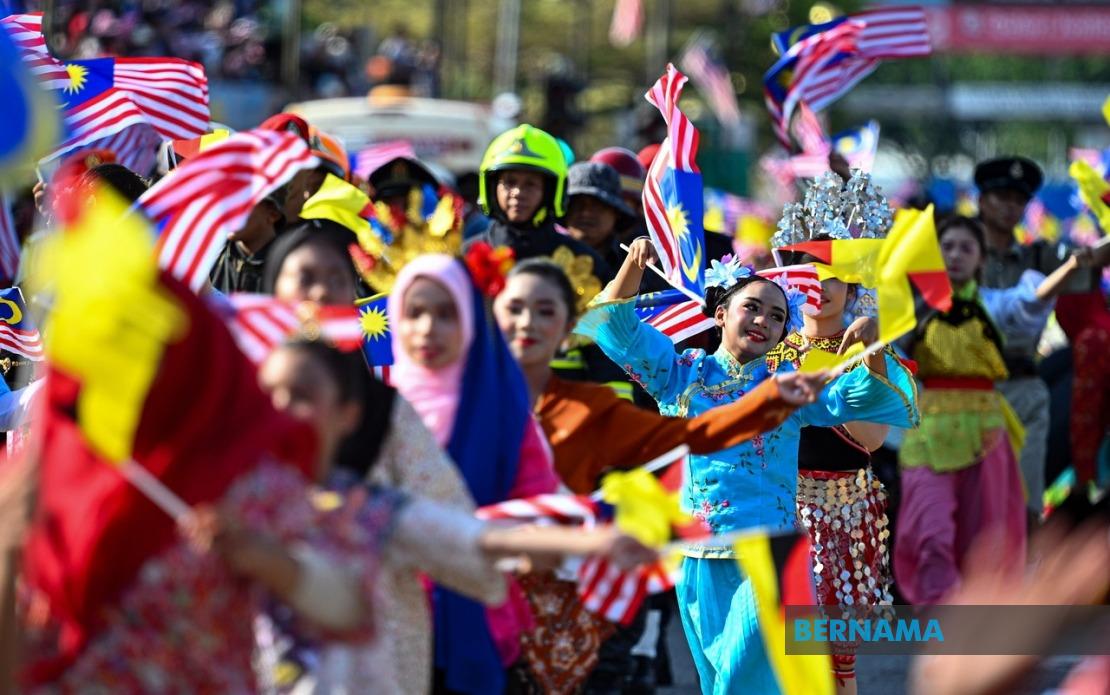
Patriotic fervour filled the streets of Seremban when over 30,000 Malaysians converged on Dataran Majlis Bandaraya Seremban for Negeri Sembilan's state-level National Day celebration, underscoring the enduring appeal of the nation's most significant civic occasion. The gathering brought together people from diverse racial and religious backgrounds, all united in commemorating the country's independence heritage. The turnout caught many observers' attention, as visitors began arriving well before dawn, a testament to the event's continued resonance among ordinary Malaysians seeking to participate in collective expressions of national identity.
Menteri Besar Datuk Ismail Lasim attributed the impressive attendance to Negeri Sembilan residents' genuine enthusiasm for the occasion and their unwavering love for the country. Speaking to journalists, he revealed that some attendees had made the effort to reach the venue by 5.30 am, demonstrating a level of commitment that spoke volumes about how deeply many Malaysians still value National Day observances. The Menteri Besar noted that the public's response this year validated the decision to organise the event, suggesting that despite challenges facing the nation, the traditional markers of shared identity remain potent rallying points for citizens from all walks of life.
The state authorities made a deliberate decision to scale back the parade's scale and duration compared to previous years, opting for caution regarding potential health impacts from haze exposure. Although atmospheric conditions on the day proved favourable, organisers determined that reducing the number of contingents and assets participating in the procession represented a prudent public health measure. This approach reflected growing sensitivity to environmental concerns in Malaysia, where seasonal haze episodes have become an increasingly pressing issue affecting outdoor public gatherings. The modification nonetheless failed to dampen enthusiasm, suggesting that the experience of collective participation mattered more to attendees than the spectacle's grandeur.
Tuanku Muhriz Tuanku Munawir, the Yang Dipertuan Besar of Negeri Sembilan, graced the occasion with his presence, arriving at approximately 8.20 am alongside Tunku Ampuan Besar Tuanku Aishah Rohani Tengku Besar Mahmud. Their attendance elevated the event's ceremonial significance and reinforced the monarchy's continued role in anchoring national celebrations at the state level. The royal presence was received by Datuk Ismail, highlighting the formal protocols that govern such occasions and the importance placed on respecting constitutional traditions.
Despite the deliberate reduction in parade elements, the celebration still mobilised substantial institutional resources and human participation. A total of 82 contingents comprising more than 4,000 participants marched through the streets, representing a cross-section of Malaysian society including government departments, statutory bodies, non-governmental organisations, educational institutions spanning primary through tertiary levels, and private sector enterprises. This breadth of representation underscored how National Day serves as an occasion bringing together the machinery of state, civil society, and commerce in symbolic unity.
The main ceremonial component, the Guard of Honour, was executed by three officers and 103 soldiers from the 15th Battalion Royal Malay Regiment stationed in Senawang, commanded by Major Dr Muhammad Hazim Abdul Qhalib. The regiment's involvement reflected the Malaysian military's central role in national commemorations, a tradition rooted in the armed forces' historical contribution to independence. A combined military band comprising musicians from the 24th Battalion Royal Malay Regiment and the Malaysian Army Basic Training Centre performed patriotic selections including Sembah Tari and Seruan Tentera, musical pieces laden with nationalist significance that resonate across generations of Malaysians.
The parade itself featured a diverse array of assets that captured public imagination, including vintage vehicles, classic motorcars, and restored bicycles that evoked historical periods in Malaysia's development. These exhibits appealed particularly to younger attendees, offering tangible connections to the nation's past through physical artefacts. Defence and security agencies including the Royal Malaysia Police, Immigration Department, Fire and Rescue Department, Malaysian Civil Defence Force, and Health Ministry all contributed vehicles and personnel to the procession, demonstrating the breadth of institutional participation that characterises major national occasions.
Family attendance featured prominently in the celebration's makeup, suggesting that National Day retains significance as an intergenerational experience. Housewife Siti Ruayiza Rebin, aged 42, explained that she had deliberately maintained the tradition of bringing her three children to National Day events since they were young, viewing the occasion as an educational opportunity to instil appreciation for national independence and the sacrifices previous generations endured. This pedagogical dimension of National Day observance reflects broader concerns about maintaining historical consciousness among younger Malaysians, a challenge educators and policymakers have increasingly emphasised.
Mohd Khairul Azmi, a private-sector employee aged 45, brought his two young children, deliberately arriving at 6 am to secure favourable viewing positions. He noted that his children's particular fascination with vintage vehicles and security assets demonstrated how the celebration's visual components engaged younger minds. His reflection that such occasions teach children to appreciate history and recognise earlier generations' contributions articulated a widely held conviction that National Day celebrations serve purposes beyond ceremonial observance, functioning as informal educational events that strengthen intergenerational transmission of national values.
The turnout in Seremban resonates more broadly across Malaysia as evidence that despite contemporary challenges—ranging from political fragmentation to economic pressures to social divisions—occasions celebrating shared national identity retain mobilising power. The gathering demonstrated that when given opportunity for non-partisan civic participation, Malaysians from diverse backgrounds continue finding value in such collective expressions. For policymakers and observers watching Malaysia's trajectory, such scenes offer reassurance that the foundations of national cohesion, though periodically tested, remain more resilient than cynical assessments sometimes suggest.
Looking ahead, the success of Negeri Sembilan's National Day celebration establishes a template for other states considering how to balance participatory enthusiasm with environmental and public health considerations. The decision to reduce parade elements while maintaining the core ceremonial experience suggests that substance matters more than spectacle to most attendees. As Malaysia navigates evolving social and environmental challenges, this lesson—that quality of collective civic participation matters more than its scale—may inform how national occasions are organised in coming years, potentially serving as a model for other state-level celebrations seeking to deepen public engagement.

