The Badminton World Federation's World Championships coming to New Delhi next week will feature an unconventional addition to its organisational team: workers trained in the art of imitating langur monkey calls to control the city's notorious primate population. This unusual workforce reflects the real challenges facing major event organisers in India's capital, where wildlife management has become as critical to successful tournaments as court preparation and security protocols.
India's national capital faces a persistent problem with rhesus monkeys that regularly infiltrate buildings, startle pedestrians, and create disruptions in crowded urban spaces. The animals' unpredictable behaviour poses challenges ranging from minor inconvenience to genuine safety concerns. However, organisers have discovered an effective natural deterrent in the form of langurs, larger primates with distinctive black faces that are naturally dominant over rhesus monkeys. This ecological relationship has led to the deliberate deployment of langur-mimicking specialists across government offices and now increasingly at major public events where disturbances could prove embarrassing or damaging.
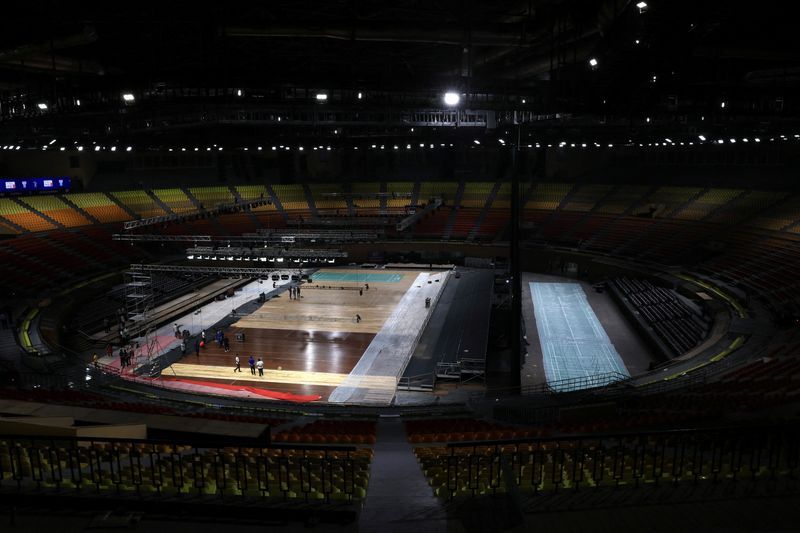
The employment of these specialised workers stems directly from an unfortunate incident during this year's Indian Open at the Indira Gandhi Indoor Stadium, where a monkey was spotted roaming through the spectators' gallery. The Badminton Association of India faced considerable public and international scrutiny over the breach in venue security and animal control. This highly visible incident highlighted the vulnerability of even well-managed facilities to wildlife intrusions and prompted organisers to develop more comprehensive mitigation strategies ahead of the World Championships.
Zafar, identified as a third-generation monkey whisperer, demonstrated his hooting techniques to media representatives during a recent stadium inspection. His family represents a lineage of specialists who have developed expertise in producing vocalizations that trigger fear responses in rhesus monkeys. According to Zafar, the approach focuses on deterrence rather than harm, with the goal of preventing monkeys from approaching the venue altogether. The effectiveness of langur mimicry relies on the natural hierarchy within primate groups, where rhesus monkeys instinctively avoid confrontation with larger, more dominant species. This biological reality transforms what might seem like theatre into a practical and humane crowd management solution.
The animal challenge facing New Delhi's badminton organisers extends beyond primates. The city's substantial pigeon population has created separate but equally disruptive problems for major sporting events. During the Indian Open, play was halted twice when birds fouled the court surface, and participating athletes raised hygiene concerns about the conditions. This recurring problem demonstrates how urban wildlife management directly impacts the quality and perception of international sporting competitions, particularly for overseas participants and broadcasting partners accustomed to controlled indoor environments.
Addressing the pigeon problem has required a different technological approach. Organisers have applied a non-toxic gel substance across roof areas and ventilation ducts of the Indira Gandhi Indoor Stadium, the same adhesive material regularly deployed on railway infrastructure to prevent birds from roosting. This preventive measure aims to eliminate the appeal of the stadium as a roosting location, thereby reducing the likelihood of birds entering competition spaces. The dual approach—biological deterrence for monkeys and chemical-environmental modification for pigeons—demonstrates the comprehensive nature of wildlife management at modern sporting venues.
Badminton Association of India secretary general Sanjay Mishra has publicly asserted that lessons from the Indian Open have been thoroughly incorporated into planning for the World Championships. The BAI undertook structural improvements with support from the sports ministry, addressing both the monkey and pigeon challenges identified during the earlier tournament. Mishra's confidence in these arrangements reflects the significant investment made in venue infrastructure, though the reliance on monkey mimics underscores the reality that even well-resourced facilities must accommodate India's urban wildlife challenges.
New Delhi's preparations for the Badminton World Federation event form part of a broader strategic initiative to establish India as a reliable host for major international competitions. India is scheduled to host the 2030 Commonwealth Games and is actively campaigning for the 2036 Olympic Games, making the successful execution of the badminton championship a crucial demonstration of organisational capability. International sports bodies and potential partner nations closely observe how host cities manage both the human and environmental dimensions of major events, with wildlife management increasingly recognised as a significant component of venue credibility.
The Badminton World Federation has apparently expressed satisfaction with the arrangements being implemented for the championship. This endorsement suggests that the international governing body views the preparatory measures as adequate to ensure a professional competition environment. For Malaysian readers familiar with similar wildlife management challenges in tropical Southeast Asia, the New Delhi situation provides instructive lessons about adapting venue operations to local environmental realities while maintaining international sporting standards. The willingness to deploy unconventional solutions reflects pragmatic event management in a region where complete animal exclusion remains technically and ethically problematic.
The employment of monkey mimics ultimately illustrates how major sporting events in developing nations must navigate complexities beyond the sport itself. While wealthy nations might implement technological solutions such as advanced netting systems or climate-controlled facilities, New Delhi's organisers have embraced solutions rooted in ecological knowledge and practical innovation. This approach not only manages the immediate challenge of keeping monkeys and pigeons away from competition spaces but also preserves the animals themselves, reflecting increasingly sophisticated thinking about coexistence between urban infrastructure and wildlife in densely populated regions.

