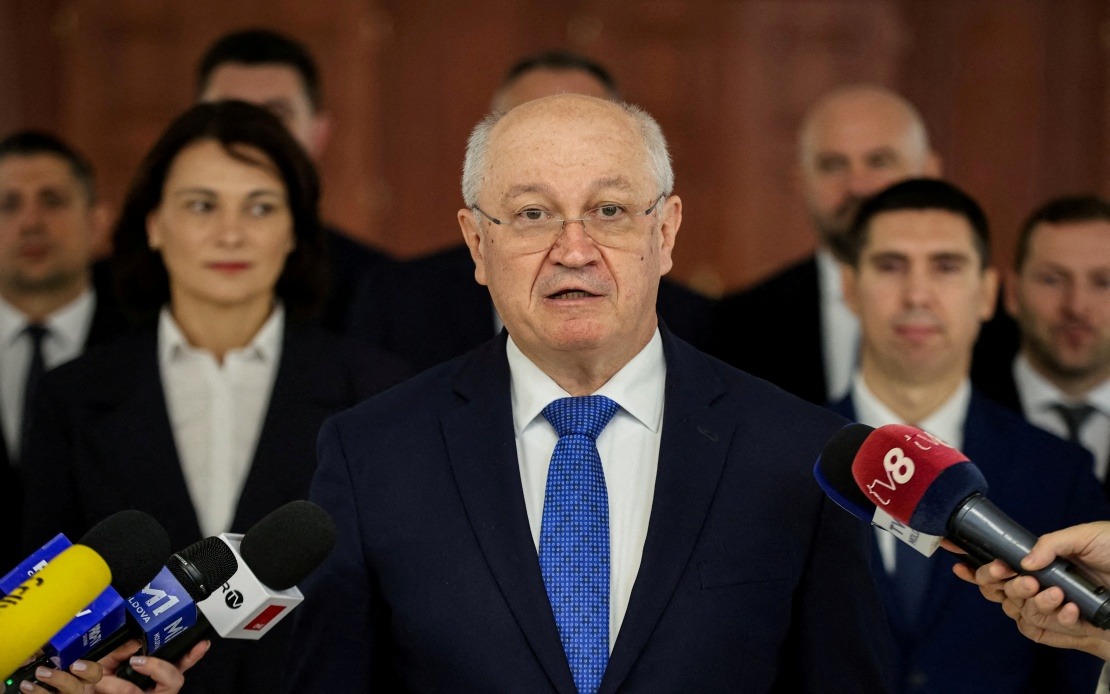
Alexandru Munteanu, who took the helm as Moldova's Prime Minister in November 2025, announced his departure from office on Friday through a post on the social media platform X, marking an abrupt end to his tenure at a particularly sensitive moment for the Eastern European nation. The resignation comes at a time when Moldova faces mounting pressures from multiple directions, including geopolitical tensions in the region and domestic political challenges that have characterised post-Soviet Eastern European governance for decades.
Munteanu's decision to step down represents a significant political development in Moldova, a country of roughly 2.6 million people that has long been caught between competing spheres of influence. His departure, announced without elaborate justification, raises immediate questions about the stability of the government and the underlying issues that prompted such a high-level political exit. The brevity of his explanation—citing only irreconcilable differences between his mandate and his personal principles—suggests tensions that may have accumulated gradually or emerged suddenly within government operations.
The Prime Minister's statement, released through his X account, offered minimal detail regarding the specific circumstances that led to his decision. He framed the resignation in philosophical terms rather than operational ones, emphasising that he had reached a point where continuing in his role would have required him to compromise his fundamental beliefs. This approach to resignation, while preserving personal dignity, leaves considerable room for speculation about what precisely triggered his exit from office.
For Malaysian observers and regional analysts, Munteanu's resignation carries broader implications about governance stability in smaller nations navigating complex international relationships. Moldova, like several Southeast Asian countries, exists within a strategic space contested by larger powers. The departures of key political figures often signal deeper fractures within government structures or disagreements over fundamental policy directions that may not immediately surface in public statements.
Munteanu's eight-month tenure represents a relatively short period for establishing and implementing a comprehensive governing agenda. Prime ministers in their first year typically face significant challenges in consolidating power, building institutional support, and navigating the transition from campaign promises to actual governance. The fact that he chose to exit rather than persevere suggests that whatever issues arose, they proved intractable through normal political compromise.
The resignation pattern in Eastern European politics often reflects clashes between idealistic principles and pragmatic governance requirements. Newly appointed leaders sometimes discover that the machinery of government operates quite differently from their expectations, or that institutional and external pressures require decisions that conflict with their core values. This dynamic is not unique to Moldova but appears with particular frequency in countries with relatively recent democratic transitions and ongoing institutional development.
Moldova has experienced considerable political volatility in recent years, with questions about corruption, rule of law, and alignment between different political factions creating a challenging environment for executive leadership. Prime ministers in such contexts often find themselves trapped between reformist ambitions and the entrenched interests embedded throughout government institutions. Munteanu's departure may reflect an unwillingness to navigate these compromises rather than a complete breakdown of governmental function.
The timing of this resignation also warrants consideration within Moldova's broader foreign policy context. The country remains deeply affected by the conflict in neighbouring Ukraine and ongoing questions about its European integration path. Government leaders in such circumstances face immense pressure regarding defence, security, and economic policy choices. A Prime Minister committed to particular principles might find that external circumstances demand decisions he cannot in good conscience implement.
For regional observers in Southeast Asia, Munteanu's exit provides a useful reminder of how governance challenges in smaller nations can escalate rapidly when key leaders lose confidence in their ability to function effectively. Unlike larger countries with deeper institutional buffers, smaller nations often experience significant disruptions when top officials depart unexpectedly. The absence of detailed explanation from Munteanu suggests either that discussing specifics would create additional political complications or that the issues were too sensitive or controversial for public elaboration.
Moldova will now face the procedural necessity of identifying a successor, a process that typically becomes entangled with various political factions' interests and ambitions. The interim period between a Prime Minister's resignation and a successor's appointment can create governing uncertainties, particularly in nations already managing complex institutional challenges. The manner of Munteanu's exit—dignified but opaque—may influence how smoothly the transition proceeds and whether his departure becomes a catalyst for broader governmental reassessment.
The resignation of a Prime Minister always carries significance beyond the individual involved. It signals that senior governmental leadership considers certain principles sufficiently important to warrant abandoning executive power rather than compromising them. Whether Munteanu's departure ultimately reflects personal conviction, unresolvable institutional conflict, or external pressure remains unclear from available information. What is evident is that Moldova faces a new leadership vacuum at a time when the nation continues navigating complex regional dynamics and competing international pressures that demand stable, committed governance.

