The Ministry of Higher Education has intensified its protective oversight of Malaysian students scattered across West Asian countries, pledging to maintain constant vigilance in response to shifting security conditions affecting the region. Higher Education Minister Datuk Seri Dr Zambry Abd Kadir outlined the ministry's multi-layered approach to safeguarding its citizens abroad, emphasising that MOHE will remain in close consultation with Wisma Putra to track developments and adjust protective measures as circumstances evolve. The announcement follows the United States' advisory cautioning its nationals to exit the region, a signal that prompted Malaysian authorities to reassess their own contingency protocols for the thousands of citizens studying there.
The unpredictability of geopolitical shifts poses a particular challenge for educational administrators managing overseas placements. Zambry acknowledged this volatility, noting that American foreign policy directions can alter substantially between policy announcements, necessitating a flexible and responsive Malaysian strategy rather than rigid adherence to any single framework. This adaptive approach reflects the complexity of maintaining student welfare during periods when international relations remain fluid and strategic calculations shift rapidly. By positioning Wisma Putra as the primary reference point for security assessments, MOHE establishes a clearer coordination mechanism between education and diplomacy, allowing for more informed decision-making when crises emerge.
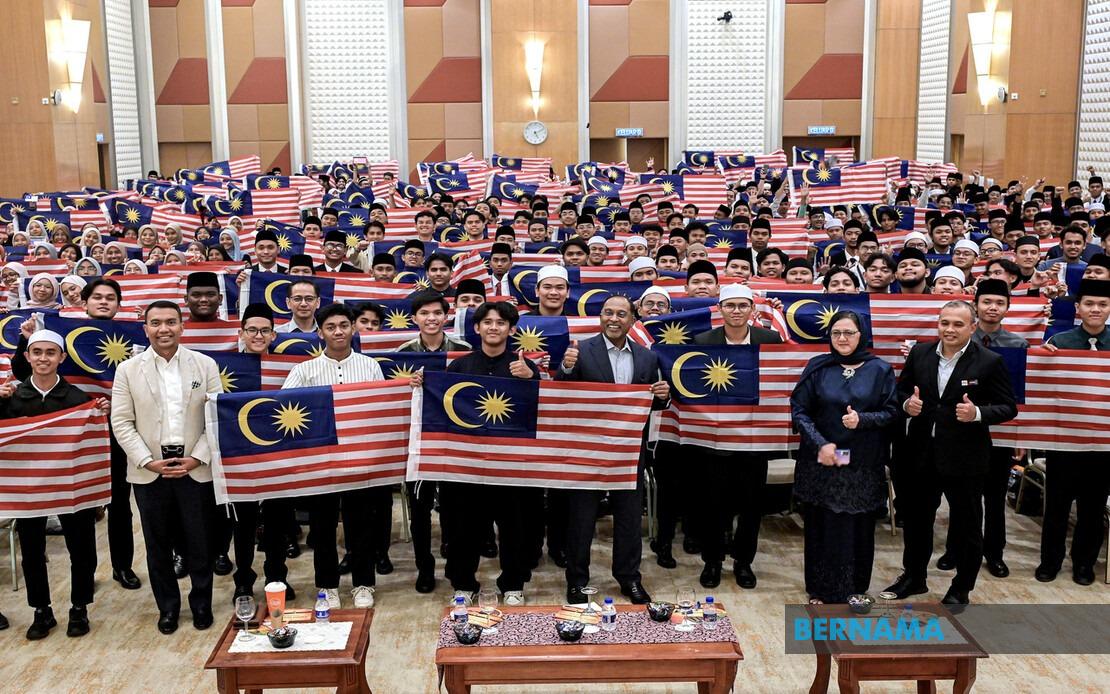
The ministry's preparedness extends beyond reactive measures to include proactive engagement with its student cohorts. Specifically, 456 Malaysian students enrolled to begin studies in Egypt, Jordan, and Morocco starting September 1 have participated in MOHE's International Charisma Programme, which provides comprehensive briefings and direct access to ministry officials before departure. This initiative serves dual purposes: it equips departing students with essential information about their host countries while simultaneously offering the ministry an opportunity to assess individual circumstances and reinforce safety protocols. The programme, executed in partnership with the Malaysia Nationhood Academy, transforms the pre-departure period into a protective intervention rather than mere administrative processing.
The geographic distribution of Malaysian students across multiple West Asian destinations requires differentiated management strategies suited to local conditions. Egypt hosts thousands of Malaysian students pursuing diverse academic disciplines, extending well beyond traditional Islamic studies to encompass medicine, dentistry, pharmacy, and other professional fields critical to Malaysia's long-term workforce development. This diversity in fields of study reflects Malaysia's recognition that higher education abroad serves national capacity-building objectives across multiple sectors. Jordan, meanwhile, accommodates between 1,000 and 2,000 Malaysian students, representing a significant but more concentrated presence. Morocco presents a different profile: the Malaysian student population remains comparatively small, yet it is experiencing steady expansion, suggesting growing interest in North African educational opportunities.
Infrastructure for student support varies across these three countries, reflecting both diplomatic presence and institutional development. MOHE maintains dedicated Education Malaysia offices in Egypt and Jordan, positioning these facilities as operational hubs for student welfare coordination and emergency response. Morocco, notably lacking a dedicated Education Malaysia office, is serviced through the Egyptian office, creating a slightly extended communication chain but one deemed manageable by current protocols. This tiered structure allows MOHE to concentrate resources where student populations are largest while maintaining service provision to emerging destinations through existing networks. The ministry emphasised that no developments in Egypt, Jordan, or Morocco have yet adversely affected Malaysian students, though preparedness remains elevated.
The significance of overseas-trained students to Malaysia's national development trajectory cannot be understated. Zambry characterised Malaysian students pursuing education abroad as strategic national assets, reflecting a policy framework that views international study not as a privilege for individuals but as an investment in collective capacity. The expectation that graduates will return to apply their knowledge and expertise suggests that education policy extends beyond individual advancement to encompass long-term economic and social benefit. This framing positions overseas study within a national development narrative, elevating its importance within policy discussions and potentially justifying enhanced protective measures during emergencies. The commitment to student welfare thus serves both humanitarian and strategic imperatives.
Beyond conventional academic metrics, MOHE emphasises a holistic educational philosophy grounded in Islamic pedagogical principles. Zambry articulated this through three Arabic concepts: *ta'lim* (transmission of knowledge), *tarbiah* (personal development), and *ta'dib* (cultivation of ethics and moral values). This integrated framework suggests that Malaysian students abroad are expected to develop intellectually, personally, and morally, with the ministry viewing itself as responsible for facilitating this comprehensive formation. Such an approach implies that student safety encompasses not merely physical security but also psychological wellbeing, cultural integration, and ethical grounding, broadening the scope of ministerial concern beyond immediate crisis response.
Malaysia's positioning as an international education destination contributes additional context to its concern for students abroad. The country currently attracts students from approximately 180 nations, a statistic reflecting robust confidence in Malaysian higher education quality and competitiveness. This inbound student flow signals that Malaysian universities have achieved genuine global recognition, distinguishing themselves through academic rigour and institutional excellence rather than relying on any single geographic recruitment market. The diversity of international enrolment provides insulation against market fluctuations or diplomatic ruptures affecting any particular nation, while simultaneously supporting Malaysia's soft power objectives and cultural influence.
The interconnection between outbound Malaysian students and Malaysia's incoming international student population creates a reciprocal ecosystem of educational exchange and cultural diplomacy. When Malaysian students perform excellently in foreign universities and return home with advanced qualifications, they enhance Malaysia's international reputation while strengthening local institutions through fresh expertise. Conversely, when foreign students complete degrees in Malaysia and return to their home countries, they become advocates for Malaysian education and vectors for soft power projection. MOHE's vigilant oversight of student safety abroad thus supports not only individual welfare but also Malaysia's broader positioning within global knowledge networks and educational markets.
The ministry's coordination framework with Wisma Putra represents a model of inter-agency collaboration designed to navigate the complexity of protecting citizens in volatile regions. Rather than MOHE operating autonomously, the arrangement establishes clear channels for security intelligence and policy guidance to flow from diplomatic specialists to education administrators. This structure acknowledges that effective student protection requires both educational institution expertise and diplomatic intelligence, neither of which independently suffices. As West Asian tensions persist and potentially intensify, this collaborative mechanism will likely face practical testing, determining whether information flows efficiently and protective measures activate swiftly when circumstances deteriorate.

