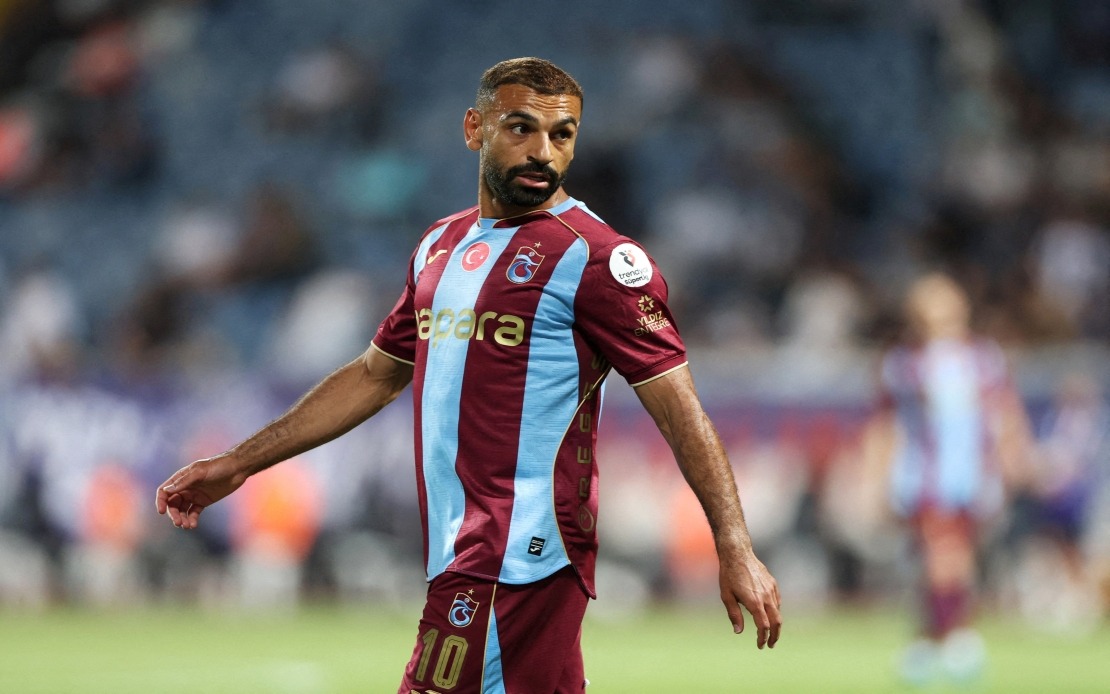
Just a fortnight after Mohamed Salah completed his move to Turkish football club Trabzonspor, his claret-and-blue No. 10 jersey has become an unmissable fixture in Cairo's most storied commercial district. Sports retailers throughout Khan el-Khalili, the ancient bazaar that remains one of the Egyptian capital's premier tourist destinations, have swiftly stocked the shirt and positioned it prominently alongside jerseys bearing the Egyptian national team crest. The rapid integration of Salah merchandise into this iconic marketplace reflects both the footballer's enduring celebrity status at home and the commercial acuity of merchants who recognised immediate demand.
The pricing strategy adopted by vendors demonstrates the premium attached to Salah's personal brand. Between 400 and 500 Egyptian pounds—equivalent to approximately eight to ten US dollars—has emerged as the standard retail range, positioning the merchandise firmly in the mid-range of the souq's sporting goods sector. This pricing suggests merchants believe the cultural cachet surrounding the player justifies a markup above standard club apparel, a calculation that appears validated by accounts of steady foot traffic and genuine enthusiasm from shoppers traversing the bazaar's labyrinthine corridors.
Beyond the transactional mechanics of retail commerce lies a deeper cultural phenomenon that extends well beyond sports consumption. Egyptian and Arab supporters have circulated extensive footage across social media platforms documenting the extraordinarily warm reception Salah received upon arriving in Türkiye, with digital sharing reflecting a profound sense of national pride in his international relocation. This enthusiasm encompasses segments of the population that rarely engage with football on a regular basis, indicating that Salah's prominence transcends the sporting domain and occupies a uniquely elevated position within Egyptian popular consciousness.
Local business operators express their optimism about Salah's transfer through explicitly cultural and ideological frameworks that reveal much about contemporary Egyptian-Turkish relations. Shopkeeper Salah Abdulmecid articulated a vision of commonality between the two nations, emphasising shared cultural traditions and religious commitment as foundations for mutual admiration. His statement—that Egyptians welcome Salah's move because Turkish people love him as much as Egyptians do—reveals how individual athlete mobility becomes mapped onto broader narratives of national affinity and cross-border peoplehood. The bazaar itself, recently hosting a high-profile diplomatic visit by Egyptian President Abdel Fattah el-Sisi and French President Emmanuel Macron, functions as a symbolic space where such national sentiments circulate and find commercial expression.
An encounter documented within the bazaar crystallises the emotional resonance surrounding Salah's transfer among ordinary supporters. A young fan who donned a Trabzonspor jersey outside a retail establishment expressed joy at the transfer and offered a blessing for Salah's success in Türkiye, verbalising a sentiment that combines sporting enthusiasm with what might be characterised as quasi-patriotic concern for the athlete's wellbeing abroad. This interaction typifies how Salah's movement functions simultaneously as sporting news, commercial opportunity, and occasion for expressing hope regarding the trajectory of his career and, by extension, Egypt's standing in international football.
Egyptian sociologist Said Sadik has offered a sophisticated analytical framework for understanding the cultural significance of Salah's transfer beyond the football pitch. Sadik characterises the footballer as a "soft power" asset facilitating deeper connections between Egyptian and Turkish societies at a moment when official diplomatic engagement has intensified. He specifically referenced the joint appearance by Turkish Foreign Minister Hakan Fidan and Egyptian Foreign Minister Badr Abdelatty during Fidan's Cairo visit on August 14, noting that Salah's name featured within this high-level diplomatic context. This observation underscores how elite political actors recognise the footballer's utility for signalling goodwill and constructing narratives of bilateral harmony.
Sadik further explained that Salah's cultural penetration within Egyptian society extends far beyond the traditional football constituency. His argument—that Egyptians of all demographic backgrounds, regardless of regular sporting engagement, make efforts to monitor Salah's career developments—positions the athlete as a unifying cultural reference point in ways that most public figures cannot achieve. This cross-demographic appeal creates fertile ground for merchandise circulation and explains why bazaar retailers display Salah jerseys with confidence that demand will materialise across diverse customer cohorts.
The Turkish public's reception of Salah's arrival reinforces Sadik's broader thesis about the diplomatic dimensions of athlete mobility. The enthusiastic welcome documented across Turkish social media and within stadiums serves simultaneously as a sporting gesture and a public relations opportunity for strengthening Egyptian-Turkish popular sentiment. From a Malaysian perspective, this dynamic illustrates how significant football transfers can operate as soft power instruments, leveraging the sport's capacity to generate emotional investment and cross-national goodwill. The Khan el-Khalili retailers capitalising on merchandise demand are simultaneously participating in this broader diplomatic process, converting sporting enthusiasm into tangible economic activity.
The timing of Salah's transfer to Trabzonspor coincides with a period of notably improved Turkish-Egyptian relations, following years of diplomatic tensions and cool official interactions. His signing represents the highest-profile Egyptian athlete recruitment by a major Turkish club in recent memory and carries symbolic weight beyond the sporting domain. For Malaysia and other Southeast Asian nations navigating complex relationships with major regional and global powers, the Salah case exemplifies how sports figures can become instruments for bilateral relationship management, generating enthusiasm at popular levels that elected officials struggle to achieve through conventional diplomatic channels.
The merchandising phenomenon unfolding within Khan el-Khalili also reflects the resilience of traditional bazaar commerce in an era of digital retail expansion. Rather than rendering physical marketplaces obsolete, Salah's popularity has instead animated traditional retail spaces with contemporary demand, creating a marketplace where centuries-old commercial traditions intersect with modern football celebrity culture. This fusion of traditional and contemporary commercial spaces mirrors patterns observable in other cultural contexts where football remains the dominant popular entertainment medium and athlete merchandise constitutes accessible expressions of sporting allegiance and national identification.

