Malaysia's Foreign Minister Datuk Seri Mohamad Hasan is set to lead the country's representation at an extraordinary assembly of the Organisation of Islamic Cooperation's Council of Foreign Ministers in Jeddah, bringing together diplomats to address the escalating situation in Palestine. The one-day gathering represents a critical moment for the 57-member bloc to synchronise collective diplomatic responses to recent developments in the occupied territories, where tensions have reached alarming levels. The meeting comes amid mounting international scrutiny over military operations in Gaza and the broader Israeli-Palestinian conflict, making Malaysia's participation and advocacy particularly significant within the broader Muslim-majority region.
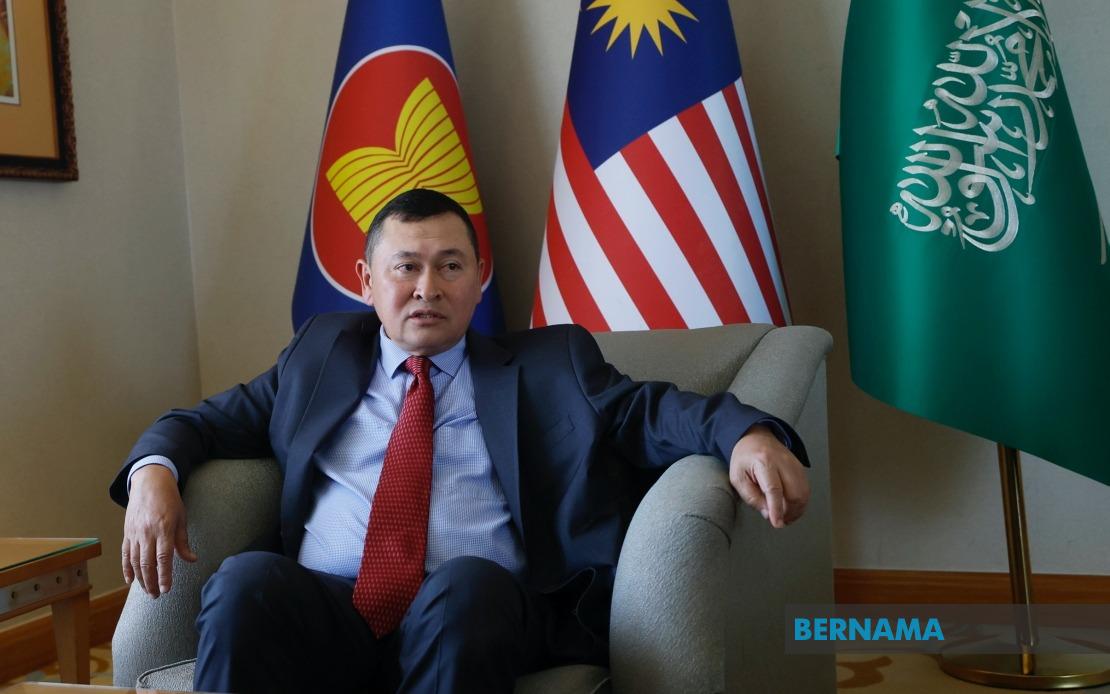
According to Datuk Syed Bakri Syed Abdul Rahman, Malaysia's Ambassador to Saudi Arabia and Permanent Representative to the OIC, the extraordinary session serves as a continuation of ongoing efforts to forge unified messaging among member states concerning Palestine. These diplomatic engagements have evolved incrementally over recent years as regional and international circumstances have shifted, requiring continuous recalibration of collective positions. The assembly provides a structured platform where nations can present individual perspectives while simultaneously working toward consensus on shared concerns, a delicate balancing act that shapes how the Islamic world projects its influence on this persistent geopolitical issue.
During the proceedings, Mohamad will present Malaysia's formal National Statement, reinforcing the government's steadfast commitment to Palestinian self-determination and statehood based on internationally recognised 1967 boundaries. This articulation of Malaysia's diplomatic stance reflects decades-long consistency in supporting Palestinian aspirations, grounded in principles of territorial integrity and national sovereignty. The reaffirmation carries particular weight given Malaysia's respected standing within the OIC and its historical role as an advocate for Palestinian rights on multiple international forums, positioning the country as a credible voice capable of influencing coalition-building among member states.
Central to Malaysia's concerns, as outlined through Ambassador Syed Bakri, are Israel's military operations and their humanitarian toll, particularly in Gaza where civilian suffering has become a major international preoccupation. The Malaysian delegation will explicitly raise the dire conditions faced by Palestinian civilians caught within active conflict zones, drawing attention to infrastructure damage, displacement, and the restrictions on essential services. Additionally, Malaysia intends to spotlight the controversial expansion of Israeli settlements in occupied West Bank territories, which the delegation views as flagrant violations of international law and a major obstacle to genuine peace negotiations. These issues reflect broader Southeast Asian and Muslim world anxieties about perceived Western-aligned military power operating with limited international accountability.
Malaysia's advocacy during the meeting will emphasise the necessity for OIC member states to escalate their collective action beyond rhetoric toward tangible policy measures. Ambassador Syed Bakri stressed that Malaysia actively seeks a strengthened international response, particularly mobilisation of concrete diplomatic and humanitarian initiatives that can genuinely protect Palestinian populations and advance their political interests. This positioning suggests Malaysia may champion more assertive stances within the OIC, potentially pushing the organisation toward coordinated economic, political, or legal strategies rather than purely declaratory statements. The emphasis on effectiveness reflects frustration within Muslim nations over the apparent inefficacy of past resolutions and international advocacy efforts.
Humanitarian assistance constitutes another pillar of Malaysia's approach to the Palestinian crisis. The government remains committed to channelling aid through various mechanisms, ensuring that resources reach vulnerable Palestinian communities regardless of geographical or administrative barriers. Ambassador Syed Bakri explicitly noted Malaysia's determination that humanitarian corridors remain functional, reflecting the country's broader development cooperation framework that extends assistance beyond bilateral relationships into crisis situations. This commitment demonstrates how Southeast Asian nations, despite geographical distance, maintain active engagement with Middle Eastern humanitarian emergencies through both government resources and civil society channels.
The extraordinary meeting agenda extends beyond Palestine to encompass the election of the OIC's next secretary-general, a position carrying substantial symbolic and institutional weight within the organisation. This leadership selection process often becomes intertwined with broader strategic considerations and regional power dynamics, as different candidates represent distinct visions for the organisation's future direction and priorities. Member states frequently use such elections to advance their preferred foreign policy orientations, and Malaysia's participation in leadership selection discussions underscores the country's stake in determining the OIC's institutional trajectory and policy emphasis over the coming years.
Expectedly, the gathering will produce a formal resolution addressing the Palestinian question and Al-Quds Al-Sharif, the Islamic designation for Jerusalem's sacred sites. Such resolutions typically combine condemnation of what member states characterise as Israeli aggression with calls for unified member state action and international intervention. While critics argue these statements lack enforceability, supporters contend they establish important baseline positions that delegates can cite when defending Palestinian interests in bilateral negotiations or other international forums. Malaysia's involvement in drafting or endorsing such language contributes to building consensus within the broader Muslim world.
Beyond the formal assembly proceedings, the visit provides Malaysia's Foreign Minister with opportunities for bilateral engagement with counterparts from numerous OIC member states. These side meetings typically focus on deepening bilateral partnerships while exploring mutually beneficial economic and commercial cooperation, reflecting how Middle Eastern diplomatic engagements increasingly intertwine political positioning with concrete economic incentives. For Malaysia, these interactions can yield trade partnerships, investment flows, and strategic alignment on other regional or global issues, demonstrating how single diplomatic missions often serve multiple strategic objectives simultaneously. The meetings underscore how Palestine-focused diplomacy frequently occurs alongside broader relationship-building activities that serve each nation's comprehensive foreign policy interests.
Malaysia's delegation sends important signals regarding the country's continuing commitment to multilateral engagement through regional Islamic organisations, particularly during turbulent periods affecting Muslim populations. The delegation's composition and the level of diplomatic resources devoted to the gathering reflect how seriously the Malaysian government prioritises this issue. For Southeast Asia more broadly, Malaysia's advocacy helps ensure that Muslim-majority nations maintain active involvement in Middle Eastern affairs, preventing the region from becoming solely defined by Western diplomatic initiatives or Israeli positions. This engagement pattern establishes Malaysia as a bridge between Southeast Asian and Middle Eastern Muslim communities, leveraging its multicultural democracy and Islamic credentials to facilitate dialogue and coalition-building across geographical and cultural divides.
The meeting ultimately represents an ongoing attempt by the OIC to demonstrate institutional relevance and organisational cohesion when confronted with conflicts affecting its member states. Malaysia's participation, through its Foreign Minister's leadership and the comprehensive advocacy agenda, reaffirms Southeast Asia's stake in developments far beyond its immediate geographic proximity. As global attention increasingly focuses on Middle Eastern upheaval and the humanitarian dimensions of protracted conflicts, Malaysia's voice and diplomatic efforts contribute to ensuring that perspectives from Muslim-majority democracies outside the Middle East receive consideration in formulating collective responses. The gathering thus exemplifies how contemporary diplomacy operates through nested multilateral frameworks where regional organisations coordinate with their members to project influence on issues of pan-Islamic significance.

