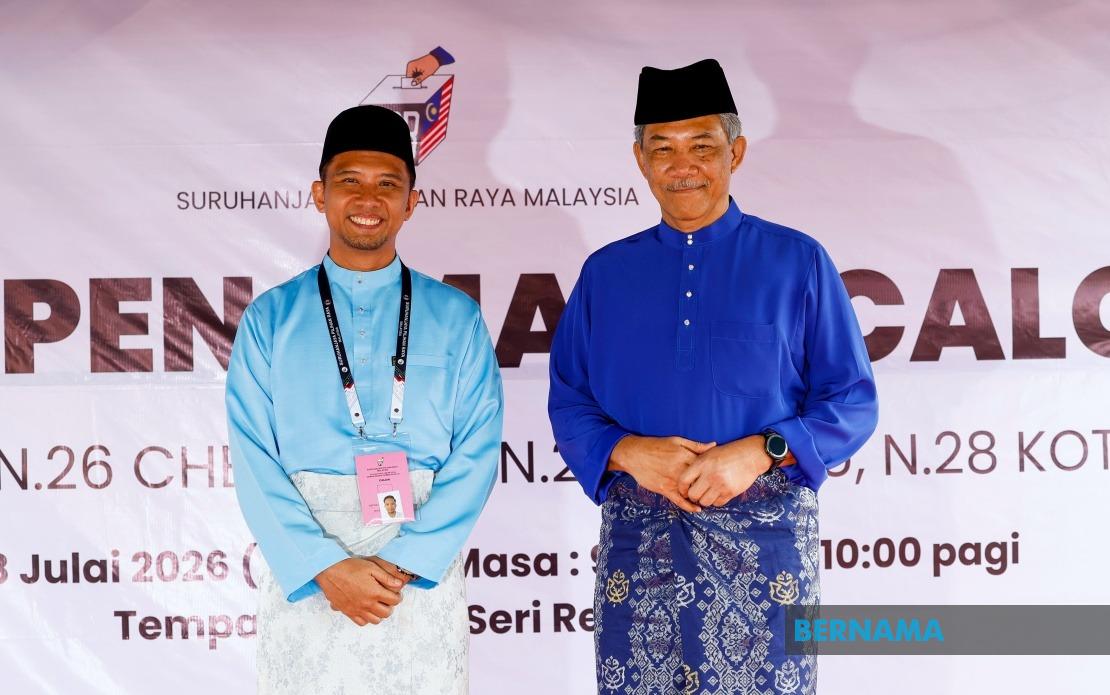
The Rantau state constituency will contest as a straight fight in the 16th Negeri Sembilan state election, with Barisan Nasional's Datuk Seri Mohamad Hasan facing Pakatan Harapan's Dr Azizul Hakim Mahdi. The returning officer Mohd Zamri Mohd Esa confirmed the two-candidate race after nomination papers closed at Dewan Sri Rembau on July 18, setting the stage for what promises to be a closely watched battle in one of Negeri Sembilan's most prominent constituencies.
Modamad, who doubles as UMNO deputy president and state Barisan Nasional chairman, has represented Rantau since 2004, building a formidable political presence across nearly two decades. His electoral dominance was evident in the 2023 state election, when he secured 16,957 votes against Pakatan Harapan's Rozmal Malakan, who managed 6,677 votes, translating to a commanding majority of 10,280. This substantial winning margin underscores his entrenchment in the constituency, though the political landscape has shifted considerably since that contest.
Addressing supporters and journalists, Mohamad emphasised that Barisan Nasional's campaign strategy would centre on articulating the coalition's manifesto while persuading voters to grant the coalition a fresh mandate. He stressed the importance of systematic and well-organised grassroots mobilisation, suggesting that meticulous groundwork translates directly into electoral success. His remarks reflected confidence tempered with awareness that Negeri Sembilan, like other states, has witnessed electoral volatility in recent years, demanding sustained engagement with voters.
Dr Azizul Hakim, at 35 years old, presents himself as a younger, professionally grounded alternative, capitalising on his medical credentials and community healthcare experience. His curriculum vitae includes a decade practising as a physician alongside ownership of three clinics operating across Senawang, Puncak Alam, and Melaka, providing him with direct exposure to constituent healthcare needs and urban-fringe community dynamics. This background allows him to position himself as someone genuinely acquainted with residents' daily struggles, particularly regarding medical access and affordability—issues that resonate deeply in Malaysian constituencies.
His campaign narrative centres on healthcare accessibility and local problem-solving, departing from the broader political messaging typical of more established politicians. By positioning himself as a medical professional first and politician second, Dr Azizul aims to appeal to swing voters and younger constituents who may view traditional political figures with scepticism. His youthfulness also offers Pakatan Harapan an opportunity to present renewal and generational change, a consistent thread in the coalition's messaging across recent elections.
Beyond Rantau, the broader Negeri Sembilan contest reveals a state electoral landscape fragmented across multiple political fronts. The Paroi state seat contests as a three-way race involving Pakatan Harapan's Ahmad Shahir Mohd Shah, the sitting Menteri Besar's press secretary, against Perikatan Nasional's Kamarol Ridzuan Mohd Zin and Parti Pribumi Bersatu Malaysia's Mohd Nazree Mohd Yunus. This three-cornered contest exemplifies the splintering of anti-Barisan Nasional votes, a dynamic that has complicated Pakatan Harapan's electoral calculus across Malaysian states.
Chembong presents a starker contrast: Barisan Nasional's Datuk Zaifulbahri Idris, the incumbent, faces a direct two-candidate duel against Pakatan Harapan's Danish Nazran Murad. Meanwhile, Kota witnesses another three-way contest featuring Barisan Nasional's Suhaimi Aini, Pakatan Harapan's Muhammad Allif Ibrahim, and Bersatu's Akmal Noradzmi Abdul Rahim. These varied contest formats across constituencies suggest voters in different areas will confront fundamentally different electoral choices, potentially fragmenting both the government coalition and the opposition.
The Negeri Sembilan State Legislative Assembly comprises 36 seats, providing sufficient magnitude for meaningful coalitional permutations should no single bloc achieve dominance. The Election Commission dissolved the assembly on June 5, scheduling early voting for July 28 and general polling for August 1. These dates fall during Malaysia's school holiday period, potentially affecting voter turnout among families adjusting holiday schedules and younger voters engaged in holiday activities outside their constituencies.
The electoral rollout encompasses 889,490 registered voters, with 867,151 classified as ordinary voters, 16,884 military personnel and their families, and 5,455 police officers eligible for early voting. These figures underscore the military and security establishment's significant presence within Negeri Sembilan's electorate, a factor that deserves analytical attention given both institutions' traditional alignment with Barisan Nasional, though recent elections have witnessed minor shifts among these constituencies.
For Malaysian and regional observers, the Negeri Sembilan election functions as a critical mid-term assessment of current national coalitional arrangements. Barisan Nasional's capacity to retain or expand control, pitted against Pakatan Harapan's organisational coherence in managing multi-candidate scenarios and Perikatan Nasional's ability to capitalise on fragmentation, will illuminate voter sentiments regarding governance performance, economic management, and political stability. Rantau's straight fight between Mohamad Hasan and Dr Azizul Hakim exemplifies this larger contest, positioning an established political heavyweight against an emerging professional voice offering alternative governance perspectives.

