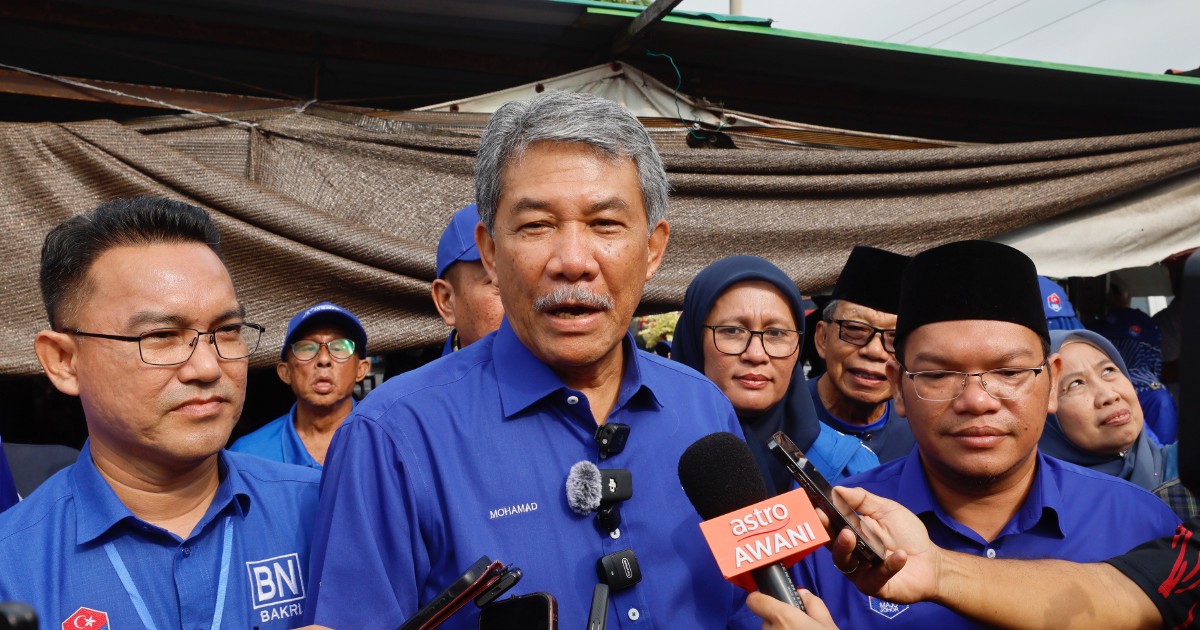
The political temperature in Malaysia's east coast has risen sharply following an escalating war of words between two senior coalition figures. Barisan Nasional deputy chairman Datuk Seri Mohamad Hasan, known colloquially as Tok Mat, has issued a pointed ultimatum to DAP leader Nga Kor Ming, suggesting that if the latter harbours genuine doubts about his government role, he should vacate his position without delay. The challenge, delivered in Muar, underscores mounting tensions between the ruling coalition and its minority partners in the federal administration.
The confrontation stems from remarks made by Nga regarding the recently concluded Johor state election, which had triggered significant political reverberations across the coalition. As a senior figure within the Democratic Action Party and a cabinet minister at the federal level, Nga's public statements on state electoral matters carry considerable weight and can influence broader perceptions of coalition unity. His comments apparently questioned or criticised aspects of the Johor electoral exercise, prompting the swift response from Tok Mat, whose portfolio as deputy BN chairman places him in a strategic position to defend the coalition's interests and messaging.
The exchange reflects deeper fractures within Malaysia's governing structure, which comprises BN parties alongside DAP and other coalition partners under the Pakatan Harapan umbrella. While these parties collectively form the federal government, they do not always align on state-level politics, particularly in strategic states like Johor where regional power dynamics significantly influence national calculations. The Johor state government remains under BN control, creating potential friction when non-BN coalition partners comment on BN-led state affairs.
Tok Mat's blunt suggestion that Nga resign carries several layers of political significance. On the surface, it appears to be a rhetorical challenge questioning the DAP leader's commitment to coalition loyalty and government solidarity. More substantially, however, it may indicate growing frustration within BN circles over perceived DAP interference in state-level BN operations, or perceived criticism of BN's handling of the recent Johor electoral process. By framing the question as one of individual choice—resign if dissatisfied—Tok Mat places Nga in an uncomfortable position where any response risks further escalation.
For Malaysian political observers, such incidents illustrate the delicate balancing act required to maintain coalition cohesion in a multiparty government. The combination of shared federal power with divergent state-level interests creates natural friction points. DAP, as the strongest non-Malay component of the ruling coalition, occupies an unusual position: it must exercise influence over major decisions affecting the nation while respecting the dominance of Malay-Muslim interests represented through BN parties, particularly UMNO.
The timing of this confrontation warrants attention. The Johor state election had been viewed as a barometer of national political sentiment and BN's capacity to retain control of crucial territories. Any suggestion from coalition partners that the process was mishandled or the outcome questionable could undermine confidence in BN's electoral machinery ahead of the next general election. Tok Mat's sharp response therefore serves to establish clear boundaries around acceptable public commentary, signalling that criticism of state-level BN operations by federal coalition partners will not be tolerated.
Nga Kor Ming's position as a federal cabinet minister adds complexity to the situation. His ministerial responsibilities require him to represent government policy consistently, yet as a DAP politician he maintains separate party obligations and state-level interests. The tension between these roles occasionally surfaces in public disagreements, as appears to be the case here. When such tensions emerge, senior BN figures like Tok Mat may feel compelled to reassert the hierarchy and discipline expected within the coalition framework.
The broader implications for coalition stability should not be understated. While coalition partnerships in Malaysian politics have weathered numerous public disputes, repeated confrontations between senior figures can gradually erode goodwill and create openings for opportunistic political challenges. The opposition, currently fragmented and weakened, would benefit considerably from visibly deepening cracks within the ruling coalition. Consequently, both sides have incentive to manage such disputes carefully, even when genuine disagreements exist.
For the DAP specifically, the situation presents a dilemma common to junior coalition partners in Malaysian politics. The party must maintain coalition solidarity to retain access to federal power and ministerial portfolios, yet simultaneously preserve its credibility with a largely Chinese Malaysian voter base that expects its representatives to voice independent opinions on matters affecting the community. Striking this balance becomes increasingly difficult when senior coalition partners issue public ultimatums.
The Johor context adds another dimension. As one of Malaysia's richest and most strategic states, developments there influence national economic and political calculations. BN's electoral performance in Johor carries symbolic weight beyond the state's borders, affecting perceptions of the coalition's viability as a national government. This explains why comments from federal coalition partners about Johor elections can provoke such sharp responses from BN leadership.
Moving forward, whether this confrontation escalates into a broader coalition crisis or fades into the background will depend on several factors: whether Nga issues a clarifying statement regarding his remarks, how DAP party leadership responds to the pressure, and whether other coalition members publicly weigh in. Historical precedent suggests that Malaysian coalitions can absorb considerable public tension between partners without fracturing, provided underlying power-sharing arrangements remain intact.
The incident serves as a reminder that despite their shared governance responsibilities, Malaysia's coalition partners retain distinct interests and constituencies that occasionally produce public conflict. Managing these tensions while preserving coalition functionality remains an ongoing challenge for Malaysia's political system.

