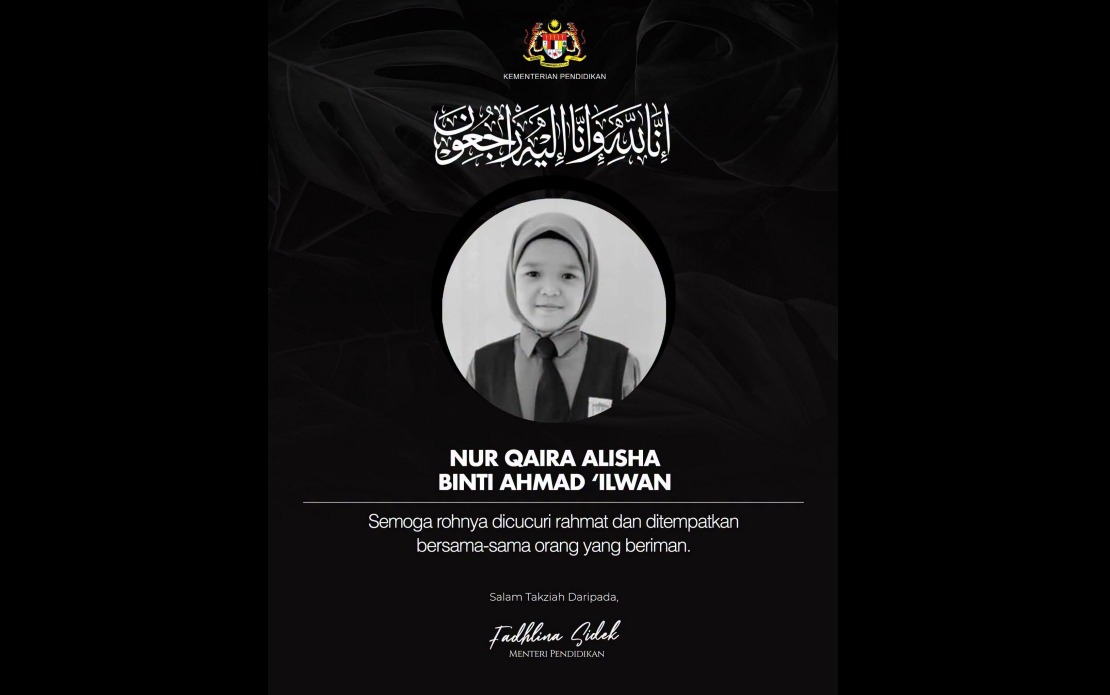
Education Minister Datuk Seri Fadhlina Sidek has instructed the Ministry of Education's Integrity Unit to pursue an investigation into a formal complaint lodged by the family of Nur Qaira Alisha Ahmad Ilwan, a Year Four student who died recently. The minister emphasised that any proceedings would strictly adhere to established protocols and be guided by fair treatment principles applicable to all involved parties. The directive marks an escalation of scrutiny into circumstances surrounding the child's passing, following preliminary examination by the Kedah State Education Department.
The tragedy has raised serious questions about student safety protocols and medical accommodation in Malaysian schools. Nur Qaira had lived with a significant cardiac condition from infancy, diagnosed when she was just three months old. Her medical condition necessitated formal exemption from participation in school sports and physical activities, a decision documented through official medical correspondence that was provided to her educational institution. Despite this documentation, her parents have alleged that during the April 15 sports house selection event, a school instructor directed their daughter to participate in a running competition.
The sequence of events that followed the sporting activity proved medically catastrophic. Nine days after the sports day participation, on April 24, Nur Qaira experienced acute deterioration, manifesting severe vomiting and facial swelling. She was immediately hospitalised at Sultanah Bahiyah Hospital, where medical investigations revealed acute heart failure stemming from decompensated dilated cardiomyopathy—a progressive weakening of the heart muscle that had previously been managed through medical restrictions. Her condition rapidly declined, and she subsequently died at the hospital.
For Malaysian families managing children with chronic medical conditions, this case encapsulates a critical vulnerability in the education system. The tension between inclusive school participation and protective medical management creates a complex terrain where institutional knowledge gaps, communication breakdowns, or inadequate training can have fatal consequences. Schools across Malaysia are ostensibly equipped with procedures to identify and accommodate students with documented health restrictions, yet this incident suggests potential systemic failures in implementing these safeguards consistently.
Fadhlina's statement acknowledges the gravity of the situation by reaffirming the ministry's foundational commitment to student welfare and safety. She underscored that the Education Ministry regards all matters touching on student protection with substantial seriousness, positioning student wellbeing as an institutional priority. The minister also extended formal condolences to Nur Qaira's parents and extended family, expressing hope that they would discover resilience and spiritual comfort during their period of profound grief.
The decision to involve the Integrity Unit rather than limiting investigation to state-level educational authorities signals the ministry's recognition that this case potentially involves institutional accountability questions extending beyond routine procedural review. The Integrity Unit functions as an internal oversight mechanism designed to examine allegations of misconduct within the education system, making its engagement appropriate when questions arise regarding whether school personnel adhered to established medical accommodation protocols.
For educational institutions nationwide, this investigation will likely generate renewed emphasis on documentation and verification procedures for student health exemptions. The case highlights the necessity for robust communication channels between medical professionals, parents, school administrators, and classroom teachers to ensure that exemption decisions are not inadvertently circumvented by individual instructors unfamiliar with or overlooking recorded restrictions. Teacher training programmes may require enhancement to underscore the legal and ethical obligations surrounding documented medical accommodations.
The broader Southeast Asian context adds dimension to this incident. Regional education systems increasingly grapple with balancing integration and normalisation of students with medical conditions against protective imperatives. Malaysia's experience will resonate across neighbouring countries similarly confronting these challenges. Educational best practices in managing chronically ill students demand transparent protocols, comprehensive staff training, and hierarchical verification systems that prevent individual discretion from overriding medical evidence.
Parental confidence in institutional safety frameworks forms a foundation for educational trust. When families provide documented medical information and schools subsequently ignore or circumvent such documentation, the fundamental compact between institutions and families deteriorates. The ministerial direction to investigate sends a message to Malaysian parents that their medical concerns receive institutional validation and investigation when outcomes suggest potential procedural violations.
The investigation's parameters and timeline remain unspecified, though standard integrity procedures typically examine documentary evidence, interview relevant personnel, and reconstruct decision-making processes. Determining whether the teacher instruction constituted negligence, miscommunication, or deliberate disregard will prove central to understanding what systemic improvements might prevent similar circumstances. Questions will likely explore whether proper notification mechanisms existed, whether documentation reached all relevant personnel, and whether training equipped staff to identify and respect medical restrictions.
Beyond the immediate investigation, this tragedy underscores broader questions about institutional liability and accountability when documented medical restrictions are not honoured. Malaysian courts and the education system face emerging jurisprudence regarding institutional negligence in medical accommodation contexts. The investigation's findings may influence future policy frameworks governing how schools document, communicate, and enforce medical restrictions affecting student participation in physical activities.

