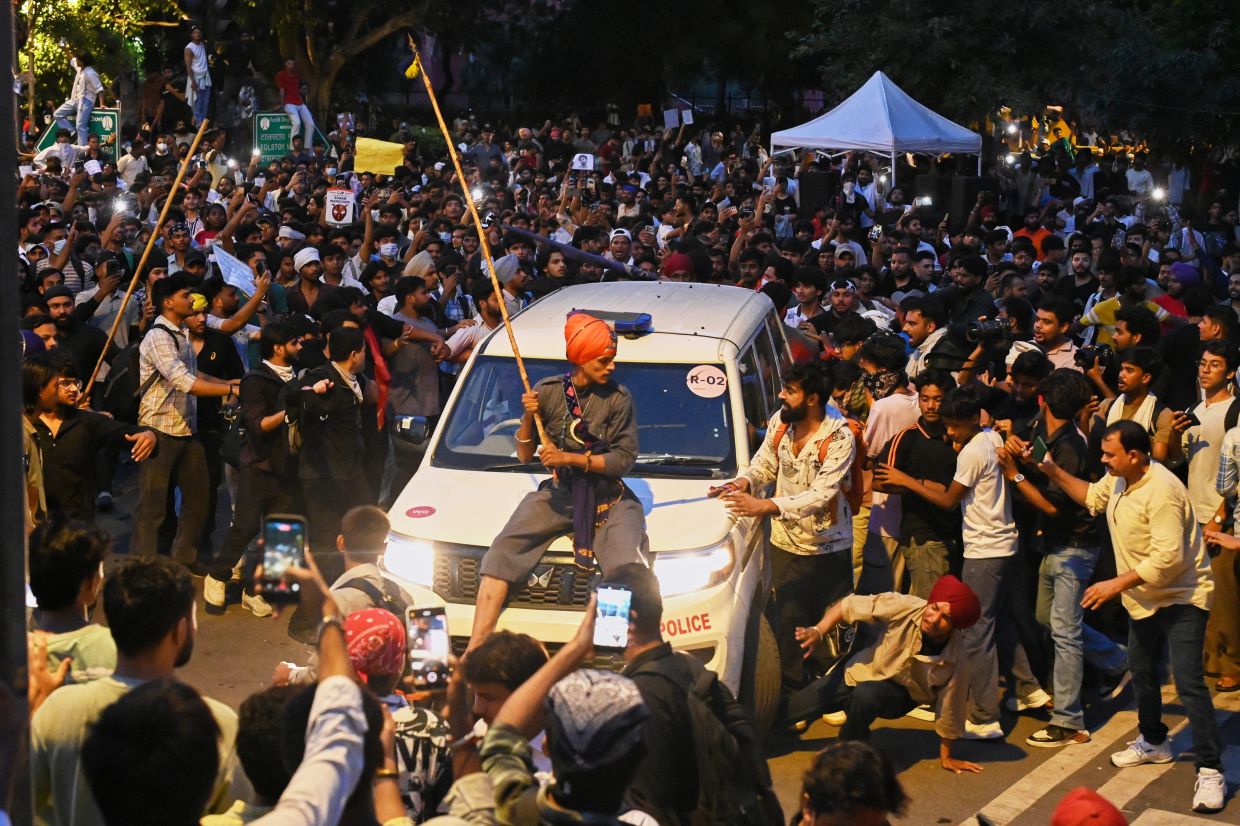
Indian Prime Minister Narendra Modi has moved to contain one of the most significant challenges to his authority since his re-election for a third consecutive term in 2024, publicly committing on Thursday to harsh penalties for those responsible for exam paper leaks that have ignited nationwide student anger. In his first direct acknowledgement of the crisis gripping the nation, Modi stated through social media that "nothing is more important than the welfare and future of our youth," while announcing plans to establish fast-track judicial mechanisms to prosecute those implicated in the examination irregularities. The pledge represents an attempt to defuse tensions after several days of intense street confrontations between police and demonstrators in New Delhi, where clashes have left at least 178 people injured, including security personnel.
The protests, which have snowballed dramatically since Monday, represent a convergence of multiple grievances extending well beyond examination fraud. What began as anger over leaked question papers has evolved into a broader youth movement encompassing concerns about joblessness, lack of opportunity, and what participants characterise as creeping authoritarianism under Modi's administration. The Cockroach Janta Party, a social media-driven movement that coalesced around satirical criticism of remarks made by Chief Justice Surya Kant in May, has emerged as the primary organising force behind the demonstrations. The movement's metamorphosis from its humorous origins into a serious political challenge underscores the depth of disaffection among India's youth demographic.
Violent scenes erupted across New Delhi on Monday as police deployed tear gas and baton charges against tens of thousands of marchers attempting to reach Parliament at the opening of the monsoon legislative session. Demonstrators responded by hurling stones and engaging in running battles with security forces, creating the capital's largest street demonstration in approximately five years. The confrontation intensified on Wednesday when crowds gathered outside Jantar Mantar, a traditional protest site in central Delhi, triggering fresh clashes that extended into the night. Police authorities accused protesters of attacking officers with stones and plastic bottles, causing what they described as serious injuries, whilst movement representatives including CJP spokesman Ashutosh Ranka countered that demonstrators faced brutal police action whilst authorities simultaneously shut down internet services to impede coordination and communication.
The examination system's credibility has been severely undermined by a succession of high-profile irregularities that have directly affected millions of Indian students. Most notably, the leak of a medical entrance examination question paper necessitated the retaking of tests by over two million candidates, creating logistical chaos and widespread frustration. Compounding this crisis, disputes surrounding the online marking procedures for examinations undertaken by nearly two million secondary school students have further eroded public confidence in the integrity of educational assessments. These cascading failures have transformed what might otherwise have remained a technical administrative problem into a symbolic indictment of governmental competence and institutional accountability.
The opposition has seized upon the government's handling of both the examination irregularities and the subsequent police response to mount sustained parliamentary pressure. Congress Party leader Rahul Gandhi has directly challenged Modi's assertion regarding youth welfare, contending on social media platform X that the Prime Minister has caused the greatest harm to India's young people by permitting and actively facilitating the "total capture and destruction" of the educational system. Opposition parties have disrupted parliamentary proceedings and demanded a formal government apology for Monday's police action, transforming the protest movement into a significant political liability for the ruling administration. The coordination between street activists and parliamentary opposition has created a multi-front challenge that extends beyond the immediate crisis of examination fraud into questions about governmental legitimacy and democratic accountability.
The movement has radiated outward from the capital to encompass major metropolitan centres across India, with smaller but notable demonstrations erupting in Mumbai, Bengaluru, and Patna on Wednesday. This geographical spread indicates that the underlying grievances resonate across India's urban landscape and are not confined to New Delhi's political establishment. The movement has also attracted international attention and solidarity, with students in neighbouring Bangladesh organising a "torch rally" for Thursday evening to express support for their Indian counterparts. This cross-border dimension carries particular resonance given that Bangladesh experienced its own transformative student-led uprising in 2024 that ultimately toppled Sheikh Hasina's government, suggesting that youth movements across South Asia are increasingly interconnected and potentially influential in shaping political outcomes.
The timing of these protests poses particular complications for Modi's administration, arriving at a moment of apparent consolidation following his recent electoral victory. The examination fraud scandal represents a failure of institutional governance that strikes at the heart of Modi's development narrative and claims of efficient administration. Unlike many protest movements that dissipate through police action and temporal passage, this movement derives strength from structural grievances regarding educational access and economic opportunity that remain unresolved. The involvement of social media platforms in both organisation and amplification means that authorities face constraints in managing the narrative or controlling information flow as they might have in previous decades.
For Malaysia and the broader Southeast Asian region, the Indian protests offer cautionary lessons regarding the vulnerability of educational systems to administrative failures and the capacity of youth movements to rapidly mobilise political opposition. The examination irregularities that sparked the Indian crisis bear similarities to examination management challenges that have periodically affected Southeast Asian countries, raising questions about whether regional education systems possess adequate safeguards and oversight mechanisms. The speed with which the Cockroach Janta Party movement transformed from satirical commentary into organised political challenge demonstrates how social media platforms can accelerate the translation of public discontent into sustained mobilisation, a phenomenon that Malaysian and other Southeast Asian governments have observed with considerable interest.
Modi's response strategy, combining promises of institutional reform through fast-track courts with implicit acknowledgements of youth grievances, represents an attempt at damage limitation rather than fundamental systemic change. The Prime Minister's framing of the issue as primarily one of criminal responsibility rather than systemic examination administration failures suggests the government intends to individualise accountability whilst preserving the broader institutional architecture. However, the breadth of the Cockroach Janta Party's agenda, extending well beyond examination fraud into unemployment and governance concerns, indicates that Modi's specific commitments regarding judicial punishment may prove insufficient to satisfy protester demands. The movement's evolution from single-issue protest into a broader articulation of youth disaffection suggests that the current crisis will likely persist unless addressed through comprehensive rather than targeted policy interventions.

