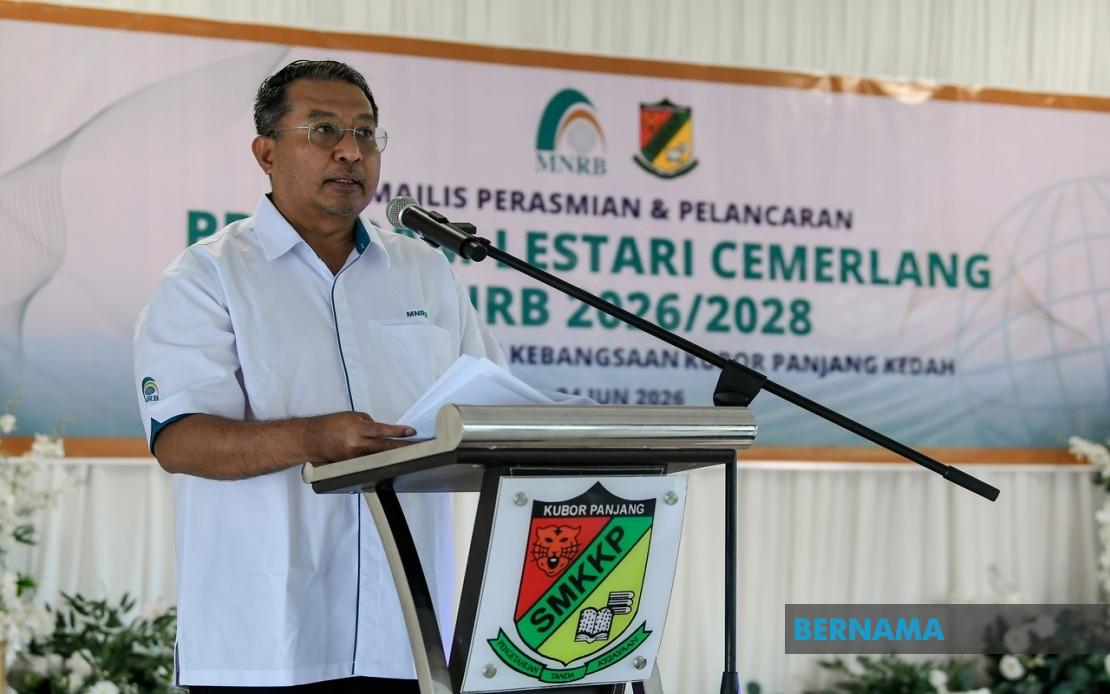
MNRB Holdings Berhad, an investment holding company, has committed nearly RM600,000 towards educational development across six Malaysian schools through its Lestari Cemerlang Programme, representing a substantial corporate investment in the nation's secondary education sector. The initiative was formally launched at Sekolah Menengah Kebangsaan Kubor Panjang in Pendang, Kedah, where the sixth participating school was unveiled alongside representatives from the state education department and the company's senior leadership.
The programme, which originated in 2011 as part of MNRB's broader corporate social responsibility framework, distinguishes itself by deliberately targeting rural communities alongside more developed areas. Datuk Rudy Rodzila Che Lamin, the company's interim president and group chief executive officer, articulated the underlying philosophy during the launch event, emphasising that the initiative seeks to unlock student potential through a comprehensive approach integrating both classroom achievement and extracurricular enrichment. This dual-focus methodology reflects a growing recognition among Malaysian corporations that educational excellence requires attention to multiple developmental dimensions beyond traditional examinations.
The geographical expansion of the programme demonstrates systematic growth, with schools in Perak, Pahang, Negeri Sembilan, Melaka, and Selangor already participating before SMK Kubor Panjang's inclusion. This spreading implementation suggests sustained commitment rather than one-off philanthropic gestures, indicating that MNRB views educational partnership as a long-term strategic priority. The selection of these locations, spanning both urban and rural contexts, suggests deliberate effort to ensure equitable access to corporate-sponsored educational enhancement across Malaysia's diverse regions.
Within each participating school, MNRB has implemented a structured suite of interventions designed to address specific academic and developmental gaps. Extra tuition sessions targeting Form Five students address the critical period when many Malaysian secondary students prepare for crucial national examinations. Beyond classroom support, the programme incorporates motivational camps and student development workshops aimed at building resilience, leadership skills, and character traits increasingly valued by tertiary institutions and employers. Infrastructure improvements, including facility upgrades and sports jersey sponsorships, signal the company's understanding that learning environments and student morale directly influence educational outcomes.
A particularly innovative component involves the MNRB Smart e-Learning Room, equipped with smart television technology and high-speed internet connectivity. This initiative addresses a persistent digital divide affecting rural Malaysian schools, where technological resources often lag significantly behind urban counterparts. By creating dedicated spaces for interactive digital learning, MNRB is helping participating schools adapt to contemporary educational approaches that increasingly rely on online resources and multimedia content. For students in these regions, such infrastructure can substantially expand access to educational materials previously constrained by geographic isolation.
The scholarship dimension of the programme, operated under the separate Tabung Biasiswa MNRB framework, extends corporate support into higher education, demonstrating commitment across the educational pipeline. Five top-performing students from SMK Kubor Panjang have been selected for sponsorships covering diploma, bachelor's, and master's degree levels, positioning them for professional advancement in fields aligned with MNRB's business operations. The company's strategic focus on insurance, takaful, and finance sectors reflects pragmatic alignment of educational investment with workforce development needs, creating a pipeline of talent educated in areas directly relevant to its operations.
The track record of this scholarship scheme proves encouraging for prospective beneficiaries. Among fourteen students previously sponsored from other adopted schools, eight have subsequently secured employment with MNRB Group upon graduation, translating educational investment into actual career pathways. This employment outcome rate suggests the company's commitment extends beyond sponsorship provision into genuine career facilitation, offering students not merely financial support but concrete professional opportunities. For rural students particularly, such employment prospects represent transformative life opportunities previously less accessible from their communities.
Hazlina Hazani, MNRB's chief people officer, clarified the distinction between the broadly accessible Lestari Cemerlang Programme and the more selective Tabung Biasiswa MNRB scheme. While the former serves entire schools through infrastructure, enrichment, and general support, the latter targets exceptional students pursuing higher qualifications in business-related disciplines. This tiered approach acknowledges that educational support operates across multiple levels, from environmental improvements benefiting all students to targeted advancement of high-achieving individuals capable of specialised roles.
The programme's emphasis on rural areas carries particular significance for Malaysian educational equity. Rural secondary schools frequently experience resource constraints, staff shortages, and limited exposure to advanced learning technologies that urban institutions take for granted. By systematically targeting such communities, MNRB addresses structural inequalities that might otherwise perpetuate educational disparities between regions. The company's willingness to invest in areas offering smaller commercial return than urban centres suggests recognition that corporate responsibility encompasses geographic equity alongside direct business interests.
For Malaysian education policy observers, MNRB's model presents a replicable template for corporate-school partnerships. Rather than sporadic donations or one-off sponsorships, the company has developed systematic, multi-year programming combining infrastructure, scholarships, enrichment activities, and employment pathways. This comprehensive approach recognises that educational transformation requires sustained commitment across multiple intervention points rather than isolated initiatives. As Malaysia seeks to strengthen educational outcomes and bridge regional disparities, such partnerships could increasingly supplement government provision, particularly in rural contexts where additional resources remain limited.
The launch at SMK Kubor Panjang concludes an implementation phase spanning the six initial schools while potentially signalling pathway for further expansion. MNRB's ability to deploy nearly RM600,000 across this network demonstrates corporate financial capacity to support education at meaningful scale. As the company continues developing human capital through this programme, monitoring employment outcomes, student achievements, and infrastructure utilisation will clarify whether such investments successfully translate corporate resources into measurable educational and developmental gains for Malaysian youth, particularly those in underserved communities.