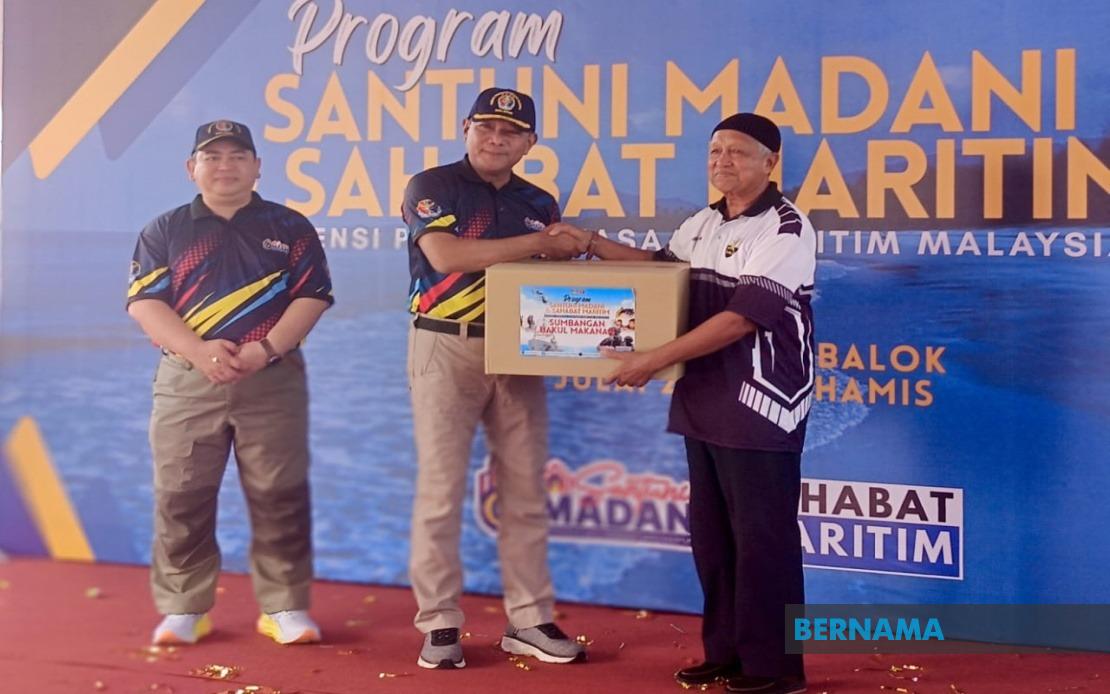
The Malaysian Maritime Enforcement Agency (MMEA) has announced substantial enforcement gains in the first half of 2024, recording RM2.29 billion in seizures while apprehending 516 individuals engaged in various maritime crimes. The agency's director-general, Maritime Admiral Datuk Mohd Rosli Abdullah, disclosed these figures during a public engagement event in Kuantan on July 16, emphasizing that the results reflect the MMEA's dedication to protecting Malaysia's territorial waters and upholding national sovereignty in the maritime domain.
The composition of seized assets reveals the diverse nature of maritime criminal activity affecting Malaysia's waters. Seized local boats constituted the largest portion of confiscations, valued at RM2.11 billion, indicating substantial smuggling operations involving Malaysian vessels. Drug seizures amounted to RM86.06 million, underscoring the region's ongoing struggle with narcotics trafficking through maritime routes. Foreign fishing vessels seized were valued at RM66 million, reflecting persistent illegal fishing operations in Malaysian territorial waters. Contraband cigarettes represented RM25.16 million in confiscations, signalling organized smuggling networks attempting to evade import regulations and tax obligations. Additional seizures included prawns valued at RM5.2 million and diesel fuel worth RM3.33 million, both commodities frequently subject to smuggling and subsidy evasion schemes.
Mohd Rosli emphasized that the MMEA's operational strategy extends beyond simple seizure activities to encompass comprehensive maritime governance. The agency remains committed to preventing the unauthorized movement of controlled and subsidized commodities outside Malaysian territory, a persistent challenge given the country's geographic position along major regional shipping lanes. Equally significant is the agency's focus on combating tax evasion schemes, which often operate in conjunction with smuggling operations. These interconnected enforcement priorities reflect the complexity of maritime crime, which typically involves multiple violations ranging from customs breaches to fiscal fraud.
The MMEA's commitment manifests through intensified operational tempo and strategic partnerships with other government agencies. The agency is actively participating in Ops Tiris, a coordinated multi-agency operation designed to comprehensively address maritime security threats. This operational framework represents a shift toward integrated enforcement, recognizing that maritime crimes rarely exist in isolation and frequently involve coordination with land-based criminal networks. One notable recent success exemplifies this integrated approach: on June 23, MMEA and partner agencies intercepted a cigarette smuggling operation in Tawau, Sabah, resulting in seizures and the confiscation of a vessel valued at RM64 million. This single operation represents approximately 2.8 percent of the half-year seizure total, demonstrating the outsized impact of coordinated enforcement actions.
Beyond enforcement operations, the MMEA is expanding its engagement with coastal communities through programmes designed to build public understanding of maritime safety and security challenges. The Santuni MADANI and Sahabat Maritim initiatives, launched during the Kuantan event, represent the agency's recognition that maritime security requires community participation and awareness. These programmes serve dual purposes: educating coastal populations about hazards and responsibilities in maritime environments while simultaneously strengthening relationships between enforcement personnel and local communities. Such community-oriented approaches have proven effective in generating intelligence about smuggling networks and illicit maritime activities, as fishermen and coastal residents often possess first-hand knowledge of suspicious vessel movements.
The strategic emphasis on search and rescue operations alongside law enforcement reflects MMEA's comprehensive maritime governance mandate. Maritime safety in Southeast Asian waters remains a significant concern, with numerous incidents involving capsized vessels, missing persons, and emergency situations occurring annually. By integrating SAR capabilities with enforcement functions, the MMEA positions itself as a multi-functional maritime authority rather than a narrowly-focused law enforcement agency. This broader mandate enhances the agency's credibility and effectiveness in engaging with civilian maritime users, as the public perceives the MMEA as concerned with their safety and security rather than solely pursuing criminal investigations.
The RM2.29 billion seizure figure carries particular significance for Malaysian policymakers grappling with fiscal challenges and subsidy management. Smuggling of controlled commodities, particularly diesel fuel and agricultural products, represents direct economic losses to the government through diverted tax revenue and undermined subsidy programmes. The ability to intercept these smuggling attempts translates directly into fiscal benefits, effectively reducing the government's expenditure on subsidy programmes and enhancing revenue collection. For a nation facing persistent budget pressures, maritime enforcement thus functions as a fiscal tool with measurable economic impact.
Regional context illuminates the importance of MMEA's operations for broader Southeast Asian maritime security. Malaysia's strategic location places its waters at the intersection of major international shipping routes and maritime boundaries involving Thailand, Brunei, Indonesia, and Singapore. Criminal networks operating in these waters often possess transnational dimensions, with vessels and personnel crossing multiple jurisdictions. The MMEA's enforcement actions necessarily occur within this complex regional environment, requiring coordination with neighbouring maritime authorities and international partners. The success of operations like the Tawau cigarette seizure depends partly on intelligence sharing and cooperative enforcement mechanisms with other regional maritime agencies.
The 516 arrests accompanying the seizures represent another significant metric of enforcement impact. These detentions encompass individuals involved in various roles within maritime criminal enterprises, from vessel operators to cargo handlers to financial facilitators. The diversity of arrests suggests that MMEA operations target multiple levels of smuggling networks rather than focusing narrowly on frontline operatives. This approach, if sustained, can disrupt criminal organizational structures by removing both operational personnel and enablers. The effectiveness of this strategy depends on consistent follow-through by prosecution authorities, ensuring that arrests translate into meaningful convictions that deter future involvement in maritime crimes.
Looking forward, the MMEA's stated commitment to intensified operations and enhanced inter-agency cooperation suggests that the first-half figures may represent baseline performance rather than peak capacity. The agency's explicit emphasis on strengthening maritime security and maritime crime prevention indicates a posture of operational escalation. Regional developments, including increased tensions over fishing rights, evolving smuggling routes, and changing criminal methodologies, will likely require continuous adaptation of MMEA strategies. The agency's engagement with coastal communities through awareness programmes suggests recognition that sustained enforcement success requires ongoing investment in public cooperation and intelligence generation.
For Malaysian policymakers and regional observers, the MMEA's performance demonstrates that dedicated maritime enforcement can yield substantial results in protecting national interests and combating transnational crime. The diversity of seizures—from narcotics to smuggled commodities to illegal vessels—underscores the scope of maritime challenges facing the nation. As regional maritime competition intensifies and criminal networks adapt their methodologies, the MMEA's role in safeguarding Malaysian waters becomes increasingly consequential. The agency's integration of enforcement, safety, and community engagement functions positions it as a comprehensive maritime authority, though sustained success will require consistent resource allocation and institutional support.

