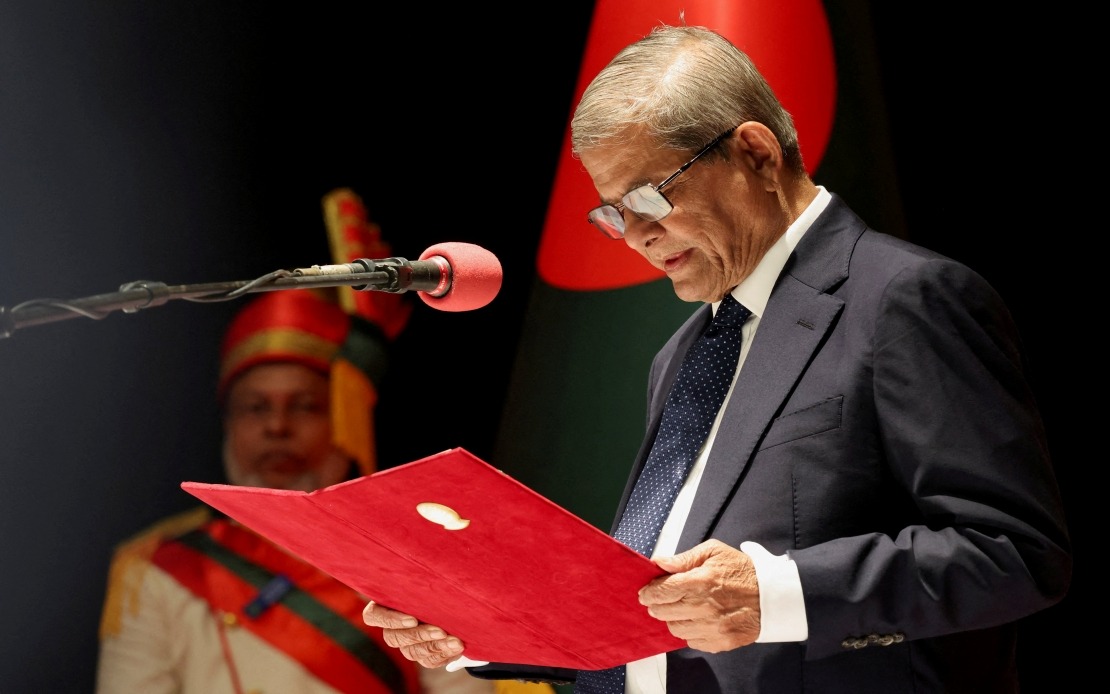
Mirza Fakhrul Islam Alamgir has officially assumed office as the 23rd President of Bangladesh, marking a significant moment in the country's political transition. The oath-taking ceremony unfolded at Bangabhaban's Darbar Hall on Friday evening at 7.30 pm (local time), conducted with full constitutional protocols and attended by the nation's top leadership and diplomatic representatives.
Acting Speaker Barrister Kayser Kamal administered the oath to Fakhrul, who represents one of Bangladesh's most experienced political figures. The formal proceedings included the customary exchange of seats between the newly sworn president and outgoing Acting President Hafiz Uddin Ahmad Bir Bikram, a symbolic moment underscoring the institutional transfer of executive power. Fakhrul subsequently signed both the oath of office and oath of secrecy, completing the constitutional requirements before the ceremony concluded with the singing of the national anthem.
The presidential inauguration drew an extensive gathering of the nation's political and administrative establishment. Prime Minister Tarique Rahman attended the proceedings alongside the Chief Justice, Cabinet members, members of parliament, and senior representatives from both the civil and military services. The presence of foreign diplomats underscored the international dimension of the event, highlighting Bangladesh's engagement with the global community during this transitional period.
Fakhrul's ascension to the presidency reflects his standing within Bangladesh's political hierarchy. As a former secretary-general of the Bangladesh Nationalist Party (BNP), he has accumulated decades of political experience navigating the country's complex and often turbulent democratic landscape. His parliamentary election to the presidency followed proper constitutional procedures, with members of the national assembly voting in accordance with Bangladesh's established electoral framework for the office.
The timing of this presidential transition carries broader significance for Bangladesh's current political moment. The swearing-in ceremony represents continuity of institutional governance during a period when the nation is managing significant changes in its leadership structure and political direction. The involvement of Prime Minister Tarique Rahman and the acting head of state in the formal proceedings emphasises the coordinated nature of these transitions and the commitment to constitutional governance.
From a regional perspective, Bangladesh's institutional stability remains closely watched by neighbouring South Asian nations, particularly given the country's strategic importance and economic influence within the subcontinent. The smooth execution of constitutional procedures for presidential succession demonstrates the resilience of Bangladesh's democratic institutions, even as the country navigates complex political circumstances.
Fakhrul brings to the presidency a background shaped by involvement in Bangladesh's major political movements and governance debates. The BNP, with which he has long been affiliated, represents one of the two dominant political forces in Bangladesh politics, and his presidency carries implications for how the institution will function during the current political configuration. The president's role in Bangladesh is largely ceremonial within the parliamentary system, yet the position remains symbolically important for national unity and constitutional authority.
The ceremonial elements of Friday's proceedings, from the formal welcome at Bangabhaban to the constitutional oaths, reflect Bangladesh's adherence to republican traditions and established protocols. These ritualistic aspects of power transfer serve to legitimise new leadership while maintaining institutional continuity—particularly important in nations with complex political histories where the symbolic authority of constitutional offices can anchor democratic practice.
Looking forward, Fakhrul's presidency will need to navigate the expectations of a diverse political landscape while maintaining the neutrality expected of a ceremonial head of state. His appointment and acceptance of office demonstrate the functioning of Bangladesh's constitutional mechanisms, even as the country continues to address broader questions about democratic governance, institutional reform, and political inclusion that remain central to its development agenda.

