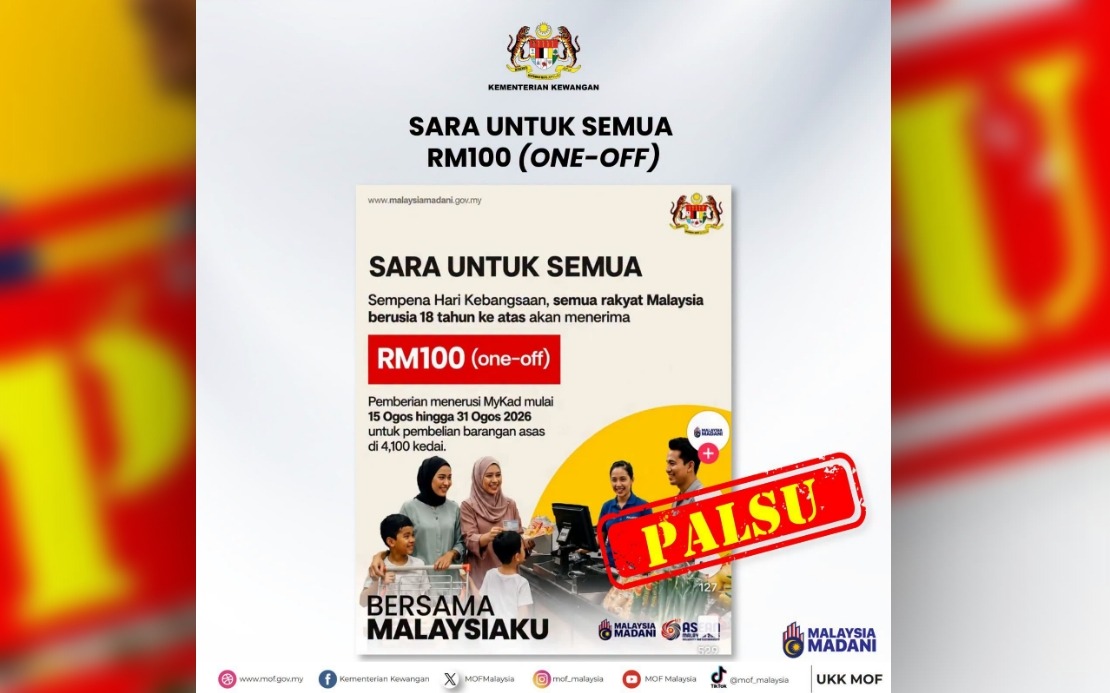
The Ministry of Finance has moved swiftly to shut down misleading claims circulating on social media regarding a promised RM100 Sumbangan Asas Rahmah payment for National Day. In a direct statement released from Putrajaya on August 5, the ministry explicitly denied the assertions contained in a viral poster that had been spreading across Malaysian social networks, characterising the document as wholly inaccurate and calling on the public to disregard it entirely.
The false poster appears to have capitalised on the anticipation surrounding National Day celebrations and the government's track record of implementing assistance programmes during major national occasions. Such fabrications exploit public expectations around festive periods when financial assistance announcements are more likely, making residents vulnerable to misinformation that can spread rapidly through messaging platforms and social media channels. This particular claim coincided with a season when many Malaysians are already expecting potential government support measures.
Official channels from the Ministry of Finance emphasised that no authorised announcement regarding any such payment has been issued. The ministry's statement stressed the critical importance of citizens verifying claims through legitimate government sources rather than relying on unconfirmed posts that circulate virally. This represents a broader challenge facing Malaysian authorities in combating the dissemination of false financial information that could lead vulnerable populations to make poor financial decisions based on expected payments that will never materialise.
The spread of such misinformation underscores the persistent challenge of disinformation in Malaysia's digital landscape, particularly surrounding government assistance programmes. During previous announcement cycles for legitimate aid schemes, similar false claims have circulated, causing confusion among eligible recipients and overwhelming government hotlines with enquiries about payments that do not exist. The pattern suggests a deliberate effort by some parties to exploit public trust in government announcements.
The Sumbangan Asas Rahmah programme itself has been a significant component of Malaysia's social safety net, having been implemented in previous phases to provide direct cash assistance to vulnerable households. The existence of this genuine assistance scheme may have made the false claim more believable to ordinary citizens who were unfamiliar with specific eligibility criteria or announcement procedures. The government's previous implementations of similar programmes created a plausible backdrop against which fraudsters could construct their deceptive narratives.
The Ministry of Finance's response highlights the necessity for citizens to develop greater digital literacy and critical evaluation skills when encountering claims about government payments online. Official announcements regarding financial assistance typically follow formal procedures involving multiple government departments, media briefings, and publication through verified government websites and official social media accounts. Claims that bypass these institutional channels and spread primarily through unverified social media posts should immediately raise suspicion among discerning readers.
This incident also carries implications for how the government communicates major policy announcements and financial initiatives to the public. As misinformation becomes increasingly sophisticated, official messaging must reach citizens through multiple verified channels simultaneously, ensuring that accurate information competes effectively with false claims in the digital information ecosystem. The rapid spread of fabricated posts suggests that some residents encounter government news primarily through informal social media rather than official sources.
For Malaysians planning their finances around expected government assistance, relying on unverified viral claims poses genuine risks. Individuals who structure their household budgets around anticipated payments that never arrive face real hardship and financial instability. This underscores why the Ministry of Finance's intervention in debunking such claims serves an important protective function for vulnerable populations who may lack access to official information channels or struggle to distinguish credible sources from fraudulent ones.
The ministry's advisory for the public to obtain verified information exclusively through official channels represents standard best practice for government communications during periods of elevated misinformation activity. Citizens are encouraged to visit the Ministry of Finance's official website, contact their regional offices, or check announcements published through verified government social media accounts before acting on claims about new payment schemes. This multi-layered verification approach helps ensure that accurate information reaches those who need it most while preventing the dissemination of potentially harmful falsehoods that exploit public expectations and trust in government institutions.

