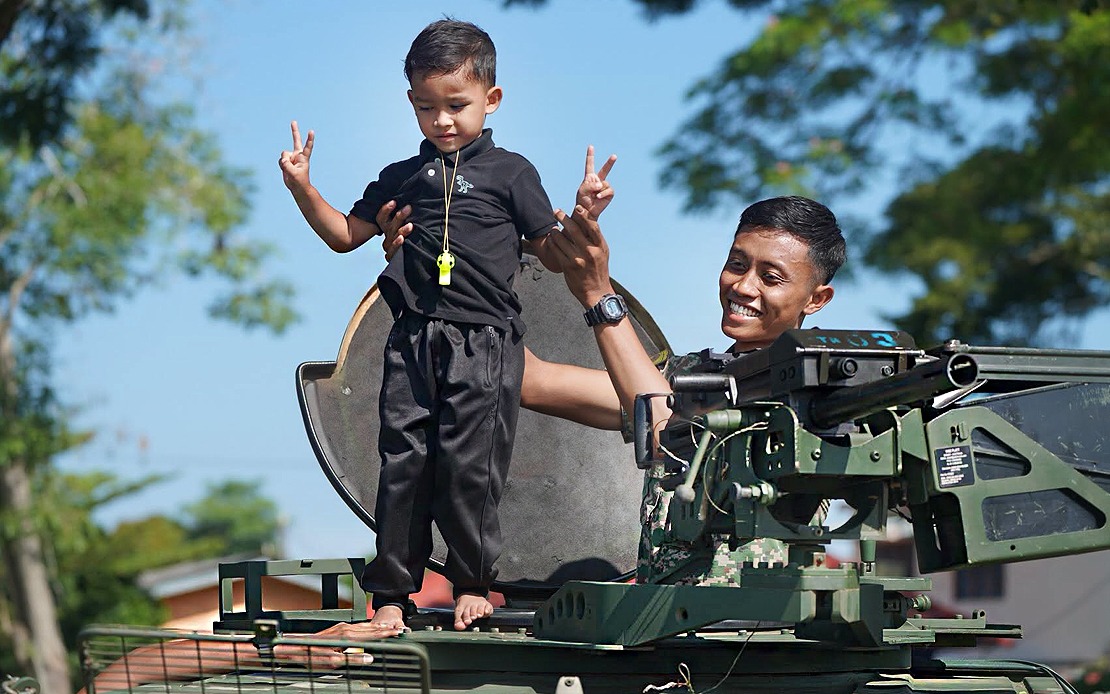
The Ministry of Defence has accelerated efforts to bridge the gap between the armed forces and civilian communities through a multi-faceted outreach programme centred in Alor Gajah, a district in Melaka state that has increasingly become a focal point for civil-military cooperation initiatives. Held on August 15, the 'Program Jiwa Murni MADANI' (PJM) at Padang Awam Kampung Gadek brought together military personnel, government agencies, and residents to participate in activities spanning healthcare, economic opportunity, and infrastructure enhancement—reflecting a strategic shift towards embedding defence institutions more deeply into everyday community life.
The initiative underscores a broader approach by MINDEF to reframe the Malaysian Armed Forces (MAF) not merely as a security apparatus but as a tangible presence contributing to local socioeconomic wellbeing. By hosting free medical screenings alongside career exhibitions and entrepreneurship workshops, the ministry seeks to demonstrate the armed forces' relevance beyond traditional defence roles. This positioning is particularly significant in Malaysia, where public perception of military institutions has historically been shaped by ceremonial functions and peacekeeping duties. The integration of RAHMAH Sales—subsidised goods initiatives—and mobile government service counters suggests an attempt to enhance accessibility to state support mechanisms in communities that may otherwise experience gaps in service delivery.
The infrastructure dimension of the programme proves particularly substantive. The 9th Squadron of the Royal Engineers Regiment undertook repairs valued at RM179,200 across five distinct community assets in and around Alor Gajah. These projects targeted both secular and religious spaces: playground facilities in Kampung Baru, school infrastructure at Sekolah Jenis Kebangsaan (Tamil) Durian Tunggal, sporting amenities in Taman Seri Kelemak, and religious spaces including Madrasah Seri Kemuning and Surau Madrasah Khairiah. Such targeted investments in multi-purpose halls, educational grounds, and worship venues address immediate community needs while symbolically affirming state investment in grassroots infrastructure—an area where local governments sometimes face resource constraints.
Deputy Defence Minister Adly Zahari's presentation of RM133,000 in cheques for the Service Centre Initiative represents the financial backbone of the outreach effort. The distribution pattern reveals careful attention to religious and cultural pluralism. Recipients included eight entities spanning Muslim suraus, Hindu temples, and Tamil-language schools, suggesting deliberate inclusivity in fund allocation. The Surau Kampung Ulu Batang Melaka, Surau Al Mubarakah in Taman Dimensi, the Chee Sen Ting Temple Association in Machap Baru, the Kuan Yen Shrine Association at Batang Pondok, and SJKT Batang Melaka collectively received support for varied purposes—from operational costs to dedicated sustainability projects such as the school's GreenLab initiative. This ecumenical approach carries political significance in a nation where religious and communal harmony remains periodically contested.
Parallel programming through the Religious Corps of the Malaysian Armed Forces (KAGAT) added a spiritual dimension to the welfare initiative. The 'Program Ilmu dan Muafakat MADANI' (PIKAT), conducted at Masjid Kelemak, integrated religious observance with community engagement through congregational prayers and educational lectures. The dual-track approach—combining the secular-welfare focus of PJM with the spiritually-anchored activities of PIKAT—suggests MINDEF's recognition that community cohesion in Malaysia often centres on religious identity and practice. By embedding defence personnel within these spaces, the ministry appears intent on normalising military-community interaction across multiple domains rather than limiting it to formal civic events.
The distribution of 500 RAHMAH baskets to MAF veterans and residents deserves particular attention as a welfare mechanism. These subsidised food packages represent a direct, tangible benefit that reaches economically vulnerable households while simultaneously honouring retired military personnel—a constituency whose social integration and material security remain ongoing policy concerns. The gesture reinforces the notion of the armed forces as institutional custodians of social welfare, particularly for their own retirees and their families, a framing that has historically justified defence budget allocations in Southeast Asian contexts.
Contextually, these initiatives align with the National Defence Strategic Plan (PSPN) 2026-2030's Core 4 objectives, which emphasise strengthening civil-military relations through community-based frameworks. MINDEF's characterisation of these programmes as expressions of this strategic doctrine indicates top-level commitment rather than ad-hoc community relations gestures. The systematisation of CIMIC (Civil-Military Cooperation) through branded, repeatable programmes suggests an institutional transition towards sustainable engagement models. For Malaysian defence policy analysts, this shift reflects a recognition that military legitimacy increasingly derives from demonstrable contributions to civilian welfare rather than military prowess alone—a trend visible across the region as defence budgets face scrutiny.
The Alor Gajah initiative carries implications for how Malaysia approaches civil society-military relations amid evolving security challenges. By positioning armed forces personnel as educators, healthcare providers, and infrastructure workers, MINDEF cultivates a narrative of the military as embedded within civilian structures rather than apart from them. This approach differs markedly from militarisation strategies in some neighbouring countries and aligns more closely with inclusive development narratives emphasised by the current MADANI framework—the government's broader societal development agenda. The programme's success in Alor Gajah could serve as a replicable model for other districts, potentially scaling community engagement across the country.
However, the initiative's effectiveness ultimately hinges on the sustainability of funding and the genuine integration of military priorities with local development needs rather than top-down imposition of defence ministry agendas. Residents' sustained engagement with these programmes and their material impact on household economic security will determine whether MINDEF successfully rebuilds public confidence in the armed forces as community partners. For Malaysia's regional standing, successful civil-military cooperation models provide soft power advantages, demonstrating inclusive governance approaches that contrast with more coercive models elsewhere in Southeast Asia.

