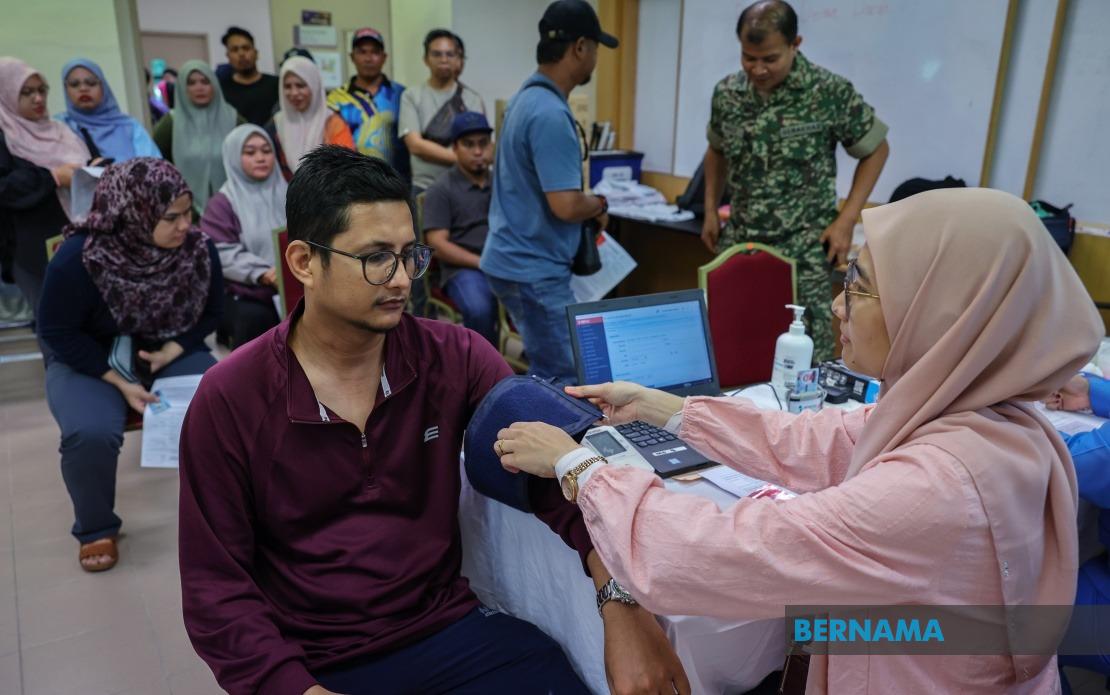
The Malaysian armed forces have demonstrated their commitment to community service by delivering comprehensive healthcare directly to residents in the Baling district. Operating under the Civil-Military Cooperation (CIMIC) framework known as the "Military with the People" programme, medical and dental teams established treatment facilities at Sultan Abdul Halim Mu'adzam Shah International Islamic University (UniSHAMS) in Kuala Ketil from Tuesday through to Thursday in July. The initiative, which coincided with the graduation of the Basic Commando Course (Series AK/1/26), represents a deliberate effort to strengthen relationships between the military and civilian population while addressing healthcare access gaps in the region.
The scope of medical provision extended across both primary care and specialist dental services. Through the Medical Community Assistance Programme (MEDCAP) and Dental Community Assistance Programme (DENCAP), visitors from diverse socioeconomic backgrounds accessed free dental examinations, preventive treatments including scaling, fillings and extractions, alongside general health assessments. Personnel from the Royal Medical Corps (KKD) and the 2nd Medical Battalion collaborated with civil defence forces to deliver rapid care. The Baling District Health Office, working in partnership with the military under coordination with the Ministry of Health (MOH), further expanded the service to include blood pressure checks, blood glucose screening, body mass index assessments, and mental health awareness promotion.
Community reception to the services proved overwhelmingly positive, with participants drawn from various employment backgrounds and age groups. Factory worker Siti Salmiah Said, 28, utilised her scheduled day off to bring her entire family for treatment, highlighting how the programme addressed common access barriers such as appointment delays at conventional dental clinics. She underwent dental scaling while her six-year-old child received restorative treatment, underscoring the programme's value to families managing multiple healthcare needs. Similar patterns emerged across other attendees, with working professionals and casual labourers expressing relief at receiving immediate care without the bureaucratic delays typically associated with public health facilities.
The efficiency of on-site treatment particularly resonated with participants accustomed to conventional healthcare pathways. Legal assistant Adam Ruzlan, 26, initially anticipated only basic screening but received immediate restorative treatment coupled with personalised oral health education regarding tartar accumulation and optimal care regimens. This combination of curative intervention and preventive education distinguishes the programme from simple health awareness campaigns. The military dental officers deliberately integrated patient education into treatment delivery, ensuring that beneficiaries understood their specific health conditions and could implement recommended follow-up care.
For some attendees, the programme rekindled memories of previous military health initiatives whilst demonstrating technological advancement and operational efficiency. One participant, whose father had served in the commandos, recalled similar outreach efforts from decades prior, yet observed marked improvements in service delivery speed and diagnostic equipment quality. This generational perspective underscores how the military's civilian engagement has evolved to meet contemporary healthcare expectations whilst maintaining the foundational mission of community support.
The programme's capacity to manage medical emergencies on-site added significant value beyond routine care delivery. When a child experienced acute symptoms of dizziness and nausea during the event, Civil Defence Force (APM) personnel rapidly triaged the patient to the MEDCAP facility. Military medical staff conducted comprehensive vital sign assessment including temperature, blood pressure, and oxygen saturation monitoring before administering symptomatic treatment. This rapid response capability, supported by proper tent infrastructure and trained personnel, transformed a potentially concerning situation into a positive demonstration of military healthcare competency, as reflected in the grateful response from the child's mother who advocated for similar initiatives at other large-scale public gatherings.
Captain Dr Muhammad Afiq Ishak, dental officer overseeing DENCAP services, articulated the clinical philosophy guiding the programme's scope and limitations. The team concentrated on fundamental dental interventions—fillings, scaling, and extractions—whilst simultaneously promoting understanding of oral hygiene maintenance. When screening revealed indicators of systemic disease such as hypertension or diabetes risk in elderly attendees, personnel referred patients to proximate dental facilities rather than attempting complex interventions in the temporary setting. This tiered approach demonstrates strategic resource allocation and clinical judgment appropriate to the field environment.
Lieutenant Dr Atiff Abdul Aziz, Medical Officer at the Special Warfare Training Centre directing both MEDCAP and DENCAP operations, emphasised the institutional coordination underpinning the programme's success. The partnership between the military and MOH's district health office transformed isolated organisational efforts into a coherent healthcare delivery system leveraging complementary expertise. The Baling District Health Office specifically contributed mental health awareness activities, recognising that physical health provision alone inadequately addresses community wellbeing. This holistic approach reflects contemporary understanding of health determinants and acknowledgment that rural populations often experience social stigma surrounding mental health conditions.
The programme incorporated an additional blood donation component managed by Sultan Abdul Halim Hospital (HSAH) in Sungai Petani, establishing a collection operation spanning multiple days with a target of approximately 100 blood units daily. This integrated approach simultaneously addresses blood supply challenges affecting the national health system whilst mobilising community participation in national health infrastructure. The blood donation initiative transforms the healthcare engagement from recipient-provider transaction into reciprocal community contribution, potentially strengthening social investment in national health resilience.
For rural Malaysian communities, such initiatives address genuine healthcare access barriers inherent to geographic dispersion and limited private sector penetration. The Baling district's relative distance from major urban medical centres creates natural obstacles to preventive care and routine dental maintenance. By deploying resources to the community location rather than requiring residents to travel for services, the programme eliminates transportation costs and time burdens that disproportionately affect working-class populations. Factory workers and casual labourers particularly benefited from on-site provision that eliminated appointment scheduling requirements and travel coordination.
The programme's sustainability and potential replication depend on institutional commitment from both military and health sector leadership. The coordination model requiring Ministry of Health partnership, district-level health office engagement, and multiple military medical units suggests that scaling this approach requires deliberate policy decision rather than ad-hoc initiative. For Malaysian policymakers evaluating rural health service gaps, the CIMIC model demonstrates that military institutional capacity, already maintained for national defence, can deliver significant civilian healthcare benefits through structured civilian-military cooperation frameworks.
The positive reception from diverse community participants suggests receptivity to expanded military healthcare engagement in underserved regions. The programme avoided perceptions of militarisation of civilian health services by emphasising professional medical delivery and coordination with established health ministry structures. As Malaysia continues developing rural healthcare infrastructure and addressing geographic disparities in medical access, this model offers a proven template for rapidly deploying specialist services to populations with limited conventional healthcare options. The voluntary participation, diverse age and occupational representation, and explicit health benefit delivery indicate that such initiatives can succeed when properly designed and community-responsive.

