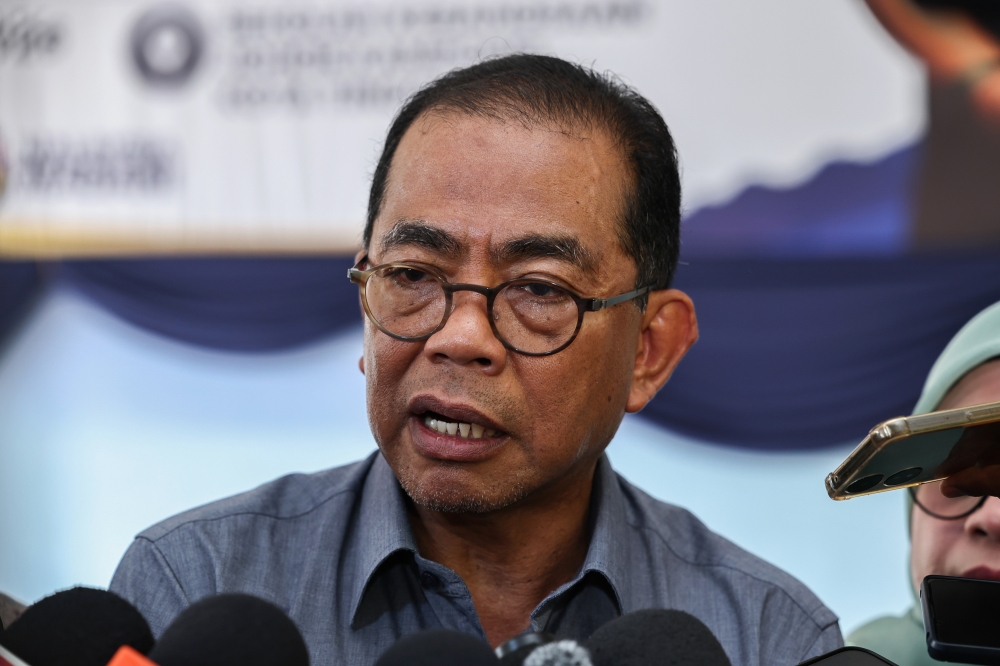
Defence Minister Datuk Seri Khaled Nordin has moved to settle a constitutional question that has long lingered in Malaysian governance circles, clarifying that the military maintains the legal authority to organise and execute training exercises across state jurisdictions without needing prior approval from state rulers. The minister's parliamentary statement addresses a recurring tension between federal military authority and the constitutional position of state sultans, effectively confirming that existing legislation provides sufficient legal cover for such operations.
Khaled's position reflects a reading of the Federal Constitution that prioritises national defence imperatives over ceremonial royal oversight, a distinction that carries significant implications for how Malaysia structures its military readiness and operational planning. The clarification becomes particularly relevant given Malaysia's strategic position in a region increasingly shaped by geopolitical competition and the need for rapid-response military capabilities. By establishing that formal royal consent is not a prerequisite, the ministry removes what could otherwise become an administrative bottleneck in emergency or time-sensitive defence scenarios.
The constitutional framework underlying the Defence Ministry's authority stems from provisions that vest defence matters primarily in the federal government, a principle enshrined since Malaysia's independence in 1957. State rulers retain ceremonial and consultative roles in matters affecting their respective states, but this does not extend to veto power over federal military operations conducted on their territories. Khaled's statement essentially codifies what legal scholars have long argued: that the distinction between courtesy consultation and formal consent is crucial to maintaining operational flexibility.
This clarification holds particular resonance for states with significant military installations or training grounds, such as Johor, which hosts major defence facilities, or Kelantan and Terengganu, where maritime and coastal defence exercises are regularly conducted. Previously, ambiguity around consent requirements could have created delays or diplomatic sensitivities when exercises were planned. The Defence Ministry's definitive stance now provides commanding officers and planners with unambiguous guidance, streamlining the bureaucratic processes that govern military activities.
From a defence management perspective, the ability to conduct exercises without protracted approval cycles enhances the Malaysian Armed Forces' capacity to respond to emerging security challenges. Modern military doctrine emphasises regular, sometimes unscheduled training to maintain operational readiness. Requiring royal consent for each exercise would introduce unpredictability into training schedules and could compromise the spontaneity that realistic military preparation demands. The Defence Ministry's position acknowledges these contemporary realities while respecting the constitutional structure that governs centre-state relations.
However, the clarification does not suggest that the military should operate in isolation from state-level coordination. Best practices dictate that exercises be conducted in consultation with state authorities, particularly regarding logistics, public safety, and civilian impact. There is a meaningful difference between not requiring formal consent and operating without state awareness. The Defence Ministry's stance is likely predicated on maintaining this distinction, ensuring transparency without surrendering operational autonomy.
Regionally, Malaysia's position aligns with how other federalised Asian nations balance military authority with state-level autonomy. Singapore's unitary system grants the central government absolute command, while India's federal structure similarly prioritises national defence authority over constituent state preferences. Khaled's clarification positions Malaysia within this spectrum, affirming that military readiness cannot be subordinated to competing power centres at the state level.
The statement also carries implications for how Kuala Lumpur manages defence relationships with states governed by opposition parties. Some observers have detected underlying tensions in defence-matter coordination between the federal government and certain state administrations. By establishing that military exercises proceed from constitutional federal authority rather than requiring state-level blessing, the Defence Ministry effectively depoliticises the process, removing opportunities for political friction to delay or obstruct essential military preparations.
Looking ahead, this clarification should improve efficiency in military planning while maintaining respect for the ceremonial and consultative roles of state rulers. Exercises can be better coordinated with state governments as administrative partners rather than formal gatekeepers. The Defence Ministry's position ultimately serves both national security imperatives and the integrity of Malaysia's federal system, striking a necessary balance between military effectiveness and constitutional governance.

