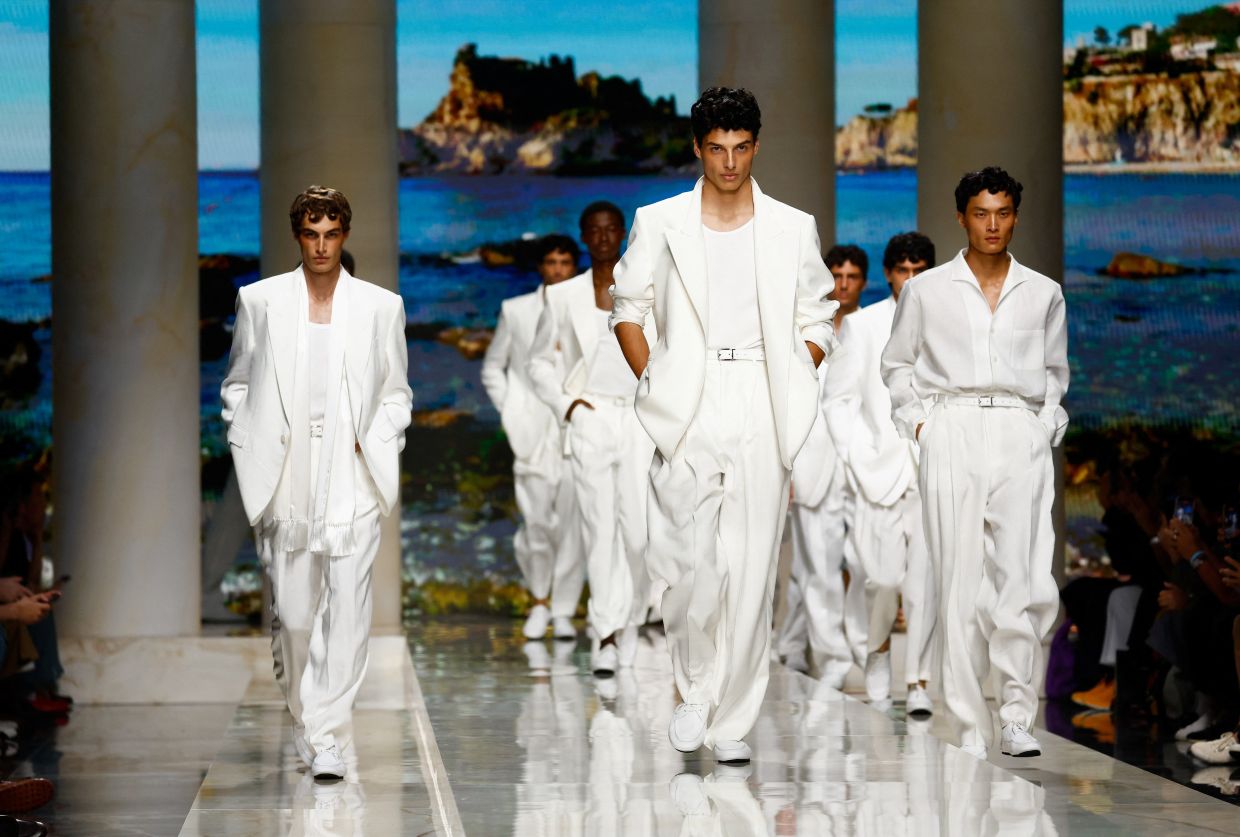
As the world grapples with economic uncertainty and geopolitical tensions, Milan's menswear designers have responded not with escapism but with a return to fundamentals. The Spring/Summer 2027 collections unveiled this month strip back visual excess in favour of cleaner silhouettes and pared-down aesthetics, suggesting that even fashion's most visionary creatives recognize the need for restraint when times grow turbulent. Yet this embrace of simplicity masks deeper innovation: how to maintain sartorial sophistication while contending with the practical realities of dressing for an increasingly warm planet.
Prada set the philosophical tone for the season through co-creative directors Miuccia Prada and Raf Simons, who championed a vision centred on proportion and fabrication rather than ornamentation. Their approach reframed familiar garments—the five-pocket jean, the simple shirt—as canvases for reimagination. By focusing on how clothes sit on the body and what materials compose them, Prada demonstrated that luxury menswear need not shout its credentials through visible branding or decorative excess. This intellectual framework filtered through much of the Milan schedule, resonating with an industry audience perhaps fatigued by years of logo-driven conspicuousness.
Yet the season's most surprising persistence was leather—a material seemingly antithetical to summer dressing. Across multiple collections, leather appeared not as heavy outerwear but as innovative layering pieces and tailored basics. Designers employed woven and perforated techniques to increase breathability, transforming leather from an insulating material into something approaching textile lightness. This represents a significant technical achievement, one that allows luxury brands to maintain their material signatures while acknowledging climatic realities. For Malaysian consumers accustomed to tropical humidity, such innovation holds particular relevance, as it suggests that formal menswear need not be abandoned during sweltering months.
The tension between luxury and practicality permeated Milan's runways this season. After years of oversized silhouettes that dominated menswear, designers broadly agreed that bodies should once again be visible and celebrated. Tailoring remained central, but in softer, more relaxed iterations than the rigid constructions of previous decades. Necklines opened, construction softened, and fabrics were selected for their capacity to move air rather than trap heat. The collective message was clear: formality has not vanished, but it has evolved to accommodate modern realities, including climatic ones.
Ventilation emerged as an unexpected design obsession. Dress shirts appeared unbuttoned, semi-transparent, or absent entirely. Dolce & Gabbana pushed this trend towards its logical conclusion with microshorts that exposed muscular legs, while other houses strategically bared torsos. These weren't radical departures so much as pragmatic solutions to the question of how a well-dressed man survives summer heat. Long trousers remained the dominant silhouette, but the emphasis shifted decisively towards closer-fitting cuts that suggested the body rather than concealing it. This represents a meaningful departure from the baggy proportions that have dominated luxury menswear for the past half-decade.
US designer Thom Browne's return to Milan—his first show in the city since 2008, now operating under the Zegna ownership structure—exemplified this season's tailoring philosophy. His layered suiting drew heavily on seersucker and pleated skirts, materials and techniques traditionally associated with summer dressing but rarely seen in contemporary menswear. By drawing on historical precedent, Browne demonstrated that innovation often means excavating forgotten solutions rather than inventing entirely new ones. His presence in Milan also signalled the brand's repositioning within European fashion infrastructure, a shift with implications for how American design houses interface with traditional luxury markets.
The Milan calendar's lighter density this season created meaningful opportunities for emerging talents to gain visibility alongside established names. Martin Quad made his Milan debut with unconventional tailoring techniques that had previously gained attention in Copenhagen, while Domenico Orefice presented leather and richly woven textiles in a co-ed collection that blurred gender distinctions. Japanese designer Shinya Kozuka's debut collection proved particularly striking: a bare-chested model draped in a billowing sheer coat in teal, paired with baggy white trousers, captured the season's poetic ambition to balance exposure with coverage, minimalism with drama. These emerging voices suggested that Milan's future lies not in consolidation around mega-brands but in supporting distinctive creative perspectives.
Not all Milan designers embraced restraint, however. Philipp Plein presented crystal-encrusted denim that demands days of handwork, a flagrant celebration of labour-intensive luxury. Dolce & Gabbana similarly leaned into maximalism with beaded accents evoking coral formations. These maximalist interventions served an important function, offering counterpoint to the season's prevailing minimalism and reminding the industry that luxury consumers hold diverse aesthetic preferences. The coexistence of reduction and ornamentation reflects broader market realities: not all affluent men desire the Prada vision; some seek conspicuous displays of craftsmanship and embellishment.
For regional readers, Milan's 2027 direction carries specific implications. Southeast Asian menswear consumers, who inhabit climates where the relationship between formality and heat has always been fraught, may find renewed permission to embrace tailored clothing despite tropical conditions. The technical innovations in breathable leather and ventilated construction address longstanding practical challenges. Additionally, the season's emphasis on proportion over logos suggests a maturation of Asian luxury markets: increasingly, consumers in the region demonstrate preferences for subtle quality markers rather than visible branding, a shift that Milan's designers clearly recognize.
The Milan menswear season ultimately delivered a message of measured optimism. Rather than abandoning formality or retreating into leisure wear, designers proposed that tradition could accommodate change. The suit remains, but lighter, more breathable, and proportioned for bodies rather than silhouettes. Leather persists, but perforated and woven for climate consciousness. Tailoring endures, but softened and opened to airflow. This isn't fashion's surrender to uncertainty so much as its pragmatic negotiation with it—a recognition that style and sense need not be opposing forces, and that sometimes the most radical move in complicated times is simply getting the basics right.