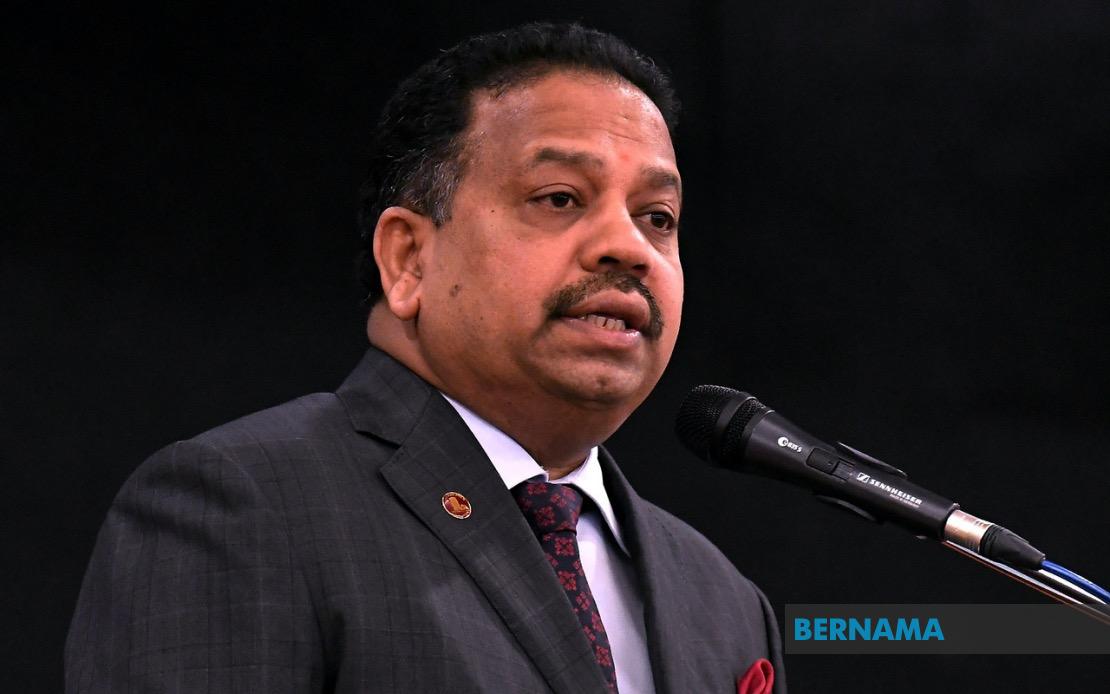
The Malaysian Indian Congress (MIC) is banking on sustained support from the Indian community in the Johor state election scheduled for July 11, with party president Tan Sri S.A. Vigneswaran expressing optimism about voter backing for Barisan Nasional candidates. Speaking in Kulai, Vigneswaran attributed the party's confidence to what he described as constructive working relationships with both federal and state authorities, relationships he believes have demonstrated tangible benefits in addressing communal concerns.
Vigneswaran's optimism reflects the party's electoral calculus heading into the 16th Johor state election. MIC is fielding four candidates across the state: K. Raven Kumar contesting the Kemelah seat, V. Rugendran in Kahang, P. Pannir Selvam in Perling, and R. Kumaran in Bukit Batu. These constituencies represent traditional areas of Indian concentration in Johor, where community cohesion and targeted messaging around development priorities can prove decisive in tight electoral contests.
The party leadership has adopted what party officials characterize as a principled campaign strategy, eschewing personal attacks in favour of solutions-oriented engagement with voters. This measured approach stands in contrast to the sometimes acrimonious tone of Malaysian electoral competition, positioning MIC as a pragmatic partner committed to incremental progress rather than confrontational politics. For the Indian community, historically sensitive to divisive rhetoric, this strategy may resonate as a commitment to stability and constructive dialogue.
At the state government level, Vigneswaran emphasized the necessity for representatives capable of bridging community interests with state administrative machinery. This framing underscores a fundamental premise underlying MIC's electoral positioning: that effective representation depends less on opposition-style confrontation than on cooperative relationships with sitting administrations capable of translating community grievances into policy action. Whether this philosophy resonates with voters frustrated by slow progress on persistent issues—education, economic marginalisation, temple land disputes—remains to be seen.
During the press conference, Vigneswaran was compelled to address allegations regarding MIC's financial dealings, specifically claims circulating via Tamil-language digital media that the party had received government funds totalling RM221 million. The party president characterised these claims as factually inaccurate and potentially defamatory, prompting legal action to demand correction and retraction from the reporting outlet.
Vigneswaran clarified that financial allocations attributed to MIC actually represent annual grants directed toward AIMST University, a non-profit tertiary institution administered through a foundation rather than party structures. This distinction carries significance for understanding party-government financial relationships in Malaysia's political ecosystem, where transparency regarding such arrangements remains a sensitive issue given historical concerns about patronage and favouritism.
The government's contribution to AIMST has increased substantially under the Datuk Seri Anwar Ibrahim administration. Since 2023, when Anwar assumed the Prime Minister's office, annual grants have reached RM25 million per annum—a figure representing a notable uptick in government support. These allocations undergo standard auditing procedures and fund specific institutional improvements including dormitory upgrades, renewable energy installations, and operational cost reduction initiatives designed to maintain student affordability.
For the Indian community, AIMST University represents an important pathway to tertiary education, particularly for families whose economic circumstances might otherwise limit access to private higher learning. Government subvention translating into reduced student fees carries direct implications for social mobility within the Indian Malaysian demographic, making university funding decisions politically consequential beyond narrow fiscal considerations. The ability to maintain accessible fee structures through government support addresses a longstanding community preoccupation regarding educational opportunity.
The framing of these expenditures as facilities maintenance and operational support rather than direct party financing attempts to distinguish between legitimate government investment in education infrastructure and potentially problematic party financing arrangements. However, the circumstance that a party president must publicly defend government funding directed to an institution associated with his party underscores persistent questions about the blurred boundaries between party interests and public institutional management in Malaysian politics.
Vigneswaran's legal response to the viral allegations reflects MIC's determination to counter narratives that could undermine confidence in party leadership during a critical electoral period. Defamation notices represent a conventional though increasingly contested response to digital-era misinformation, raising broader questions about information control, press freedom, and the political economy of digital media in Malaysian elections.
The MIC's electoral fortunes in Johor reflect broader patterns in Indian Malaysian political behaviour. Traditionally aligned with Barisan Nasional through an informal power-sharing arrangement, the Indian vote has shown volatility in recent electoral cycles, particularly among younger, urban-educated demographics increasingly skeptical of established communal politics. The party's continued reliance on cooperation with state authorities rather than independent advocacy may address some voter concerns about effective representation while potentially alienating those seeking more confrontational opposition stances.
As polling day approaches, MIC's campaign messaging emphasises proven governance partnerships over ideological differentiation. This positioning assumes that Indian voters prioritize tangible service delivery and institutional responsiveness over transformative political change. Whether this assumption aligns with actual voter priorities, particularly among constituencies experiencing persistent socioeconomic challenges, will become evident through electoral results that will provide clearer indication of community sentiment regarding both MIC's stewardship and Barisan Nasional's broader appeal.

